AMD Helios Could Gain a Powerful AI Inference Edge as OpenAI Researcher Praises Cerebras Chips
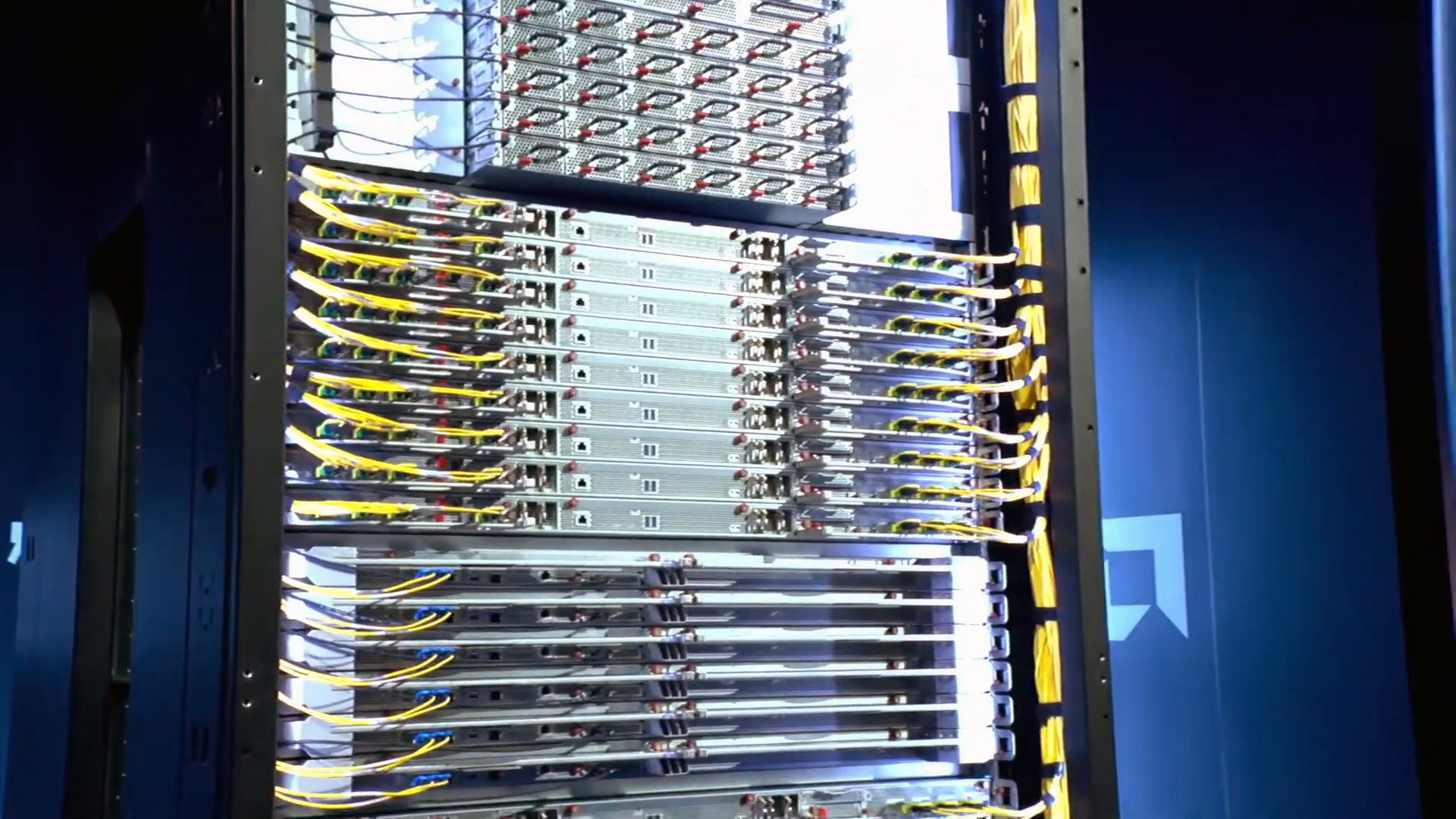
AMD’s Helios rack-scale AI system is shaping up to be one of the company’s most important moves in the high-performance artificial intelligence market. While AMD is already bringing together its own advanced GPUs, CPUs, networking hardware, and software stack, its partnership with Cerebras could give Helios a major advantage in one of the most critical areas of AI computing: fast, efficient inference.
Helios is AMD’s first full-stack rack-level platform designed specifically for demanding AI workloads. The system combines AMD Instinct MI455X GPUs, 6th Gen AMD EPYC processors, AMD Pensando AI network interface cards, AMD Pensando DPUs, AMD Infinity Fabric, and the ROCm software stack. Together, these technologies are meant to create a scalable AI infrastructure platform for training and inference at data center scale.
But AMD’s collaboration with Cerebras adds another layer of interest. Cerebras is known for its Wafer-Scale Engine, a massive chip architecture that places a huge amount of compute and memory on a single piece of silicon. Instead of spreading workloads across many separate chips and dealing with external communication bottlenecks, the Wafer-Scale Engine keeps compute cores and on-chip SRAM tightly connected. This can significantly improve data movement and reduce latency.
That design is especially important for AI inference, where speed and responsiveness matter. Inference is the process of running trained AI models to generate outputs, such as text, code, images, recommendations, or decisions. As AI applications become more widely used, inference performance is becoming just as important as model training, and in many cases, even more important for business profitability.
Cerebras’ architecture can store an entire medium-sized AI model, or large portions of a much bigger model, inside its unified on-chip memory. This allows data to move quickly without constantly relying on slower external memory or networking paths. The result is faster token generation, lower latency, and potentially better energy efficiency.
That advantage is now getting attention from inside the AI research world. OpenAI researcher Jeffrey Wang recently praised Cerebras chips, saying that some internal OpenAI models are running on Cerebras hardware and that the performance is “incredible” because of the chips’ extremely fast inference.
Wang explained that the speed difference has a direct impact on productivity. Tasks that previously took a couple of minutes can now finish so quickly that he does not even have time to switch his attention to something else. In other words, instead of waiting for AI workloads to complete and moving on to another task, the results are ready almost immediately.
This matters because even short delays can slow down researchers, developers, and AI systems that depend on rapid iteration. In advanced AI workflows, models may need to move between multiple tasks, tools, or specialized sub-models. Faster inference reduces idle time and makes the entire process feel more responsive.
For AMD, this kind of praise is especially meaningful. If Cerebras technology can deliver the kind of ultra-fast inference performance described by Wang, integrating it into Helios could make AMD’s rack-scale AI systems more attractive to companies building large AI data centers.
AMD’s broader plan appears to position Helios as a high-throughput AI engine, while Cerebras contributes ultra-low-latency decode and token generation. Together, the two technologies are expected to deliver up to five times higher tokens per second per watt. That metric is becoming increasingly important because AI companies are now focused not only on raw performance, but also on how much useful AI output they can generate per unit of power.
The timing is important. AI infrastructure is quickly shifting from a market focused mainly on training massive models to one increasingly driven by inference. As more users interact with AI assistants, enterprise tools, coding systems, and generative AI platforms, data centers must process enormous volumes of inference requests every day.
Inference costs are now a major factor in determining whether AI data centers can operate profitably. Some financial models suggest that data centers selling AI-generated tokens could achieve strong margins depending on hardware efficiency, utilization, and power costs. In that environment, any system that can improve token generation speed while reducing energy use becomes highly valuable.
This is where AMD Helios and Cerebras could become a compelling combination. AMD brings a complete rack-scale AI platform with GPUs, CPUs, networking, and software. Cerebras brings a unique chip design built to reduce bottlenecks and accelerate model execution. If the integration works as expected, the combined system could give cloud providers, AI labs, and enterprise customers a new option for high-speed AI inference.
The AI hardware race is becoming increasingly competitive, and performance alone is no longer enough. Customers want systems that are scalable, power-efficient, software-ready, and capable of handling real-world AI workloads at massive volume. AMD’s Helios strategy suggests the company is aiming directly at that opportunity.
Cerebras’ strong inference performance, now publicly praised by an OpenAI researcher, may strengthen confidence in AMD’s decision to work with the company. If Helios can deliver the promised gains in tokens per second per watt, it could become a serious contender in the next generation of AI data center infrastructure.
As demand for generative AI continues to grow, the winners in AI hardware may be the companies that can deliver faster responses, lower latency, and better economics at scale. With Helios and Cerebras’ Wafer-Scale Engine, AMD is positioning itself for exactly that future.