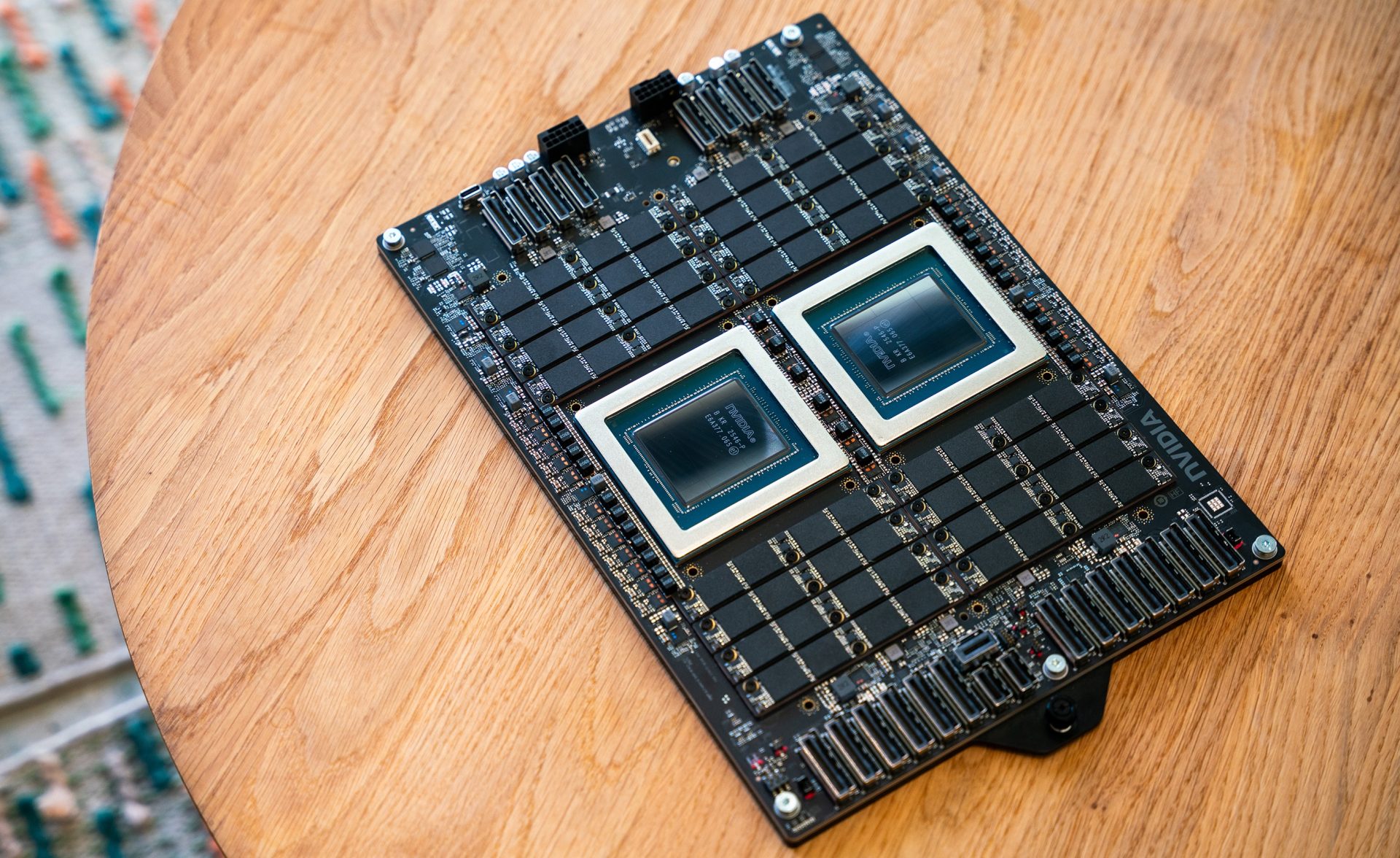
NVIDIA Begins Shipping Vera CPUs as Agentic AI Demand Accelerates
NVIDIA has officially started shipping its first Vera CPUs to leading AI companies, signaling a major step forward in the race to power large-scale agentic AI systems. The first units have now left NVIDIA’s labs and reached early customers, including OpenAI, SpaceX, Anthropic, and Oracle Cloud.
The Vera CPU is NVIDIA’s first custom-built CPU designed specifically for agentic AI workloads. Unlike traditional AI infrastructure that mainly focuses on training and inference, agentic AI requires systems that can plan, reason, call tools, manage long-context memory, run reinforcement learning tasks, and coordinate multiple AI agents at once. NVIDIA is positioning Vera as the processor built to handle exactly that.
Ian Buck, NVIDIA’s Vice President of Hyperscale and High-Performance Computing, personally delivered the first Vera CPU racks to several major AI organizations. The first delivery reportedly arrived at Anthropic’s offices in San Francisco, followed by OpenAI’s Mission Bay headquarters. Another Vera rack was delivered to SpaceXAI in Palo Alto, where Elon Musk received the hardware. A final early rack was delivered to Oracle’s AI Customer Excellence Center.
These initial shipments represent only the beginning of what is expected to become a much larger rollout. NVIDIA is preparing to ship far more Vera CPUs in the coming quarters as cloud providers, AI labs, and enterprise customers scale their agentic AI infrastructure.
Vera is designed to succeed NVIDIA’s Grace CPU and bring major improvements in performance, efficiency, and memory capacity. According to NVIDIA, the processor offers strong single-threaded performance, high data throughput, and excellent energy efficiency. The company also describes Vera as the first data center CPU to use LPDDR5-class memory in this way, giving it a major performance-per-watt advantage for AI data center workloads.
At the heart of Vera is NVIDIA’s next-generation custom Arm architecture, codenamed Olympus. The chip features 88 custom Olympus cores and 176 threads using NVIDIA Spatial Multi-Threading. It also includes a 1.8 TB/s NVLink-C2C coherent memory interconnect, up to 1.5 TB of system memory, and 1.2 TB/s of memory bandwidth using SOCAMM LPDDR5X.
Compared with Grace, Vera is expected to deliver up to twice the performance in areas such as data processing, compression, and CI/CD workloads. NVIDIA also claims Vera can provide around 50% faster per-core performance under full-load conditions, making it especially valuable for demanding AI orchestration tasks.
The CPU is built for workloads that are becoming increasingly important in modern AI systems. These include tool calling, agent sandboxing, data analytics, reinforcement learning, long-context state management, and the coordination of complex AI workflows. As agentic AI becomes more common, the need for CPUs that can efficiently manage these tasks is growing rapidly.
NVIDIA will not limit Vera to one platform. The processor will be used as part of the upcoming Vera Rubin platform, but it will also be sold as a standalone CPU. This gives NVIDIA another potential multi-billion-dollar opportunity in the data center market, especially as AI companies look for processors optimized beyond standard server CPU designs.
The Vera Rubin platform is expected to combine Vera CPUs with NVIDIA’s next-generation Rubin GPUs, creating a tightly integrated AI computing system for high-performance data centers. Vera will be used in standalone LPX servers as well as in Vera Rubin NVL72 racks, where it will act as the host processor for large-scale AI deployments.
The rise of Vera could also have a major impact on the memory supply chain. Because the platform supports up to 1.5 TB of LPDDR5X memory, demand for this type of DRAM may increase significantly as AI companies begin ordering systems at scale. If adoption grows as expected, memory suppliers could face added pressure to meet NVIDIA’s production needs.
Early interest in Vera appears strong. Several major cloud and AI infrastructure companies are expected to adopt the processor as part of their next-generation AI systems. With AI workloads becoming more complex and agentic AI moving from research into real-world deployment, NVIDIA is aiming to make Vera a central component of future AI data centers.
The launch of Vera also reflects a broader shift in AI hardware strategy. GPUs remain essential for training and inference, but CPUs are becoming more important as AI systems evolve into autonomous, multi-step agents. These systems need fast, efficient processors that can manage decision-making pipelines, memory movement, coordination, and communication across large clusters.
By building Vera around its own custom Arm architecture and pairing it with high-bandwidth LPDDR5X memory, NVIDIA is trying to remove bottlenecks that slow down advanced AI workloads. The result is a CPU that is not just a companion to GPUs, but a key part of the company’s broader AI computing roadmap.
With Vera now entering full production and the Rubin platform preparing for launch, NVIDIA is laying the groundwork for the next phase of AI infrastructure. As agentic AI continues to expand, Vera could become one of the most important processors in the data center market, powering the systems that help AI models act, plan, reason, and operate at scale.