Former Google CEO Eric Schmidt Booed by Graduates During AI-Focused Commencement Speech
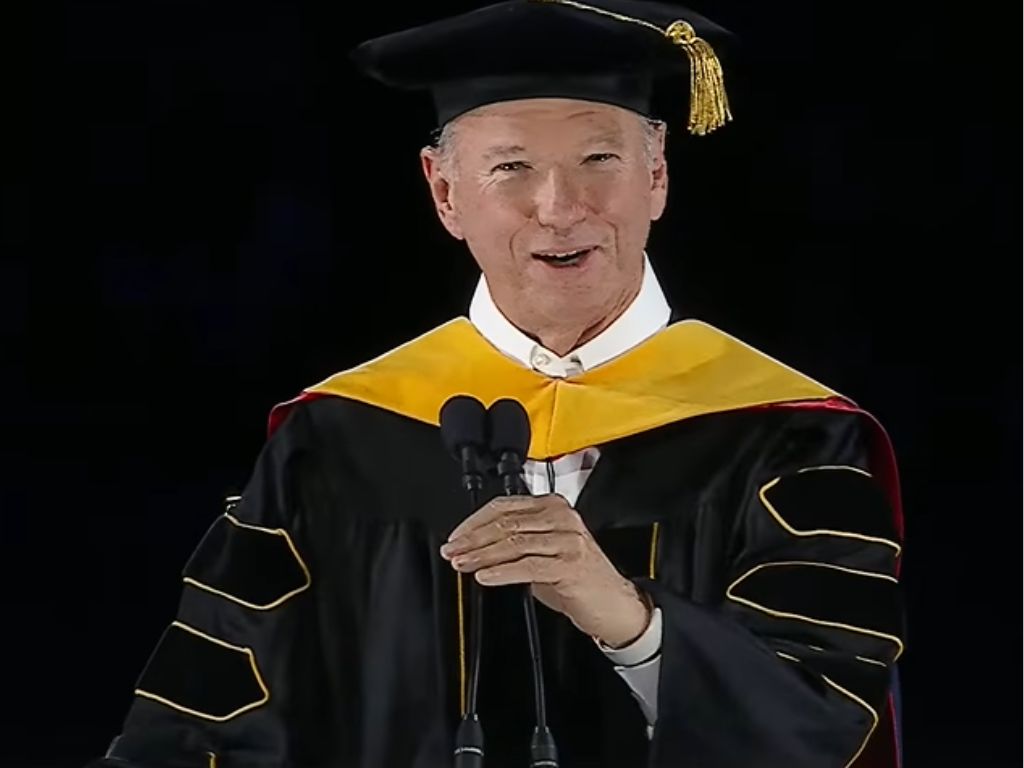
Former Google CEO Eric Schmidt faced a wave of boos during the University of Arizona’s 162nd commencement ceremony after speaking about artificial intelligence and its growing influence on the future of work.
Schmidt, who led Google from 2001 to 2011, addressed thousands of graduates at Casino Del Sol Stadium during the university’s 2026 commencement event. What began as a traditional graduation speech quickly became tense when he turned to the topic of AI. According to the reaction from the crowd, many students were not eager to hear optimistic predictions about a technology they fear could reshape careers before they even begin.
The booing reportedly started just before Schmidt moved into the main portion of his speech. Each time he mentioned “AI” or “artificial intelligence,” the noise from the audience grew louder. His attempt to frame technological progress as part of a larger “cathedral of knowledge” did little to calm the crowd once the focus shifted toward automation and machine intelligence.
Schmidt referenced Time magazine’s 2025 Person of the Year selection, saying the honor had gone to “the architects of artificial intelligence.” That remark drew a particularly strong response from graduates, many of whom are entering a job market already being transformed by AI tools, automation, and changing employer expectations.
As the boos intensified, Schmidt paused and directly acknowledged the frustration in the stadium.
“I know what many of you are feeling about that. I can hear you,” he said. “There is a fear in your generation that the future has already been written, that the machines are coming, that jobs are evaporating, that the climate is breaking, that politics is fractured, and that you are inheriting a mess that you did not create. And I understand that fear.”
His comments appeared to recognize the anxiety many young people feel about artificial intelligence, climate change, political instability, and economic uncertainty. Schmidt described those concerns as rational and suggested that social media algorithms have amplified fear and division.
Still, he urged graduates not to see AI as an unstoppable force controlled only by corporations, engineers, or governments. Instead, he encouraged them to take an active role in shaping how artificial intelligence is used.
“The question is not whether AI will shape the world. It will,” Schmidt said. “The question is whether you will help shape artificial intelligence.”
The message was meant to be empowering, but it did not fully win over the audience. For many graduates, AI is not just an abstract innovation. It is a real concern tied to job security, entry-level opportunities, creative work, and the future of entire industries.
Schmidt continued by telling students that artificial intelligence will affect far more than science and engineering. He argued that no matter what career path graduates choose, AI will become part of how work is done.
“If you don’t care about science, that’s okay… because AI is going to touch everything else as well,” he said. “Whatever path you choose, AI will become a part of how work is done.”
That statement drew some of the loudest boos of the ceremony. But Schmidt pressed on, ending with a message that the future remains open and that today’s graduates still have the power to influence what comes next.
“The future is not yet finished. It is now your turn to shape it,” he said.
The reaction at the University of Arizona highlights a growing divide in the public conversation around artificial intelligence. Tech leaders often describe AI as a revolutionary tool that can boost productivity, accelerate discovery, and transform industries. Many students and workers, however, see the same technology as a threat to stable employment, fair wages, and human creativity.
The incident also reflects a broader concern among younger generations entering the workforce. As companies adopt AI for writing, coding, customer service, design, research, and administrative tasks, graduates worry that traditional entry-level jobs may become harder to find. These early roles have long served as the first step toward building experience, skills, and long-term careers.
Schmidt’s commencement speech was intended to challenge students to participate in shaping the AI era rather than fear it from the sidelines. But the strong reaction from the crowd showed that enthusiasm for artificial intelligence is far from universal, especially among those who may feel its effects most directly.
For universities, employers, and technology leaders, the moment serves as a clear signal: conversations about AI can no longer focus only on innovation and efficiency. They must also address job displacement, ethical use, education, fairness, and the real concerns of the next generation of workers.