NVIDIA Vera CPU could make the company a CPU leader as AI demand explodes
NVIDIA is already the dominant force in the GPU market, but its next major growth engine may come from a different category: CPUs. With the Vera CPU platform now in full production, NVIDIA is positioning itself to become one of the most important CPU suppliers in the world, driven by surging demand for agentic AI, inference, cloud computing, and next-generation data center infrastructure.
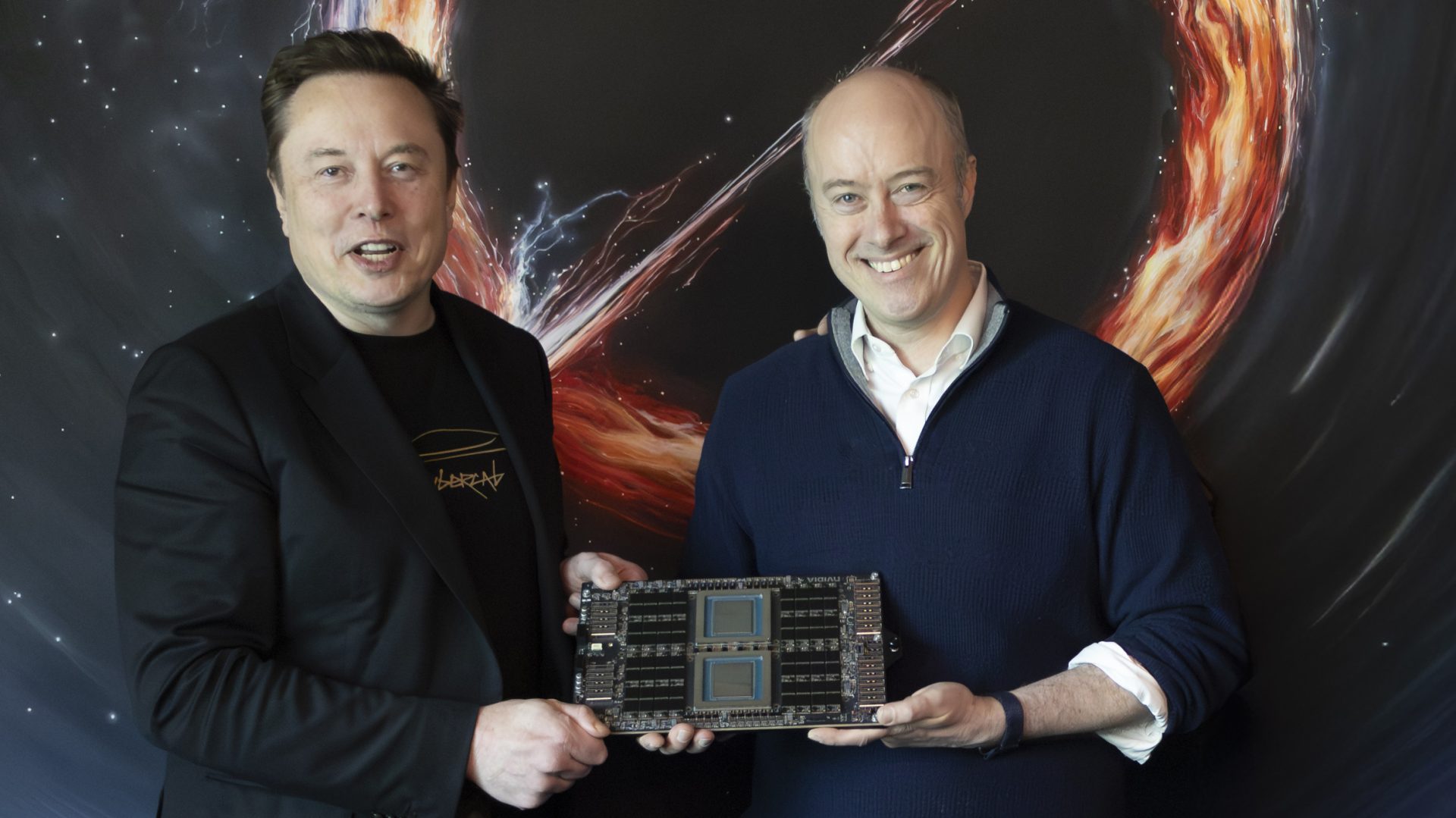
The company recently confirmed that Vera CPUs have entered full production, with early CPU racks already being delivered to major AI and cloud customers, including OpenAI, SpaceX, Anthropic, and Oracle. That move marks a major shift for NVIDIA. While the company has long built its empire around GPUs, Vera represents its first serious push into standalone custom CPUs at scale.
Vera is not a traditional server processor designed only to replace existing x86 chips. It is an ARM-based custom CPU created specifically for the AI era. NVIDIA designed it to support workloads where AI agents must plan, reason, call tools, manage long context windows, run reinforcement learning tasks, coordinate services, and process large amounts of data with high efficiency.
At the heart of Vera are 88 custom Olympus CPU cores. NVIDIA says the chip can deliver up to 50% better per-core performance under full load, twice the performance per watt, and four times the rack density compared with traditional x86-based alternatives. It also offers 1.2 TB/s of memory bandwidth, making it well suited for AI infrastructure where data movement, efficiency, and scaling are just as important as raw compute power.
This is why Vera is being described as an “agentic AI” CPU. Older CPU business models were often built around selling or renting cores. In contrast, AI agents are not simply looking for more cores; they need tasks completed quickly and efficiently. Agentic AI workloads require fast orchestration, tool-calling, sandboxing, analytics, state management, and inference support. Vera has been designed around that new reality.
NVIDIA sees a massive opportunity here. According to the company, Vera opens the door to a new total addressable market worth around $200 billion. Even more striking, NVIDIA expects nearly $20 billion in CPU revenue this year, with the standalone Vera CPU making up a major part of that figure.
That is a significant development because it suggests NVIDIA is no longer only expanding within the AI accelerator market. It is entering the broader server CPU market with enough customer demand to challenge established players such as Intel and AMD, whose Xeon and EPYC processors have long powered data centers around the world.
The demand is being fueled by the rapid rise of AI labs, hyperscale cloud providers, and enterprises building large-scale AI systems. These customers need hardware that can handle not only model training but also high-volume inference and agent-based workloads. As AI systems become more interactive and autonomous, the role of the CPU becomes more important. Vera is designed to work tightly with NVIDIA’s broader AI ecosystem, including Rubin GPUs, NVLink, networking, storage, and security software.
Vera will be used in several different ways. One major use case is inside Vera Rubin systems, where Vera acts as the host CPU for Rubin GPU-based AI platforms. These systems are expected to play a central role in NVIDIA’s next generation of AI racks. Rubin GPUs are already in production, with first shipments expected in 2026.
Another use case is Vera as a standalone CPU, which is the portion tied to NVIDIA’s projected $20 billion CPU revenue. This is particularly important because it shows that customers are not only interested in Vera as part of a full NVIDIA GPU system. They also want the CPU itself for broader data center deployment.
Vera can also be combined with NVIDIA’s networking and software stack for storage, security, compute isolation, and confidential computing. These applications are increasingly important as enterprises deploy AI workloads that need both high performance and strong data protection.
The scale of demand is so high that NVIDIA expects Vera to remain supply-constrained throughout the life of the Vera Rubin platform. That means the company may be able to sell as many units as it can manufacture, but production capacity and component supply will likely limit how quickly it can meet customer needs.
One key bottleneck is memory. Vera relies heavily on LPDDR5X, which is already in high demand due to the broader AI hardware boom. As more companies race to build AI servers and data centers, memory supply has become one of the most important constraints across the industry. NVIDIA is investing to ease these pressure points, but demand continues to grow rapidly.
The broader message is clear: NVIDIA wants to control more of the AI infrastructure stack. For years, the company’s GPUs were the centerpiece of modern AI training and inference. Now, with Vera, NVIDIA is moving deeper into CPUs, networking, storage, security, and full data center system design. Instead of selling only chips, NVIDIA is building complete AI platforms optimized from end to end.
This strategy could reshape the server market. Traditional x86 CPUs still dominate many enterprise and cloud workloads, but AI is changing what customers need from data center processors. Performance per watt, rack density, memory bandwidth, and integration with AI accelerators are becoming critical. Vera is aimed directly at those priorities.
NVIDIA also addressed specialized inference chips designed around SRAM and low-latency token generation. According to CEO Jensen Huang, these products can be useful for specific workloads that require very high token rates and low latency, but their usefulness is limited by lower throughput, smaller model capacity, and weaker long-context processing. In his view, such accelerators may remain niche products for some time, especially compared with more flexible AI platforms that can handle a wider range of workloads.
That distinction is important. AI infrastructure is not only about generating tokens quickly. Modern workloads often require large context windows, software coding assistance, agentic reasoning, tool usage, and complex multi-step execution. These tasks need systems that can absorb and process significant amounts of context, not just produce short bursts of output at high speed.
With Vera, NVIDIA is betting that the future of AI computing will require tightly integrated CPUs and GPUs built specifically for large-scale agentic AI. If the company’s revenue projections hold, Vera could become one of the most important CPU launches in the data center market.
NVIDIA’s rise from GPU leader to potential CPU leader reflects how quickly the AI hardware landscape is changing. The company is no longer simply powering AI models with GPUs; it is building the complete foundation for the next generation of AI data centers. Vera may be the CPU that helps NVIDIA extend its dominance into a market it has never fully addressed before.
If demand continues at the current pace, NVIDIA could soon be recognized not only as the world’s top GPU supplier but also as one of the most influential CPU providers in the AI infrastructure era.