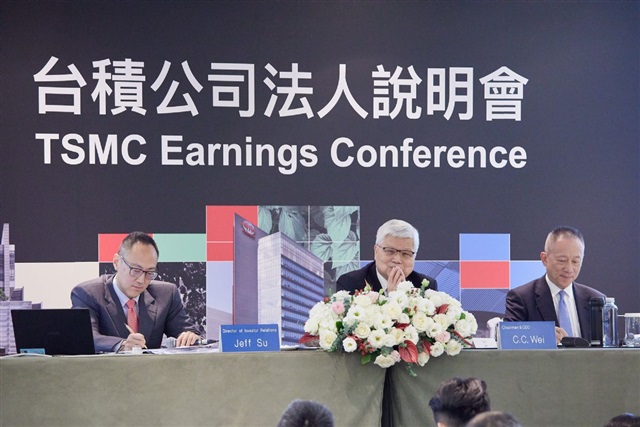
TSMC’s Cautious AI Chip Expansion May Be Preventing a Market Bubble
TSMC’s measured approach to expanding chip production could be one of the biggest reasons the artificial intelligence boom has not turned into a full-scale bubble, according to veteran semiconductor investor Gavin Baker, chief investment officer at Atreides Management.
Speaking at the 2026 Sohn Investment Conference, Baker argued that the world’s most important chip manufacturer is acting as a natural brake on overheated AI spending. His view comes at a time when major technology companies are racing to secure advanced semiconductors, while global chip supply remains extremely tight.
The AI boom has created enormous demand for high-performance processors, especially those used in data centers to train and run large AI models. Nvidia has been at the center of this surge, but behind many of those chips is TSMC, the Taiwanese foundry that manufactures the most advanced semiconductors for some of the world’s largest technology firms.
Baker said TSMC is not expanding production as aggressively as Nvidia CEO Jensen Huang would like. According to Baker, Huang regularly visits TSMC and wants the company to dramatically increase capacity. TSMC, however, appears to be taking a much more disciplined path, adding capacity gradually rather than doubling or tripling output in response to short-term demand.
That restraint matters. Baker suggested that if TSMC expanded as quickly as Nvidia wanted, Nvidia could potentially sell around US$1.5 trillion worth of chips in 2027. Such a rapid surge in supply and spending could intensify fears that the AI industry is repeating the mistakes of previous technology bubbles.
TSMC’s leadership has lived through multiple semiconductor cycles, including periods of rapid growth followed by painful downturns. Baker said the company’s senior executives understand the risks of overbuilding. Taiwan’s semiconductor industry was once seen as an underdog trying to catch up with Intel, and TSMC’s management knows how damaging a boom-and-bust cycle can be.
That experience appears to be shaping the company’s current strategy. Instead of chasing every dollar of AI demand, TSMC is maintaining tighter control over capacity expansion. This approach may limit short-term sales growth, but it could also protect the broader market from excessive supply and a future crash.
The scale of AI spending is already enormous. Microsoft, Meta, Alphabet, and Amazon are expected to invest hundreds of billions of dollars in capital expenditures in 2026, with a large share of that spending directed toward AI infrastructure and advanced chips. Much of this demand ultimately benefits TSMC, which produces leading-edge chips used in AI accelerators and data center hardware.
This has placed TSMC in an unusually powerful position. In advanced semiconductor manufacturing, the company has very few true rivals. Samsung’s foundry business continues to lag behind in the most advanced process technologies, while Intel and Japan’s Rapidus are still working to gain stronger traction. Other ambitious chip manufacturing projects remain far from large-scale production.
Because of this dominant position, TSMC has significant pricing power. When supply is tight and customers need cutting-edge chips, the foundry can command better margins and more favorable long-term agreements. Some customers are reportedly reserving production capacity years in advance and making large prepayments to secure access to future chip supply.
Nvidia’s purchase commitments have also risen sharply. For the fiscal quarter ending in January 2026, its commitments exceeded US$95 billion, a major increase from roughly US$16 billion just two years earlier. A substantial portion of that spending is expected to flow to TSMC, reflecting how central the foundry has become to the AI hardware supply chain.
Still, investors continue to ask whether the AI investment boom could become another dot-com-style bubble. Baker believes this cycle may be different, not because enthusiasm is lower, but because real-world limitations are stronger.
Historically, major technologies have often produced speculative bubbles. Railroads, canals, personal computers, the internet, and now artificial intelligence all attracted waves of investor excitement. In many cases, excessive capital flooded into the market, valuations soared, and eventually the bubble burst. However, that bubble-era spending often left behind valuable infrastructure that supported future growth.
AI could follow a similar path, but Baker argues that physical constraints may prevent the market from overheating too quickly. Power availability, semiconductor wafer supply, and advanced manufacturing capacity are all limiting factors. Among these, TSMC’s cautious approach to wafer and chip production may be the most important bottleneck.
In other words, TSMC is not just benefiting from the AI revolution. It may also be controlling its speed.
By refusing to expand too rapidly, TSMC is forcing the AI industry to grow within practical limits. That could reduce the risk of oversupply, protect profitability, and prevent companies from building far more AI infrastructure than the market can absorb.
Baker described TSMC’s leadership as disciplined and deeply experienced, suggesting that their reluctance to chase explosive expansion is helping the entire sector. While some customers may want faster growth, TSMC’s conservative capital spending strategy could be what keeps the AI chip market healthier for longer.
For now, the company remains one of the most important players in the global technology supply chain. As demand for artificial intelligence continues to rise, TSMC’s decisions on factory expansion, wafer allocation, and advanced chip production will likely shape the next phase of the AI economy.
If Baker is right, TSMC’s caution may not be a weakness. It may be the key reason the AI boom avoids becoming the next major tech bubble.