NVIDIA’s ARM Chip Roadmap Points to a Major Windows on ARM Push Through 2030
NVIDIA appears ready to make a much bigger move into the ARM-based PC market, with a new roadmap outlining a long-term strategy for laptops and desktops. The company’s first ARM-based SoC lineup begins with RTX Spark, and future releases are expected to arrive on a yearly cadence as NVIDIA targets a larger share of the Windows on ARM ecosystem.
The roadmap suggests that NVIDIA is not treating this as a one-time experiment. Instead, the company is preparing multiple generations of CPU and GPU architectures designed specifically for consumer PCs, including laptops and desktops. This could put NVIDIA in direct competition with Qualcomm in the Windows on ARM space while also positioning its chips as a potential alternative to Apple Silicon.
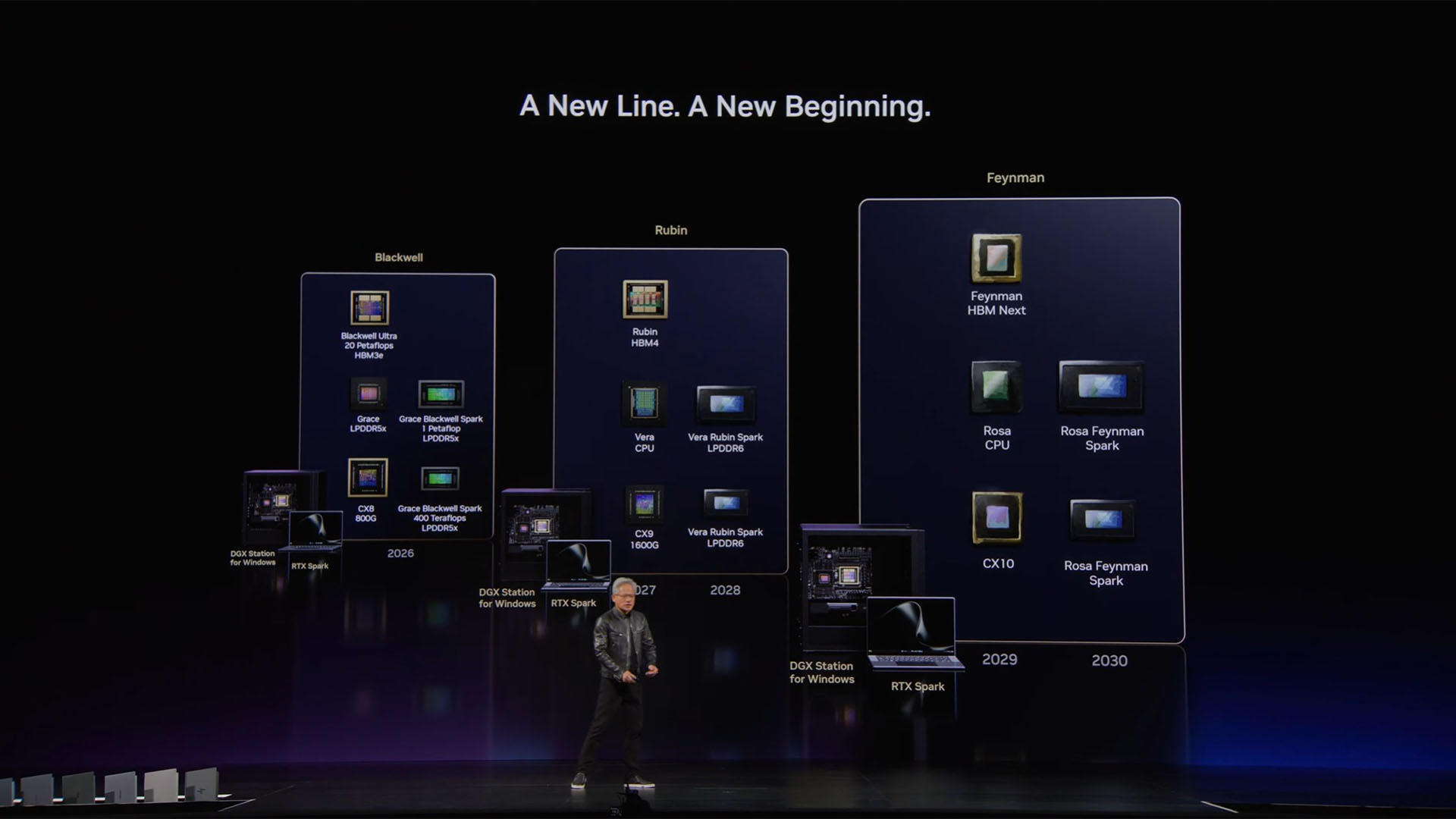
A key part of the plan appears to be the Vera CPU architecture, which is expected to arrive in 2027 as the successor to Grace. At this stage, it remains unclear whether NVIDIA will continue using ARM CPU designs developed with outside partners or move further toward custom in-house cores. However, a continued collaboration with MediaTek remains a possibility, especially as NVIDIA builds out its ARM-based PC platform.
Vera is expected to be paired with NVIDIA’s Blackwell graphics architecture for laptop-focused chips. This combination could deliver a major performance jump for Windows on ARM devices, particularly in gaming, AI workloads, and high-performance productivity tasks. By 2028, NVIDIA’s roadmap points to Rubin as the next major GPU architecture, replacing Blackwell in future platforms.
One of the most important upgrades expected with these upcoming chips is support for LPDDR6 memory. RTX Spark is already said to deliver up to 600GB/s of unified memory bandwidth, and Rubin-based platforms could push those speeds even higher. Faster unified memory would be especially valuable for integrated CPU-GPU designs, helping improve gaming performance, AI acceleration, and overall system responsiveness while maintaining better power efficiency.
Looking further ahead, NVIDIA plans to introduce the Rosa CPU architecture in 2029. Rosa is expected to succeed Vera and may later be paired with the Feynman GPU architecture in 2030. The roadmap does not currently point to a newer memory standard beyond LPDDR6, suggesting that NVIDIA may continue using the same memory technology across multiple generations while focusing on efficiency and performance improvements.
The gaming potential of RTX Spark is one of the most interesting parts of NVIDIA’s ARM PC strategy. The company has claimed that these chipsets are capable of running AAA games at 1440p resolution and 100 frames per second. NVIDIA CEO Jensen Huang also demonstrated laptop systems running titles such as 007 First Light and Forza Horizon 6 on battery power, signaling that the company wants its ARM-based chips to compete not only in efficiency but also in serious gaming performance.
That is a major statement for the Windows on ARM market. While Qualcomm has helped push ARM-based Windows laptops into the spotlight, gaming performance has remained one of the biggest challenges for the platform. If NVIDIA can deliver strong graphics performance, better game compatibility, and efficient battery-powered gameplay, it could significantly change expectations for ARM laptops.
The broader goal appears clear: NVIDIA wants to establish a strong foothold in the next generation of Windows PCs. Apple has already shown how powerful ARM-based computers can be when hardware and software are tightly optimized. Qualcomm is also pushing aggressively into the same market. NVIDIA, however, brings a major advantage in GPU technology, gaming support, AI acceleration, and developer mindshare.
The current Grace CPU is based on older ARM designs, but Vera could mark the beginning of a more competitive era for NVIDIA’s ARM processors. If the company introduces newer CPU cores, combines them with its leading GPU architectures, and supports high-bandwidth LPDDR6 memory, its future laptop and desktop chips could become serious contenders.
For now, RTX Spark will be the first major test of NVIDIA’s ARM-based PC ambitions. Real-world performance, battery life, software compatibility, and gaming results will determine how competitive the platform truly is. But with Vera, Rosa, Rubin, and Feynman already appearing on the roadmap, NVIDIA is clearly preparing for a long-term battle in the Windows on ARM market through 2030 and beyond.


