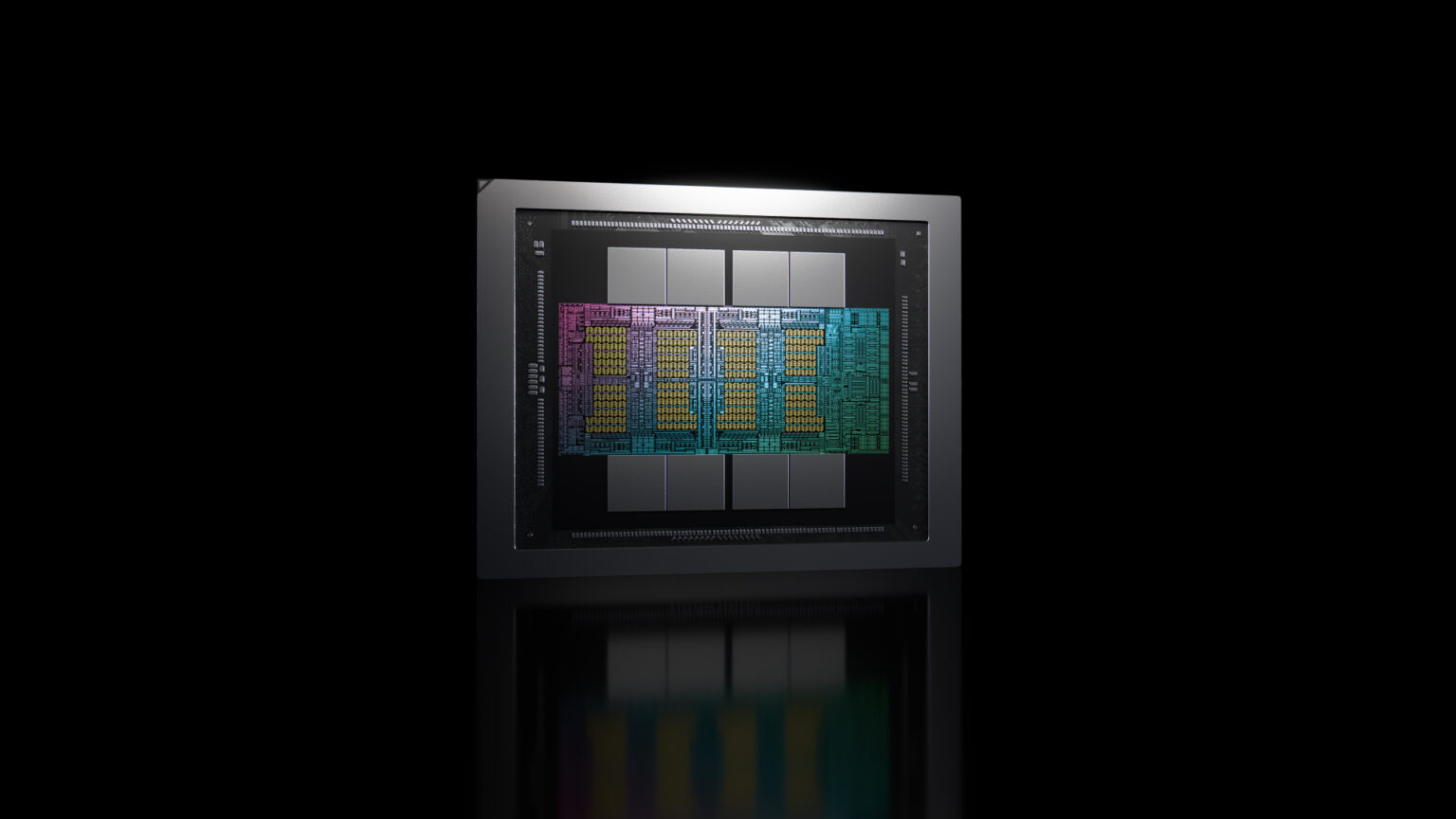
Nvidia Rubin HPC GPU targets scientific computing with 50,000+ CUDA cores
Nvidia has introduced Rubin HPC, a powerful new GPU built for high-performance computing, large-scale scientific simulations, engineering workloads, and advanced data analytics. Expected to arrive in 2028, the accelerator is part of Nvidia’s broader Vera Rubin platform, but it is being positioned differently from GPUs primarily focused on AI training and inference.
The standout detail is its scale: Rubin HPC will feature more than 50,000 CUDA cores on a single chip. That is nearly 2.5 times the CUDA core count of the GeForce RTX 5090, which includes 21,760 CUDA cores. While gaming GPUs are designed for graphics and consumer workloads, Rubin HPC is aimed at supercomputers and research systems handling some of the world’s most demanding computational tasks.
Nvidia revealed the GPU at the SC26 supercomputing conference, highlighting its role in accelerating general-purpose GPU computing. The company says Rubin HPC is designed to speed up key scientific operations such as sparse matrix calculations, stencil computations, sorting, and reductions. These types of workloads are essential in fields including climate research, genomics, molecular modeling, engineering simulation, industrial design, and financial risk analysis.
A major goal of Rubin HPC is to help researchers shorten the time between forming an idea, testing it through simulation, analyzing the results, and refining the next approach. In areas such as materials science or drug discovery, AI systems may generate thousands of possible molecules, materials, or product designs. Each one then needs to be tested, often through complex simulation. Faster GPUs can make that evaluation process significantly quicker, helping teams focus on the most promising candidates before moving to costly lab work or physical prototyping.
Ian Buck, Nvidia’s vice president of hyperscale and high-performance computing, said that faster simulation leads to faster discovery for AI agents working on science and engineering problems. Nvidia’s broader vision is that AI agents and accelerated computing will work together to explore more possibilities than traditional research workflows allow.
Rubin HPC is also designed to improve data movement, not just raw compute performance. In large simulations, GPUs can sometimes spend time waiting for data rather than actively processing it. Nvidia says the new GPU includes sparse data acceleration to help keep its CUDA cores fed with information, improving efficiency in workloads where data patterns are irregular or difficult to process.
The chip will also support Nvidia’s CUDA-X libraries, a collection of optimized software tools used for scientific computing, simulation, data analysis, and AI-assisted workflows. These libraries are important because hardware alone is not enough; researchers need efficient software frameworks that can translate complex algorithms into real-world performance gains.
Another key upgrade is seventh-generation Nvidia NVLink. This high-speed interconnect is designed to improve communication between GPUs inside large computing systems. For supercomputers and advanced research clusters, GPU-to-GPU bandwidth is critical because massive simulations often require many accelerators working together as one system. Faster interconnect technology can help reduce bottlenecks and improve scaling across large GPU deployments.
Nvidia has not yet shared the full specifications for Rubin HPC. Details such as memory capacity, memory bandwidth, power consumption, cooling requirements, pricing, and exact compute performance remain undisclosed. The company also has not announced which systems or supercomputing platforms will be the first to use the accelerator.
For context, the standard Rubin GPU is expected to include 288 GB of HBM4 memory, up to 22 TB/s of memory bandwidth, and sixth-generation NVLink with up to 3.6 TB/s of bidirectional bandwidth. However, Nvidia has not confirmed whether Rubin HPC will use the same configuration, and those specifications should not be assumed for the new high-performance computing model.
Rubin HPC is expected to become available in 2028, roughly two years after the standard Rubin generation begins rolling out. If Nvidia delivers on its performance ambitions, the GPU could become a major building block for next-generation supercomputers, AI-assisted research platforms, and simulation-heavy industries looking to accelerate discovery and design.


