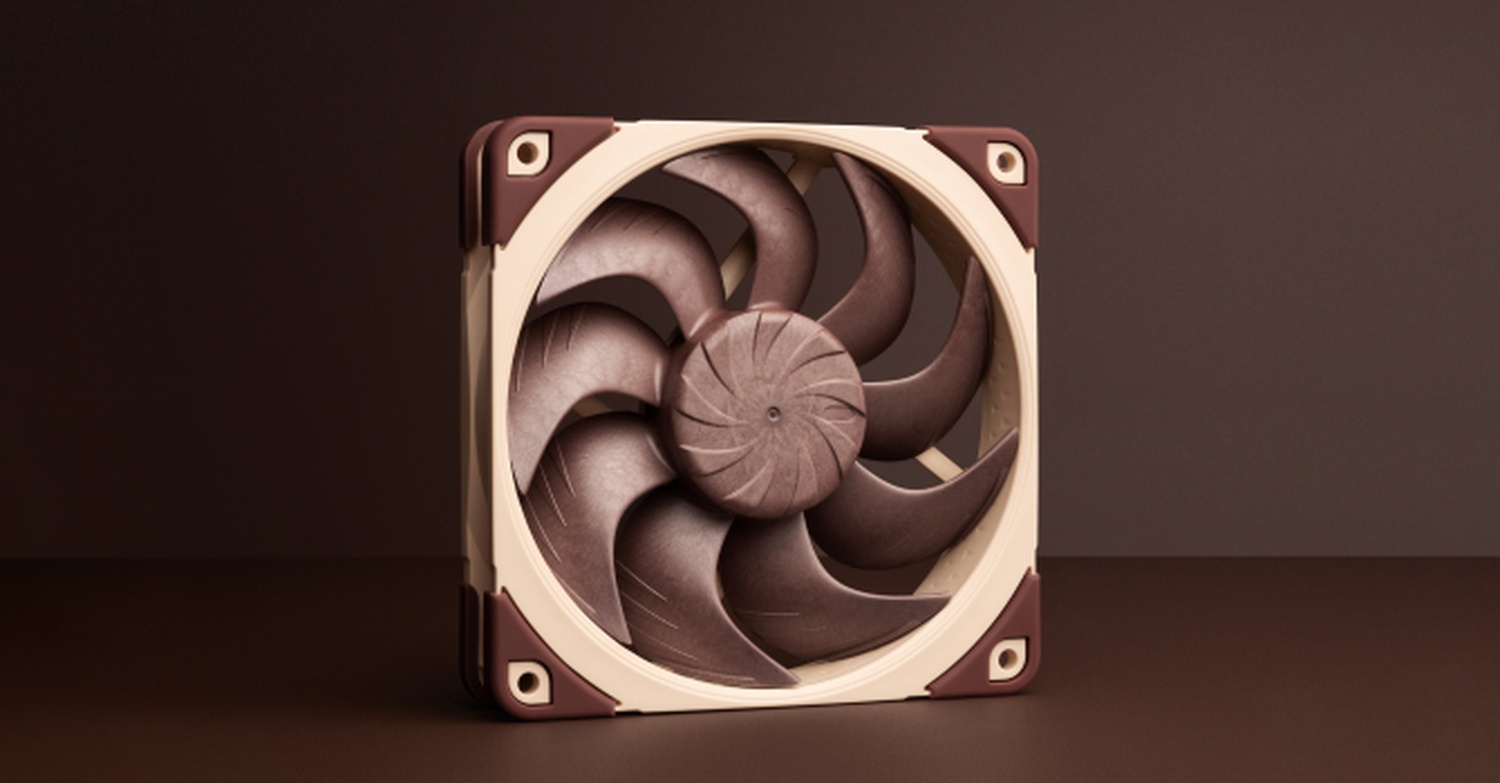
Noctua has opened up a valuable new resource for PC builders, engineers, and system designers: the company is now offering public 3D CAD models for its entire fan lineup. The idea is simple but powerful—anyone planning a custom build can download accurate fan models to make sure clearances, mounting points, and exterior dimensions line up correctly before committing to a design.
That said, Noctua is also making one point crystal clear: these CAD files are not meant to be used to 3D print a working replacement for a real Noctua fan.
While the newly released models accurately reflect the fans’ mounting dimensions and overall external size, Noctua explains that the internal airflow-related structures have been intentionally modified. Specifically, subtle changes were made to elements like the fan impeller and blade geometry. As a result, a 3D-printed fan based on these files won’t match the performance or design of an authentic Noctua unit—and it’s not intended to.
In other words, you can print the models if you want, but they’re designed for mechanical integration and visualization workflows, not functional reproduction. This approach helps people who design cases, brackets, ducts, shrouds, mounts, custom enclosures, or other hardware that needs to fit around a Noctua fan. Instead of manually measuring every detail, creators can drop the CAD model into their project and confidently build around known dimensions.
Noctua’s decision also addresses a common concern in the hardware world: reverse engineering. By keeping the external measurements accurate while adjusting the internal geometry, the company can provide genuinely useful design assets to the community without enabling easy cloning of its fan designs.
Even with that limitation, it’s still a noteworthy move. Publicly releasing CAD models across an entire fan portfolio isn’t something many cooling manufacturers do, and it makes planning custom PC builds, prototypes, and professional integration work significantly easier—especially for anyone trying to achieve clean fitment and precise component spacing in tight layouts.