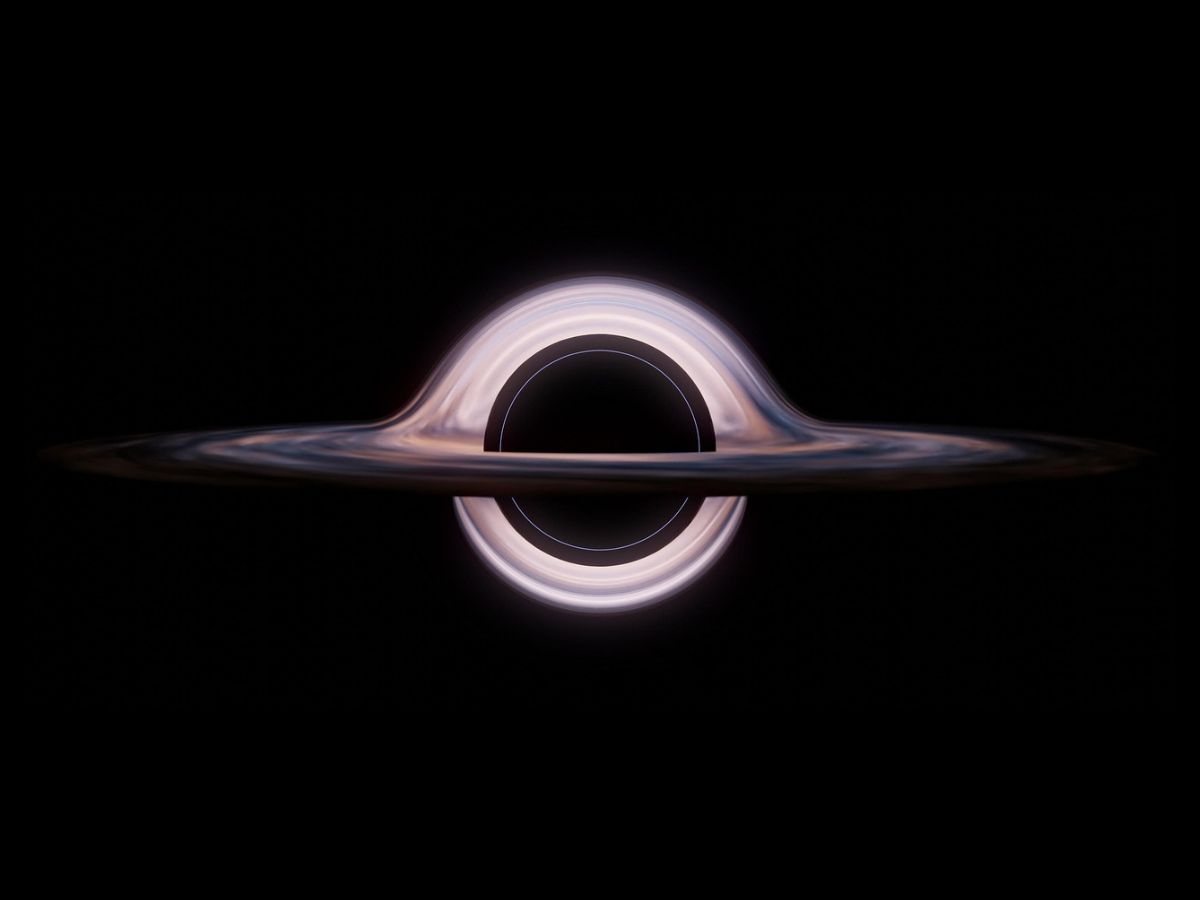
Astronomers are peeling back the layers of mystery surrounding Sagittarius A* (Sgr A*), the supermassive black hole that sits at the heart of the Milky Way. While Sgr A* is relatively quiet today, new observations suggest it hasn’t always been so calm. Using NASA-supported X-ray research tools, scientists have uncovered evidence pointing to a far more violent history—one marked by powerful outbursts over the last 1,000 years.
Black holes are famously difficult to study because their gravity is so extreme that not even light can escape once it crosses the boundary. But the region around a black hole can still tell a story. Gas and dust pulled in by gravity can heat up, collide, and flare, releasing energy that astronomers can detect—especially in X-rays. Even when an outburst happened long ago, traces of that event can linger in the surrounding environment like an echo.
To hunt for those echoes, researchers turned to XRISM, an advanced X-ray space telescope designed to analyze high-energy events in the universe with exceptional detail. Instead of trying to catch Sgr A* in the act today, the team focused on a nearby molecular cloud close to the galactic center. This cloud can act like a natural screen, reflecting past X-ray activity—essentially preserving a “mirror image” of energetic emissions that once blasted through the region.
By studying these reflected X-rays, scientists identified signs that Sgr A* produced strong eruptions at multiple points across roughly the past millennium. It’s a striking reminder that the Milky Way’s central black hole may cycle through phases of activity, even if modern instruments haven’t recorded a major flare directly from Sgr A* itself in the present day.
Stephen DiKerby, the research team leader from Michigan State University, emphasized just how surprising and promising this technique is, noting that it opens up a new way to investigate black hole history using X-ray reflections. In other words, astronomers now have an additional method to reconstruct what the black hole was doing long before humans ever pointed telescopes at the sky.
This discovery is significant, but it’s not the final word. Researchers expect follow-up observations in the coming months to search for more clues and refine the timeline of Sgr A*’s past eruptions. As this “X-ray echo” approach develops, it could help scientists better understand how supermassive black holes evolve, how they influence their host galaxies, and what the Milky Way may have experienced during earlier, more turbulent eras.
For anyone fascinated by black holes, galaxy evolution, or the hidden history of our cosmic neighborhood, this is a compelling step forward: the Milky Way’s core may look quiet now, but the echoes suggest it once had a much louder voice.


