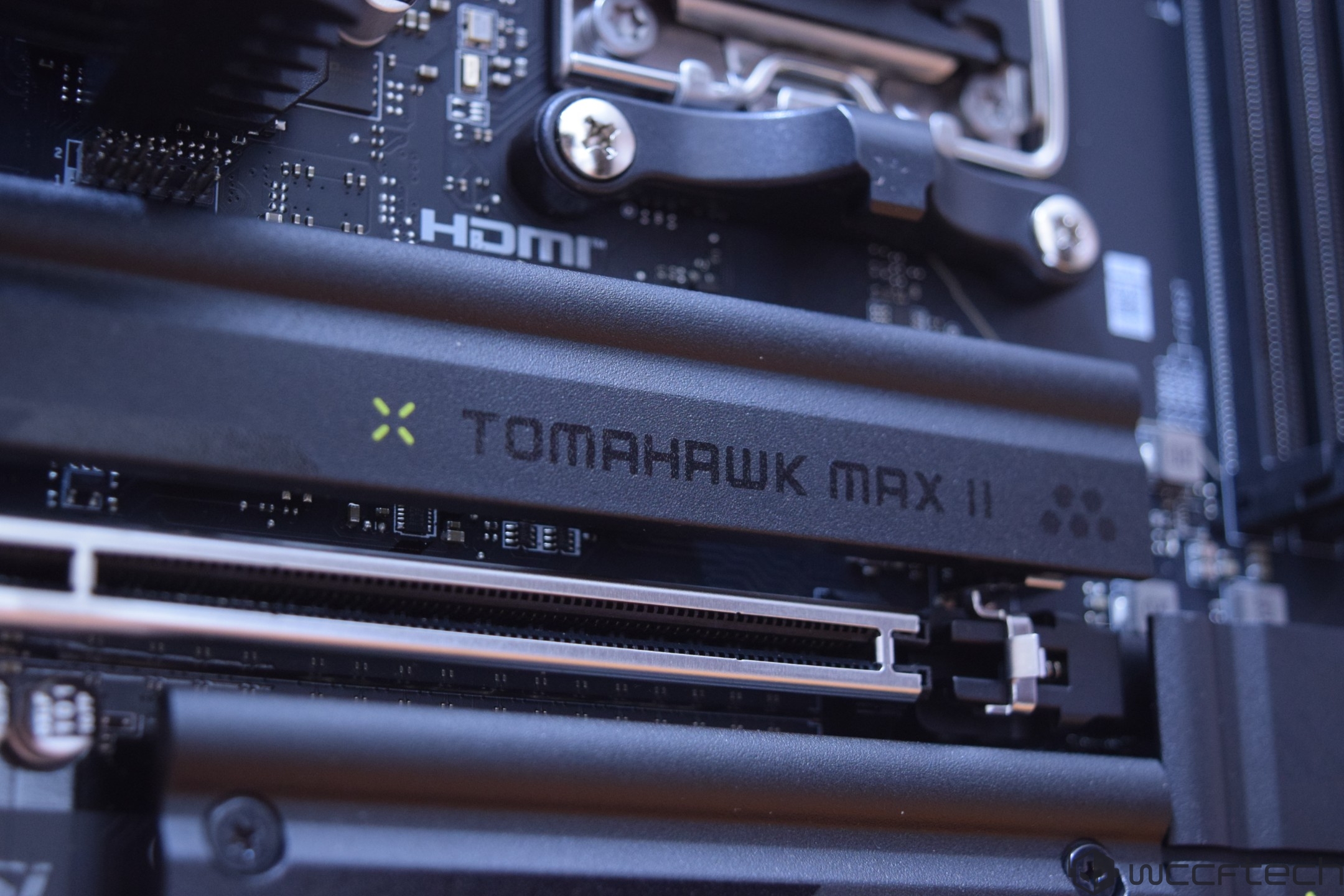
Product Info for MSI MAG B850 Tomahawk MAX WIFI II (February 2026) puts this board right in the sweet spot for builders who want an up-to-date AMD AM5 motherboard without jumping all the way to the premium X870 tier. Priced around $239 USD, it targets gamers and content creators who care about modern connectivity, strong upgrade paths, and overclocking support.
It’s been three years since AMD launched the AM5 platform alongside the first wave of 600-series motherboards, and the socket has already powered multiple CPU generations, including Ryzen 7000, Ryzen 8000, and Ryzen 9000. Even though many 600-series boards remain highly capable and compatible with newer Zen 5 processors, motherboard makers never stop iterating. New chipset families let them refine layouts, expand features, and modernize I/O in ways that keep the platform feeling fresh. That’s exactly where AMD’s new 800-series chipset lineup comes in.
AMD’s latest AM5 refresh includes two major chipset tracks: X870 for high-end builds and B850 for mainstream systems. The point is simple: offer updated motherboard designs and newer feature sets that make it easier for first-time AMD builders and long-time AM4 users to justify moving to AM5 for gaming, streaming, and productivity. For this round of testing, the focus is MSI’s refreshed “MAX” series entry, the MAG B850 Tomahawk MAX WIFI II.
The AMD AM5 platform itself represents a major generational shift. AM4 became the longest-running mainstream platform in modern PC history, debuting in 2017 and staying relevant for years thanks to wide CPU compatibility and a steady flow of motherboards at every price point. Now AM5 takes over, and the roadmap looks promising: AMD has committed to supporting the AM5 socket through 2027 and beyond. If AM4 taught the PC world anything, it’s that AMD tends to keep sockets alive long enough to make upgrades worthwhile—something many DIY builders prioritize when planning a system.
At the chipset level, B850 is designed to balance cost and capability. It brings a mix of PCIe Gen 5 and Gen 4 support, generally positioning Gen 5 for next-generation NVMe storage while Gen 4 is commonly used for graphics. Motherboard makers can choose how to allocate lanes, meaning some B850 boards may be configured to dedicate Gen 5 lanes to a discrete GPU if they want to push that angle. For everyday builders, the practical win is clear: you’re getting a modern AM5 platform with forward-looking storage potential and strong overall expansion options.
Connectivity is also a key part of the B850 identity. Expect USB 3.2 support at up to 20 Gbps, but not the native USB4 focus found on the more expensive high-end options. Graphics configurations on B850 boards typically fall into x16 Gen 4 or x8 setups that may run Gen 5 or Gen 4 depending on the implementation. The good news for enthusiasts is that B850 retains the features that matter most to tweakers: it supports both CPU overclocking and memory overclocking, making it far more flexible than entry-level alternatives.
Memory support continues the AM5-only DDR5 strategy. Native DDR5-5600 MT/s support is part of the baseline, and higher-end motherboards can push far beyond that, with some designs aiming for 8000+ MT/s transfer rates. That means builders who like tuning RAM for gaming performance or productivity workloads still have plenty of headroom—especially as DDR5 kits and BIOS maturity continue to improve over time.
Under the hood, B850 boards are based on the Promontory 21 silicon, but without native USB4 support. Gen 5 GPU capability is on the table, while Gen 5 M.2 support can vary by board, since it may be optional depending on the manufacturer’s lane layout and feature priorities.
Below B850, AMD’s 800-series also includes B840 as the more budget-oriented option. B840 uses an older Promontory 19 design and sticks to more basic functionality: Gen 4-class GPU/SSD support as a ceiling, no CPU overclocking, and memory overclocking only. The trade-off is price—B840 boards are expected to be far more affordable and are positioned to compete aggressively against value-focused alternatives. AMD also continues to keep the A620 family around for entry-level builds, with plans to adjust pricing further to support system integrators and value-centric configurations.
One of the biggest physical changes with AM5 is the socket itself. AMD has moved from the familiar PGA (pins on the CPU) approach to an LGA (pins in the socket) design. AM5’s LGA 1718 layout increases the number of contact points, enabling more communication channels between the CPU and motherboard and paving the way for the platform’s expanded capabilities.
Worried about cooling compatibility? AM5 keeps that simple. Ryzen 7000, 8000, and 9000 desktop CPUs maintain a 45x45mm square form factor and are built to remain compatible with existing cooler solutions. The integrated heat spreader design is also sealed in a way that helps prevent thermal paste from being pushed into unwanted areas, so cooler installation and thermal paste application should feel familiar for experienced builders.
Taken as a whole, the MSI MAG B850 Tomahawk MAX WIFI II lands at a practical intersection: it’s designed for buyers who want the AM5 upgrade path, DDR5 performance potential, and enthusiast-friendly overclocking—without paying top dollar for the highest-tier chipset. With AMD’s AM5 support expected to extend through 2027+, boards like this are positioned not just as a “right now” purchase, but as a foundation for multiple CPU upgrades over the coming years.


