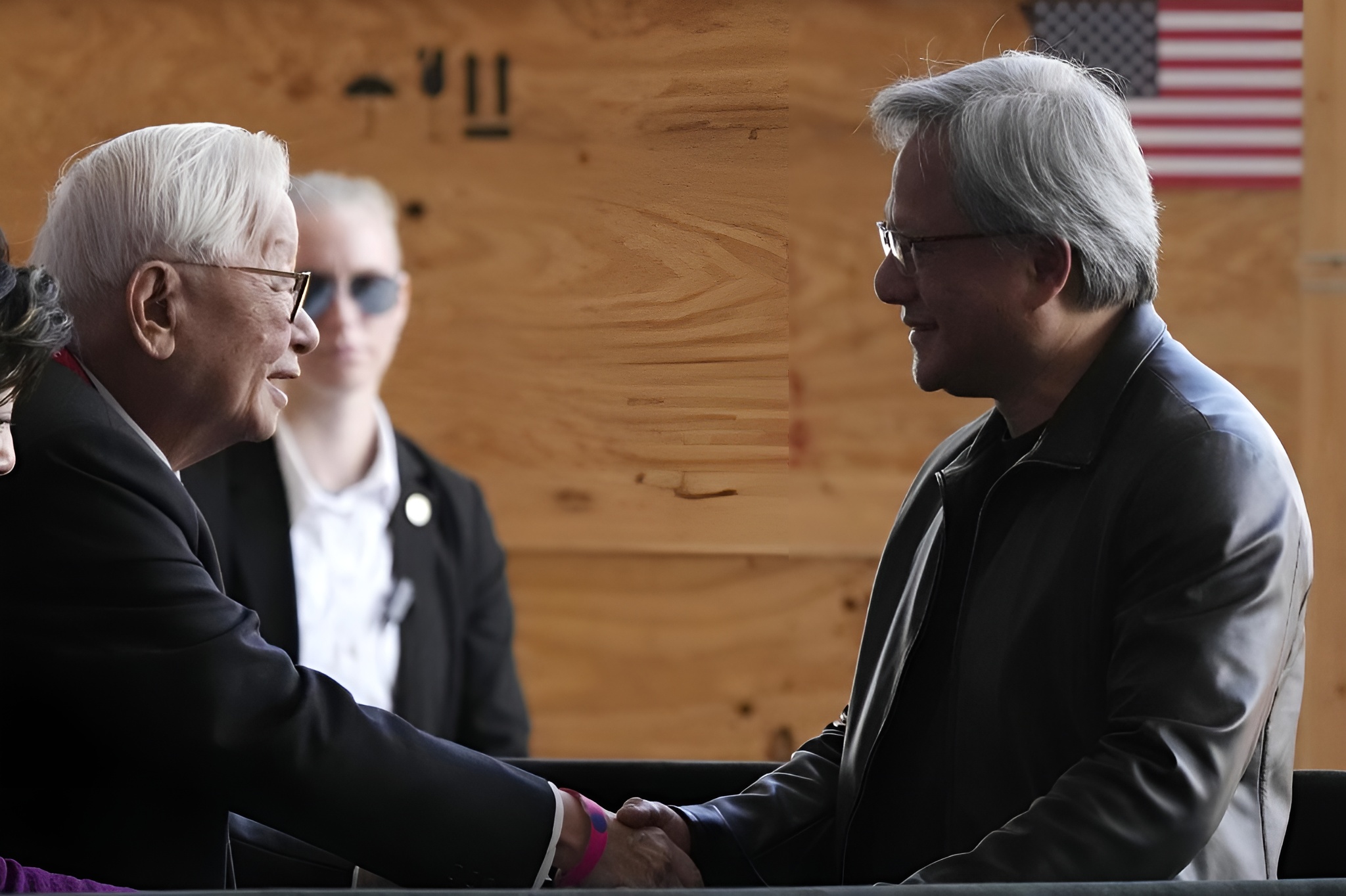
TSMC founder Morris Chang, now 94 and reportedly in frail health, has made a rare public appearance in Taiwan—meeting NVIDIA CEO Jensen Huang during Huang’s latest trip to the island. Local media captured photos of Chang arriving in a wheelchair at a Taipei restaurant, marking his first appearance in more than a year. Despite concerns about his condition, those present noted that spirits appeared high, underscoring Chang’s enduring presence in the semiconductor world he helped shape.
The meeting carries weight well beyond a simple courtesy visit. TSMC remains one of NVIDIA’s most critical manufacturing partners, and that importance has only intensified as demand for AI chips continues to surge. With NVIDIA’s growth tightly linked to cutting-edge chip production, Taiwan and its semiconductor ecosystem have become central to the company’s global strategy—making Huang’s trip especially significant.
While Jensen Huang did not publicly detail the purpose of meeting Chang, their relationship reportedly stretches back decades, dating to the period when NVIDIA selected TSMC as a primary foundry partner. Their connection has long been seen as one of the industry’s most consequential partnerships—uniting NVIDIA’s leadership in AI accelerators and advanced GPUs with TSMC’s world-leading manufacturing capabilities. Reports also highlight how early that bond formed, with Huang said to have expressed strong confidence in the partnership even when NVIDIA was far smaller than it is today.
Their professional history also includes an intriguing “what if” moment: Huang was once offered the CEO role at TSMC, a sign of the respect he commanded within the industry, though he ultimately declined. It’s a detail that adds extra context to why this meeting matters—it’s not only about two executives crossing paths, but about a long-running relationship between two of the most influential figures tied to modern chipmaking.
Huang’s visits to Taiwan are often closely watched because they tend to coincide with pivotal moments in the AI and semiconductor industries. This trip is no different. Industry attention is currently centered on NVIDIA’s next major platform transition, with the company and its manufacturing and supply-chain partners aligning on ramp plans, production readiness, and timelines. Huang is also expected to host a major gathering with Taiwanese partners, where leading manufacturers and assemblers typically обсуж discuss the current state of production, capacity planning, and what comes next for NVIDIA’s hardware roadmap.
NVIDIA’s ability to stay ahead in fast-moving product cycles is frequently attributed to how tightly it coordinates with its ecosystem—from foundry partners to key manufacturers. These relationships can influence everything from supply availability to launch timing, especially at a moment when AI hardware demand continues to pressure the entire supply chain.
For many observers, the most striking part of the story is Chang himself. Even at 94 and facing health challenges, he still made time to meet Huang, offering a reminder of the personal dedication behind the companies powering today’s AI boom. In a sector defined by relentless change, the image of the semiconductor pioneer showing up—wheelchair and all—feels like a powerful symbol: the passion that built the modern chip industry hasn’t faded.