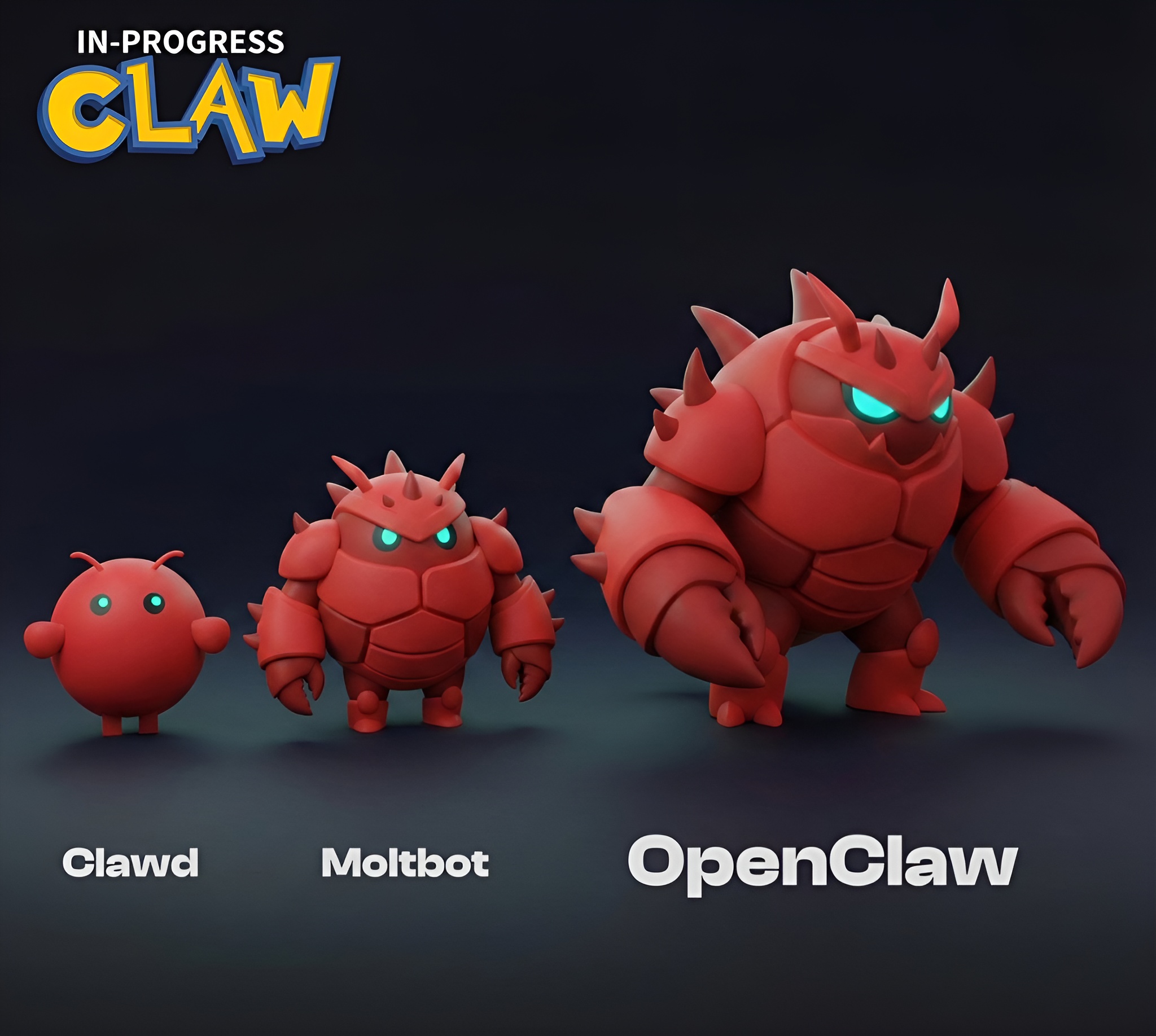
In what might be a blink-and-you’ll-miss-it branding saga, the viral AI personal assistant formerly known as Clawdbot has changed its name for the second time in just a few hours. After briefly becoming Moltbot, the open-source AI assistant has now reintroduced itself as OpenClaw—an update that many will find easier to remember and far less awkward to say out loud.
The rapid-fire renames reportedly started after Anthropic pushed for a change, citing the similarity between “Clawdbot” and its own Claude AI models. That led to the first rebrand to Moltbot. But almost immediately, the developer appeared to rethink the choice, quickly “molting” the project once again into OpenClaw.
Name drama aside, the reason OpenClaw has exploded across developer circles is simple: it’s positioned as more than a chatbot. It’s an AI agent designed to behave like a “digital employee,” with an emphasis on proactive automation rather than waiting for you to type commands. The assistant is built to handle everyday work tasks such as clearing and organizing your inbox, booking and managing reservations, keeping tabs on your calendar, and more—often without requiring you to prompt it first.
Another key feature driving interest is memory. OpenClaw is designed to keep a history of conversations and recall preferences you’ve mentioned before, helping it act more like a persistent assistant rather than a tool that resets every time you open a new chat.
Under the hood, OpenClaw functions primarily as an orchestration layer—a coordinator for AI agents. Users host a “control plane” on their own hardware, which acts as a model-agnostic governance layer that manages how the agents run. This control plane can be set up on a personal machine such as an Apple Mac mini or deployed on a VPS, and it can be connected to different AI models, including Anthropic’s Claude or OpenAI’s ChatGPT.
That local-first setup is a major reason the project has become a standout in the “personal AI assistant” and “personal OS” conversations. Since logs and files stay on your own hardware, it appeals to people who want stronger privacy and greater control over their data—especially compared to many cloud-first AI services.
The hype has also had an unexpected side effect: claims of people panic-buying Apple Mac mini units to host the assistant locally. Whether it’s a genuine hardware rush or internet exaggeration, the buzz underscores how quickly OpenClaw captured attention among developers, particularly those experimenting with “vibe coding” and agent-based automation workflows.
For now, OpenClaw appears to be the latest—and best-sounding—identity for the project. Still, given how fast this story has moved, it wouldn’t be surprising if the name isn’t the last thing to change.


