MIT’s concrete battery just got a 10x boost, bringing self-powered homes closer to reality
A research team has dramatically increased the energy capacity of its carbon-cement supercapacitor, known as ec3 (electron-conducting carbon concrete). The advance, detailed in the Proceedings of the National Academy of Sciences, delivers a tenfold jump in storage performance—enough to transform building foundations, walls, and even bridges into large-scale energy storage systems.
What does a 10x leap mean in practical terms? An average home that once needed a 45-cubic-meter block of ec3 to run for a day would now need only about 5 cubic meters, roughly the size of a typical basement wall. In other words, the structure that supports your house could also help power it.
The team reached this milestone by peering inside the material like never before. Using high-resolution 3D imaging to visualize the internal architecture of ec3, they uncovered how its microstructure and chemistry influence performance. Those insights led to three key upgrades:
– Better-performing organic electrolytes that significantly raise energy density
– A “cast-in electrolyte” manufacturing method that simplifies production and integration into concrete structures
– A multicell stacking design, demonstrated with a 12-volt prototype, that overcomes the low-voltage limitations of earlier versions
As co-author James Weaver put it, the work shows that a material as ancient as concrete can do something entirely new—opening the door to infrastructure that doesn’t just support our lives, it powers them.
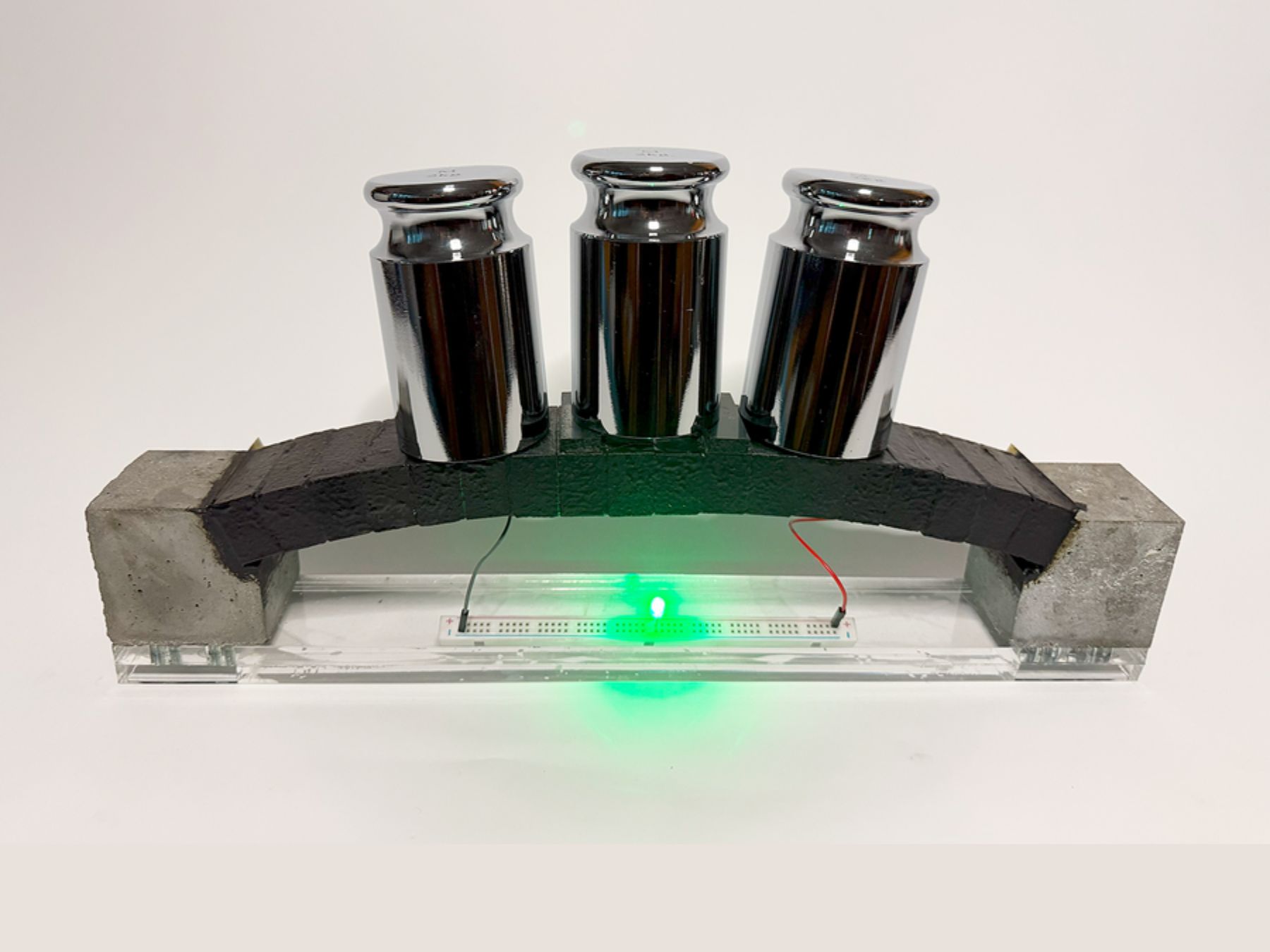
Beyond buildings, the research points to intriguing new applications. The team found seawater can serve as a viable electrolyte, hinting at energy-storing marine and offshore structures. They also showcased structural health monitoring by forming a 9-volt ec3 arch that powered an LED; the light flickered when the arch was stressed, signaling real-time strain.
Why it matters for clean energy and the grid:
– Energy storage embedded in foundations could help homeowners store daytime solar for nighttime use, cut peak demand, and improve resilience during outages.
– Infrastructure-as-storage could smooth the intermittency of renewables at neighborhood or city scale without dedicating extra footprint to batteries.
– Using concrete—a ubiquitous, formable material—could streamline installation and reduce balance-of-system costs compared to standalone storage units.
What’s next? Scaling up, validating long-term durability, ensuring safety, and integrating with building codes and electrical systems. But with a working 12-volt prototype, a simpler manufacturing pathway, and a massive jump in capacity, ec3 is moving from lab curiosity toward practical, built-world energy storage.