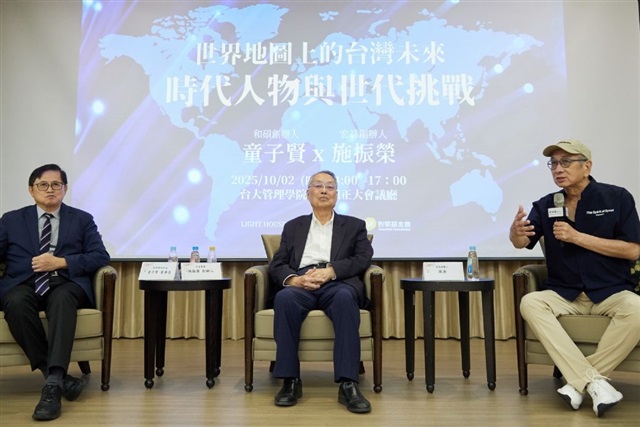
Taiwan’s next chapter: Acer’s Stan Shih and Pegatron’s TH Tung call for transformation to lead the global market
Two of Taiwan’s most influential tech leaders, Acer founder Stan Shih and Pegatron chairman TH Tung, shared a unified message at an October 2 forum hosted by the Yu Chi-Chung Cultural and Education Foundation: transformation is essential if Taiwan is to strengthen its position in the global market. Their discussion underscored the urgency of evolving beyond traditional strengths to capture new opportunities in a rapidly changing economy.
Taiwan has long been a cornerstone of the world’s technology supply chain, celebrated for manufacturing excellence, engineering talent, and speed to market. But the forces reshaping global industry—digitalization, AI-driven services, sustainability demands, and diversification of supply chains—require a broader playbook. The forum highlighted that the next phase will be defined by how effectively Taiwan pairs its world-class hardware capabilities with innovation in software, services, and design, while building brands and intellectual property that command premium value.
In practical terms, transformation means moving up the value chain. That includes embracing original design and solution-oriented business models, investing in R&D that creates differentiated products, and expanding into recurring revenue services that complement hardware. It also means developing cross-disciplinary talent—blending engineering with design, data analytics, cloud expertise, and global business acumen—to compete at the highest levels.
Collaboration emerged as another central theme. Taiwan’s ecosystem thrives when large manufacturers, component suppliers, startups, universities, and government work in sync. Accelerating digital transformation for small and medium-sized enterprises, fostering entrepreneurship, and nurturing deeper partnerships with international customers can help convert technical strength into market leadership.
Global uncertainty has also made resilience a strategic imperative. Diversifying markets, strengthening logistics and supply chain visibility, and co-creating solutions with global partners can help Taiwan remain indispensable even as production footprints evolve worldwide. At the same time, sustainability is rapidly becoming a competitive differentiator. Building greener supply chains, advancing energy efficiency, and designing for circularity will position Taiwanese companies as go-to partners for customers with net-zero goals.
Key priorities highlighted by the discussion include:
– Elevating from manufacturing excellence to innovation leadership through design, software, and services
– Investing in talent development and interdisciplinary skills to drive high-value growth
– Deepening collaboration across industry, academia, and government to accelerate commercialization
– Expanding global partnerships while improving supply chain resilience and market diversification
– Integrating sustainability into strategy to meet customer and regulatory expectations
For businesses, the takeaway is clear: now is the time to modernize product portfolios, strengthen IP, and align operating models with long-term, service-led growth. For policymakers and educators, it’s about enabling the talent pipeline, incentivizing R&D, supporting startups, and streamlining frameworks that help companies scale internationally.
Taiwan has repeatedly proven its ability to adapt and lead in technology. The message from the forum is a focused call to action: by embracing transformation—across innovation, talent, collaboration, resilience, and sustainability—Taiwan can shape not only its own future, but the future of the global tech industry.