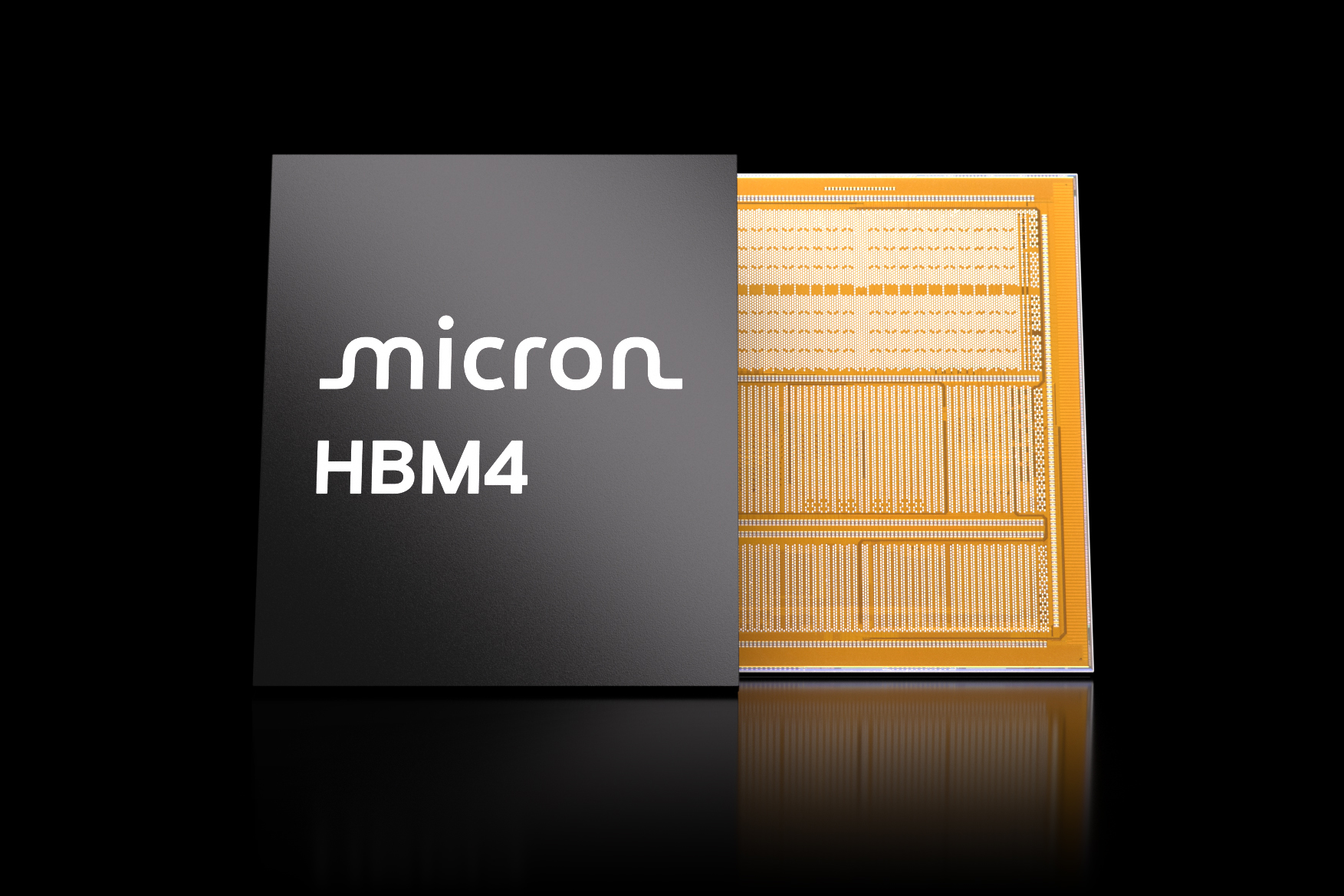
Micron sets a new bar for high-bandwidth memory, confirming it has shipped customer samples of its fastest HBM4 to date. The new 12‑high stack pushes pin speeds past 11 Gbps and delivers more than 2.8 TB/s of bandwidth, with the company asserting leadership in both performance and power efficiency. Backed by its 1‑gamma DRAM process, an in‑house advanced CMOS base die, and packaging breakthroughs, Micron says its HBM4 is designed to outperform rivals as next‑generation AI and HPC platforms ramp.
The company’s momentum is reflected in its latest results. Quarterly revenue climbed to $11.32 billion from $9.30 billion in the prior quarter, while full‑year revenue rose from $25.11 billion to $37.38 billion. Micron expects its share of the HBM market to align with its overall DRAM share as customer platforms migrate to higher bandwidth and faster pin speeds.
Looking beyond HBM4, Micron outlined its roadmap for HBM4E. For this generation, the base logic die will be manufactured through a partnership with TSMC, covering both standard products and custom variants. Micron says customized base logic dies should yield higher gross margins than standard HBM4E, and it is targeting 2027 for HBM4E availability. The company also noted it now serves six HBM customers, has pricing agreements with nearly all of them for the vast majority of its HBM3E supply in calendar 2026, and is in active discussions to finalize specifications and volumes for HBM4 to sell out its remaining 2026 supply.
Micron’s collaboration with NVIDIA continues to influence data center memory design. The company says it pioneered the adoption of LPDRAM for servers and remains the sole supplier of LPDRAM in the data center following NVIDIA’s launch of its GB product family. On the graphics side, Micron is advancing GDDR7 for AI and client systems, projecting pin speeds exceeding 40 Gbps in future iterations. That is a substantial jump over the initially announced 32 Gbps and is aimed at enabling higher throughput with best‑in‑class power efficiency.
On the manufacturing front, Micron reports record‑pace maturity for its 1γ DRAM node, achieving mature yields 50% faster than the previous generation. Its G9 NAND ramp is progressing for both TLC and QLC, and the company has already brought PCIe Gen6 SSDs for data centers to market. Expect continued expansion of solutions built around 16 Gb 1γ DRAM as Micron scales production.
What it all means: AI training and inference, cloud computing, and high‑performance workloads are hungry for bandwidth, efficiency, and capacity. With 11+ Gbps HBM4 already in customers’ hands, a 2027 target for customizable HBM4E, leadership in LPDRAM for servers, and faster GDDR7 on the way, Micron is positioning itself at the center of next‑gen memory for data centers and advanced computing platforms.