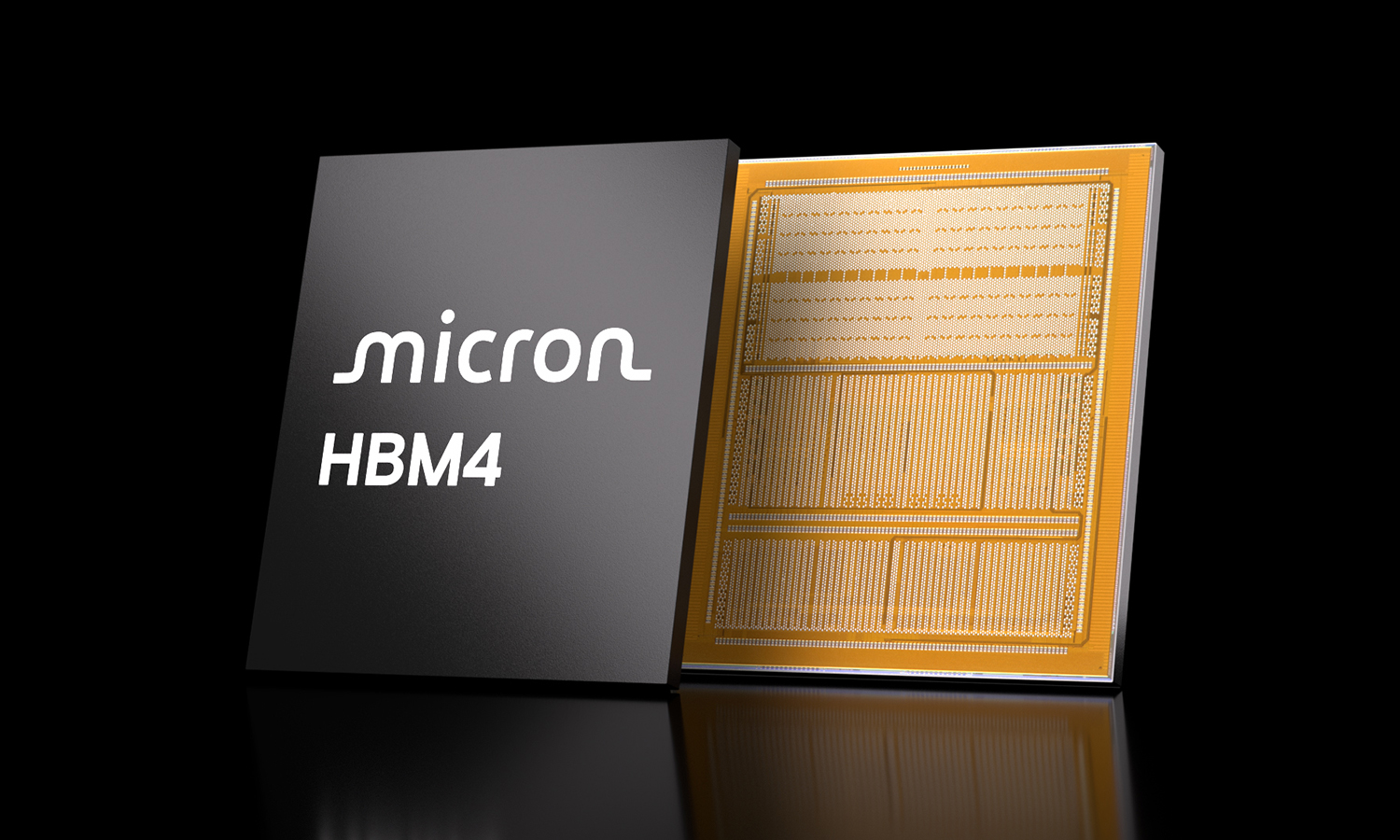
Micron is ramping up its next-generation AI memory and storage lineup, announcing that it has started high-volume production and shipment of key technologies built to support NVIDIA’s upcoming Vera Rubin platform. The move signals that the industry is already preparing the full “data pipeline” needed for future AI training and inference, from ultra-fast HBM memory to next-gen SSD storage and new modular memory formats for scalable systems.
At the center of Micron’s announcement is HBM4, the high-bandwidth memory expected to power the next wave of AI accelerators. Micron says it began volume shipments of its HBM4 36GB 12-high stack in the first quarter of calendar year 2026, and that this specific HBM4 is designed for NVIDIA Vera Rubin. Performance numbers are aimed squarely at the bandwidth-hungry demands of massive AI models: Micron reports pin speeds above 11 Gb/s, enabling more than 2.8 TB/s of bandwidth. Compared to HBM3E, Micron is claiming a 2.3x increase in bandwidth along with more than a 20% improvement in power efficiency.
Micron is also looking beyond the first high-volume HBM4 product. The company says it has demonstrated a higher-capacity HBM4 configuration by sampling HBM4 48GB 16-high stacks to customers. That jump to a 16-die stack represents a 33% increase in capacity per HBM placement versus the 36GB 12-high version, which can be a meaningful advantage for AI hardware where memory capacity and bandwidth directly affect model size, batch sizes, and throughput.
Memory isn’t the only bottleneck in AI systems, though, and Micron is pairing its HBM4 push with two additional technologies aimed at the broader platform. One is SOCAMM2, a low-power, high-capacity memory option designed for high-performance computing and AI. Micron says its 192GB SOCAMM2 is now in high-volume production, with a broader SOCAMM2 portfolio spanning 48GB up to 256GB. For the Vera Rubin ecosystem specifically, Micron positions SOCAMM2 as a fit for NVIDIA Vera Rubin NVL72 systems and standalone Vera CPU platforms, enabling up to 2TB of memory and 1.2 TB/s of bandwidth per CPU.
On the storage side, Micron is making a major generational leap by claiming the industry’s first mass-produced PCIe Gen6 data center SSD. The drive is the Micron 9650, and it’s tuned for heavy AI workloads, including agentic AI, while also focusing on efficiency in modern data center environments like liquid-cooled deployments. Micron says the 9650 can deliver up to twice the read performance of PCIe Gen5 SSDs and up to 100% higher performance per watt, with optimization for workloads built around the NVIDIA BlueField-4 STX reference architecture. Performance figures shared include up to 28 GB/s sequential read throughput and up to 5.5 million random read IOPS, targeting fast, low-latency access for both AI training and inference pipelines.
For organizations that aren’t ready to jump straight to Gen6, Micron also points to its existing PCIe Gen5 options, including the Micron 7600 and 9550 SSDs, giving system designers flexibility depending on platform readiness, thermals, and cost targets.
Micron’s overall message is clear: next-generation AI won’t be defined by compute alone, but by tightly integrated platforms where GPUs/accelerators, CPUs, memory, networking, and storage scale together from day one. By moving HBM4, PCIe Gen6 SSDs, and SOCAMM2 into volume production for the Vera Rubin era, Micron is positioning itself as a foundational supplier for the bandwidth, capacity, and efficiency demands that next-gen AI infrastructure will require.