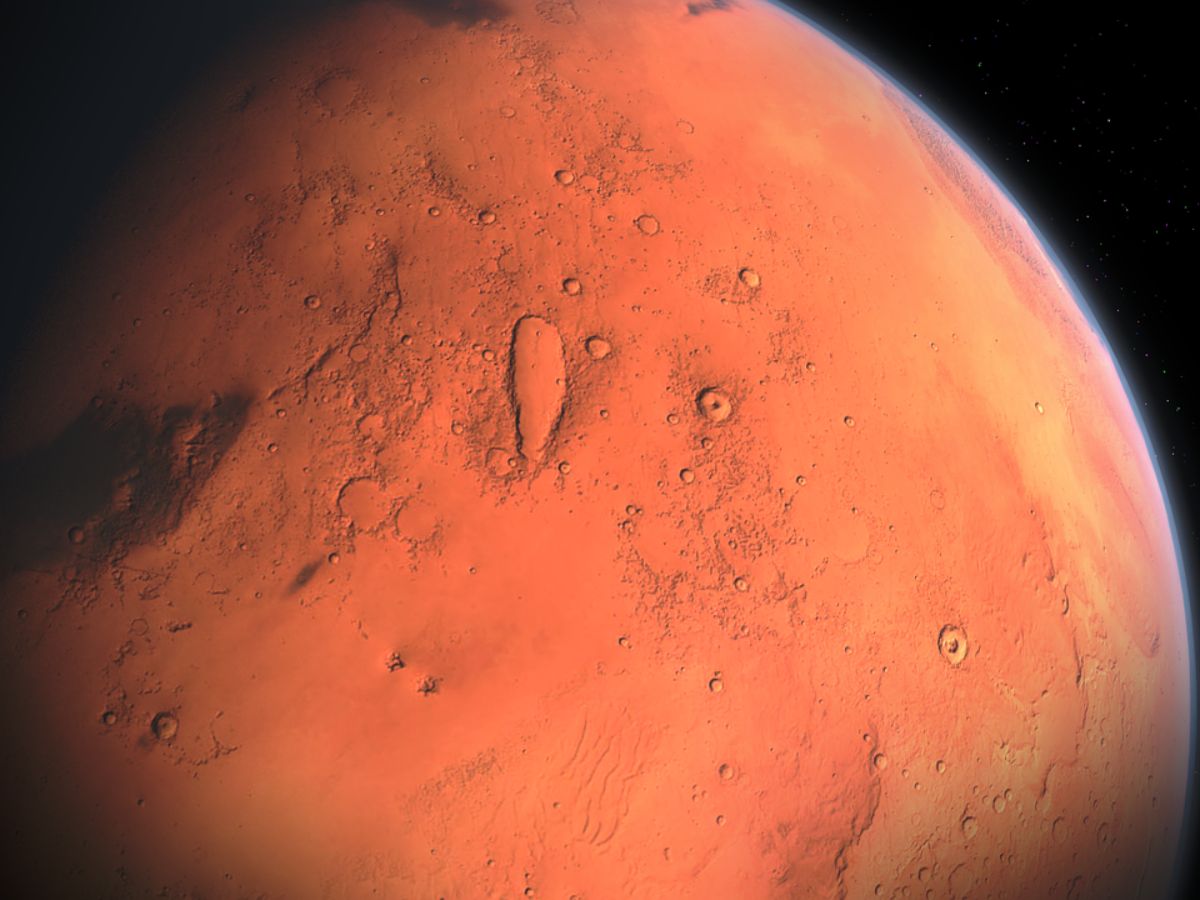
NASA’s Mars Reconnaissance Orbiter (MRO) has just reached a major milestone: it captured its 100,000th image of Mars. It’s a striking reminder of how much we’ve learned about the Red Planet over the last two decades—and how much these discoveries still matter as space agencies and scientists plan the next era of Mars exploration.
Mars has fascinated people for generations, and that curiosity has turned into a steady stream of missions. Today, orbiters circle the planet and rovers continue exploring on the surface. Among all of these spacecraft, MRO has become one of the most valuable long-term observers, quietly building an enormous archive that helps scientists understand what Mars looks like up close and how it behaves over time.
A big reason MRO’s work stands out is its powerful HiRISE camera. HiRISE has been central to the orbiter’s mission to map the Martian surface in extraordinary detail. These aren’t just “pretty pictures,” either. The images help researchers identify different types of terrain and evaluate potential landing sites—critical information for future robotic missions and long-term plans that could eventually include human exploration.
The newly celebrated 100,000th image is especially memorable. Captured on October 7, it highlights the Syrtis Major region, located roughly 80 kilometers from the Jezero crater. The scene features sweeping dunes with noticeable color variations, creating a landscape that looks alien compared to anything on Earth. It also hints at a planet that isn’t frozen in time—one where wind and gravity continue reshaping the surface.
Scientists emphasize that HiRISE has revealed two key truths about Mars: the surface is fundamentally different from Earth’s, and it changes more than many people might expect. Researchers have observed dune fields slowly shifting with the wind and avalanches tumbling down steep slopes. That’s why each new image is examined carefully—because understanding how Martian terrain moves and evolves can directly influence how future missions are designed, where spacecraft can land safely, and what hazards explorers might face.
After more than 20 years in orbit, MRO’s 100,000th image isn’t just a milestone number. It’s a snapshot of ongoing discovery, a detailed look at a dynamic world, and another step toward answering one of humanity’s biggest questions: what will it take to explore Mars even further—safely, successfully, and with purpose.