Marathon makes a smart early case for itself by giving each run a clear reason to matter. While many extraction shooters lean almost entirely on the anxiety of losing your loot, Marathon builds in structure that helps the tension feel purposeful instead of exhausting. Before launch, Bungie outlined a wider framework for the full release, including six factions, six Runner shells, three zones, and 28 weapons, alongside a seasonal approach designed around regular content drops that add new gear, Runner shells, zones, and events over time. That long-term plan matters, because it suggests Marathon isn’t just about repeating the same risk loop forever—it’s about steadily expanding what you can chase and how you chase it.
The most compelling part of that structure is how contracts and progression push each match beyond simple scavenging. The faction-contract setup ties your runs to Priority and Standard contracts, faction reputation, unlocks, and a broader progression loop. Even when a run goes badly, it doesn’t have to feel like a total waste. Losses land differently when they’re part of a bigger plan, because you’re still learning routes, completing objectives, and moving within a system that recognizes effort over time. That added meaning is one of Marathon’s strongest ideas so far, and it helps the game stand out in a genre where “extract or lose everything” can start to feel repetitive.
Tau Ceti IV also does a lot of heavy lifting. Marathon’s setting doesn’t read like a copy-paste sci-fi battlefield. It feels cold, wet, and alien, with an edge of hostility that comes through in the industrial structures, rocky terrain, washed-out skies, strange plant life, and weather conditions that make the world feel exposed rather than heroic. The environment design blends industrial relay-like spaces with open ground, fog-thick sightlines, and surreal transitions that give the planet a stronger identity than many genre competitors manage early on. It’s the kind of atmosphere that quietly changes how you play, because the world itself communicates danger even before another player shows up.
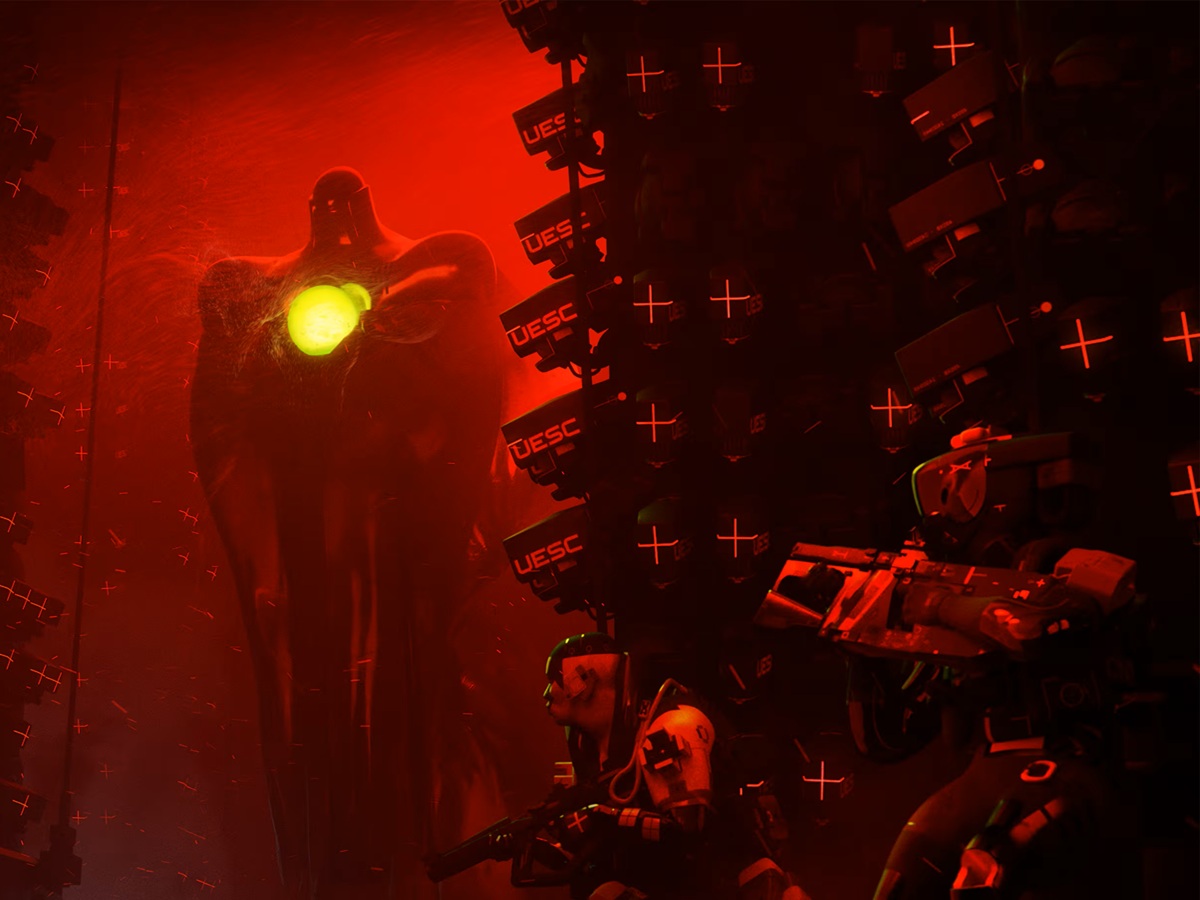
Even the loading screens contribute to that tone in a way that’s surprisingly effective. Instead of feeling like a functional pause between menus and combat, the presentation leans into the strange and unsettling: a giant moth-like figure paired with system-style phrases such as “Searching…,” “Molecular disassembly complete,” and “Transfer to destination in progress…” turns matchmaking into part of the fiction. It makes the process feel like you’re being processed by a hostile machine and dropped into something you’re not meant to survive comfortably. That kind of stylistic commitment makes Marathon feel less like a standard multiplayer queue and more like an intentionally unsettling journey into a dangerous place.
Another pleasant surprise is that getting into matches is generally smooth. Across roughly 20 hours, only one session reportedly failed to matchmake. For an online shooter launching into the chaos of early demand—especially one built around frequent runs and quick re-entry—that reliability is a meaningful win. It means most of the friction comes from Marathon’s design choices rather than technical barriers, and that’s an important distinction for any new extraction shooter trying to build momentum.
Where Marathon stumbles hardest is onboarding, and it’s not because the game lacks quality or because it’s “too hard” in a cheap way. The problem is that it asks too much of players too early, before they have the context to understand what matters and what can wait. Contracts, shells, abilities, faction ranks, sponsor kits, season levels, multiple queues, Codex entries, timed objectives, and layered progression systems can arrive fast, creating depth but also immediate overload. The interface reinforces that feeling: it’s stylish and dense, and it fits the game’s identity, but it can take real time to parse across contract pages, faction screens, onboarding notes, and in-match objectives.
That gap—between how ambitious the systems are and how readable they feel at the start—is where a lot of frustration comes from. You can spot the craft and the potential early, but you may not feel comfortable with the flow until later than you’d like. Marathon often makes players push through irritation before the best parts fully click. The result is a game that can feel frustrating for the right reasons: not because it’s bad, and not because it’s unfair, but because its strongest ideas are sometimes buried under an introduction that doesn’t ease players in. If Bungie can smooth that first stretch without flattening the depth, Marathon could land as an extraction shooter with more purpose, more atmosphere, and more long-term pull than most.