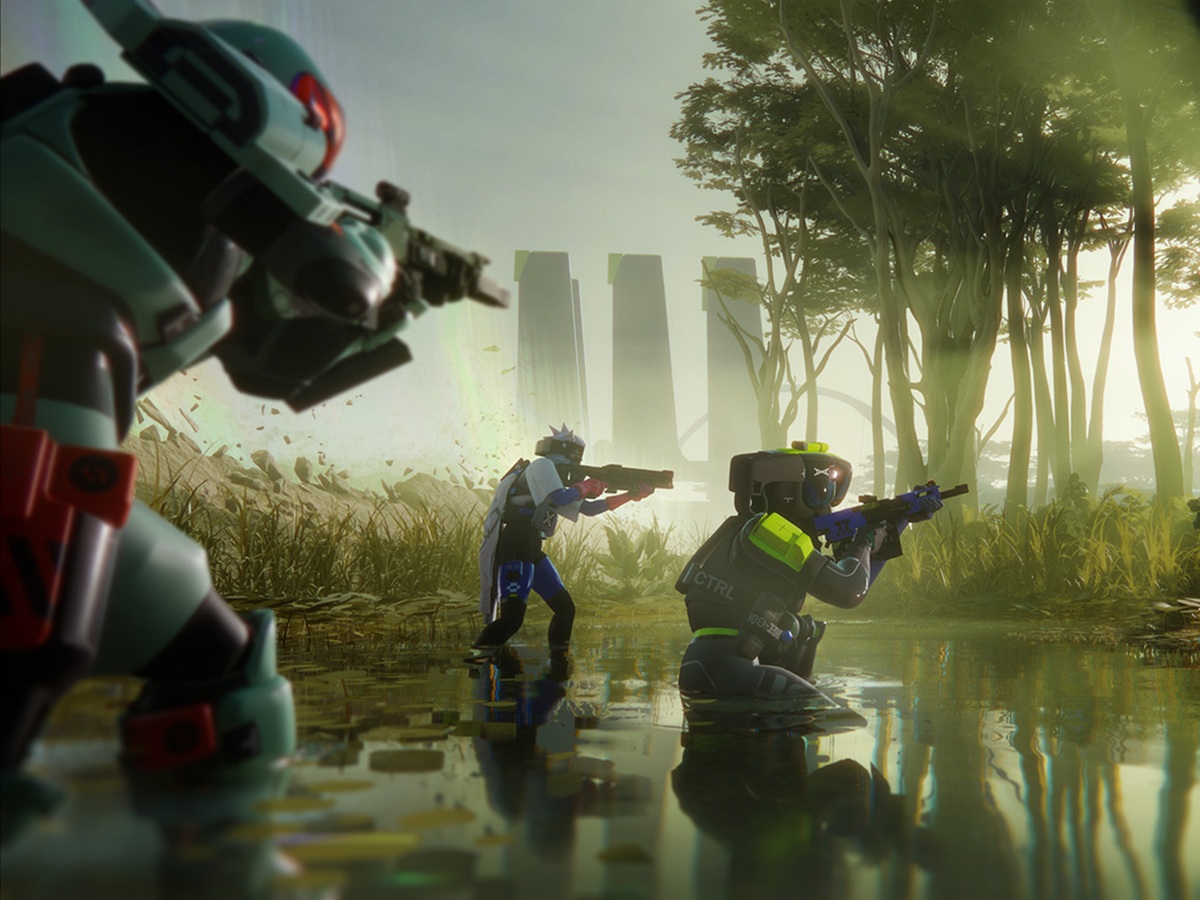
Marathon’s core pitch might sound straightforward at first, but its onboarding materials reveal a game with far more structure than you’d expect from a quick overview. Even at this early stage, Marathon already looks like it’s being built around clear progression lanes, distinct playable zones, and a strong sense of style that shapes how every run feels.
The onboarding information points to multiple playable areas, with Perimeter and Dire Marsh listed as current zones. Progression also appears to gate certain locations over time: Outpost is shown as unlocking at Runner level 15, while Cryo Archive is marked as opening later. That kind of roadmap signals that Marathon isn’t just about dropping into matches—it’s about building momentum, unlocking new opportunities, and gradually expanding what players can access.
The same onboarding details also confirm several key matchmaking and social features that many players will be looking for in a modern online shooter. Proximity chat is in, along with crew fills for team-based play and a solo queue option for players who prefer to go it alone. The onboarding also mentions a six-shell lineup, reinforcing the idea that “shells” will be a central part of how you define your playstyle and role in the world.
One of the most intriguing reveals is a special scavenger shell called Rook. Unlike other options, Rook is designed to join runs already in progress, which is a surprisingly thoughtful twist for this type of game. There are trade-offs: Rook can only queue solo, arrives with a basic loadout, and can’t complete faction contracts because prototype shells aren’t sponsored by factions. Still, it’s an innovative system that hints at Bungie planning for real-world play patterns—disconnects, late sessions, quick drop-ins, and players who want a catch-up path without needing a perfectly prepared loadout every time.
Marathon’s atmosphere also seems tightly tied to its presentation, starting with ONI, your Onboard Navigational Intelligence. ONI isn’t positioned like a typical tutorial helper. Instead, it frames the world as controlled, artificial, and unsettling—an approach that gives the onboarding process more narrative flavor while setting expectations for the mood of the game.
That tone continues into the user interface, where menus and overlays are styled to feel futuristic and intentionally designed rather than purely utilitarian. Contracts, progression screens, and mission displays all contribute to that cohesive identity. Even routine moments like loading and transferring between locations are treated as part of the experience. One memorable sequence features a giant moth-like figure paired with eerie system text such as “Searching…,” “Molecular disassembly complete,” and “Transfer to destination in progress…,” making the downtime feel surreal and world-building instead of just a loading screen.
Progression itself looks broader than a simple contract grind. In addition to faction ranks and contracts, Marathon includes sponsor kits, an Armory, a Rewards Pass, customization unlocks, and a Codex. The Rewards Pass uses a currency called SILK, which is spent to unlock nodes and claim cosmetics. Customization categories include weapon styles, charms, stickers, and Runner shell styles, suggesting players will have plenty of visual goals to chase beyond raw power upgrades.
The Codex adds another layer by collecting achievements, audio logs, data entries, and other discoveries gathered during runs, which should appeal to players who like narrative breadcrumbs and lore tracking alongside competitive play. It also creates a natural reason to explore, survive, and extract with more than just loot in mind.
A particularly player-friendly detail is the plan for Rewards Passes not to expire. On top of that, players will reportedly be able to purchase and progress older passes later. For a live-service multiplayer game, that’s a significant choice. It reduces the usual time pressure that turns battle passes into deadlines, and it makes the progression system feel more like a long-term collection journey than a seasonal obligation.
Taken together—zone unlocks, multiple matchmaking options, a distinct shell system, layered progression, and a strong visual tone—Marathon is shaping up to be more than a simple extraction shooter concept. The onboarding details paint a picture of a game designed for longevity, with systems that support different play schedules, different commitment levels, and different ways to engage with its world.