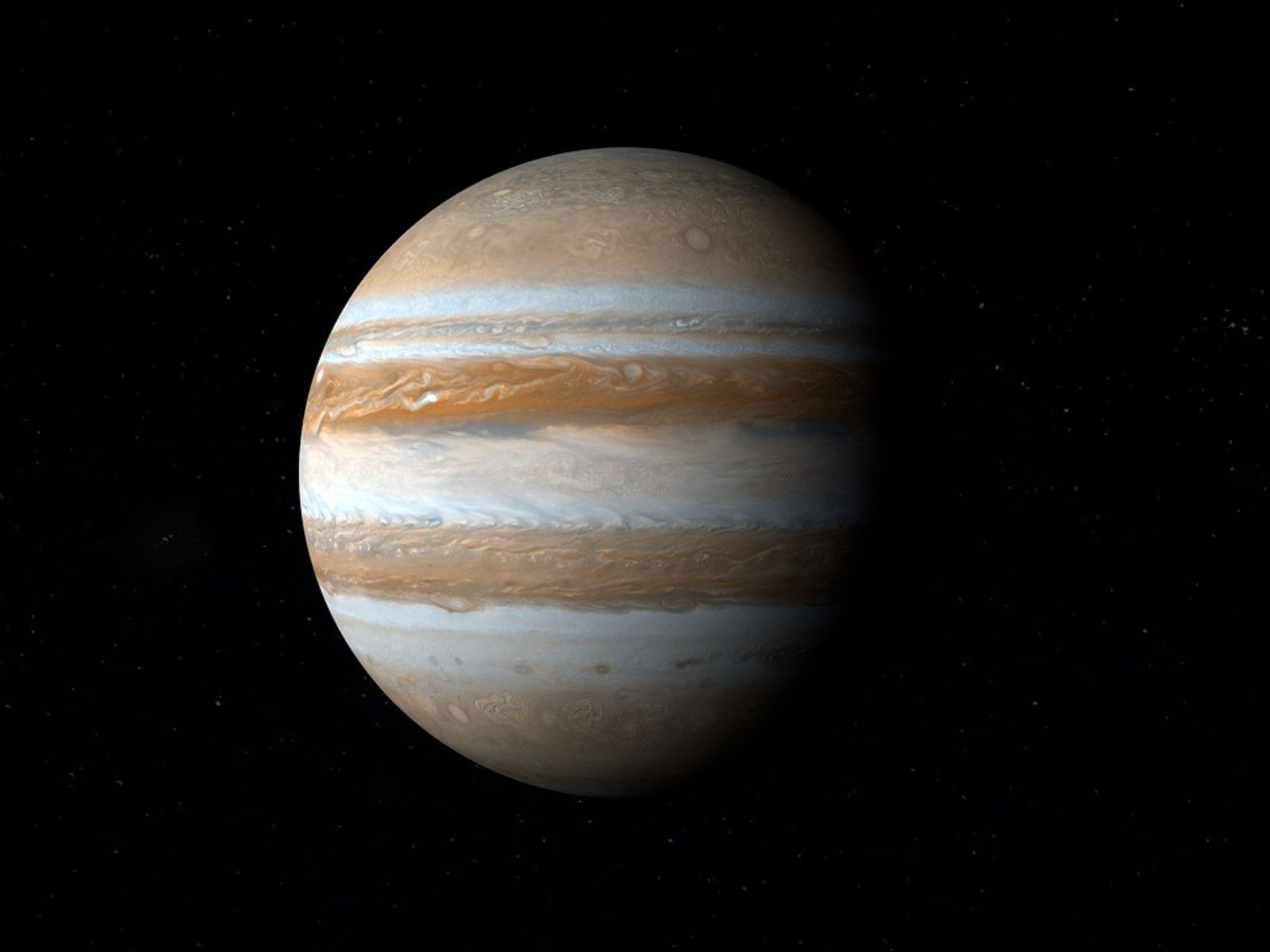
Jupiter, the largest planet in our solar system, may be slightly smaller than astronomers have long believed. Fresh observations from NASA’s Juno spacecraft, currently orbiting the gas giant, suggest that earlier measurements of Jupiter’s size were just a bit off—by only a few kilometers, but enough to matter for planetary science.
For years, Jupiter’s diameter was widely cited as about 142,984 kilometers across at the equator and roughly 133,708 kilometers from pole to pole. Juno’s newest calculations indicate a difference of around 8 kilometers at the equator and about 24 kilometers at the poles compared with those previous estimates.
While those numbers might sound tiny next to a planet that dwarfs every other world in our solar system, Jupiter is more than just a famous giant—it’s a key benchmark. Scientists use Jupiter as a reference point when studying other gas giants, both in our own planetary neighborhood and around distant stars. That means even small adjustments to Jupiter’s radius can ripple outward into how researchers estimate the size, structure, and composition of similar planets.
The reason these “few kilometers” are important is that they help reconcile different kinds of observations. As study lead Eli Galanti explained in findings published in Nature Astronomy, shifting Jupiter’s radius by a small amount allows models of the planet’s interior to match both gravitational data and measurements of the atmosphere more accurately. In short, the better scientists pin down Jupiter’s true shape and size, the better they can understand what’s happening beneath its clouds—where pressure, temperature, and exotic forms of matter push physics to its limits.
So how did Juno make these improved measurements? The spacecraft performed a technique that uses radio signals to probe Jupiter’s dimensions with high precision. As Juno passed behind the planet from Earth’s perspective, it transmitted radio waves back home. Researchers tracked where those signals were bent, disrupted, or blocked, which helped them determine the planet’s size more accurately. On top of that, Juno collected 26 additional measurement passes, building a stronger dataset that researchers can use to refine future models of Jupiter and other gas giants.
With Juno continuing its mission, Jupiter is steadily becoming less of a mystery and more of a well-measured guidepost—one that can sharpen our understanding of giant planets across the universe.