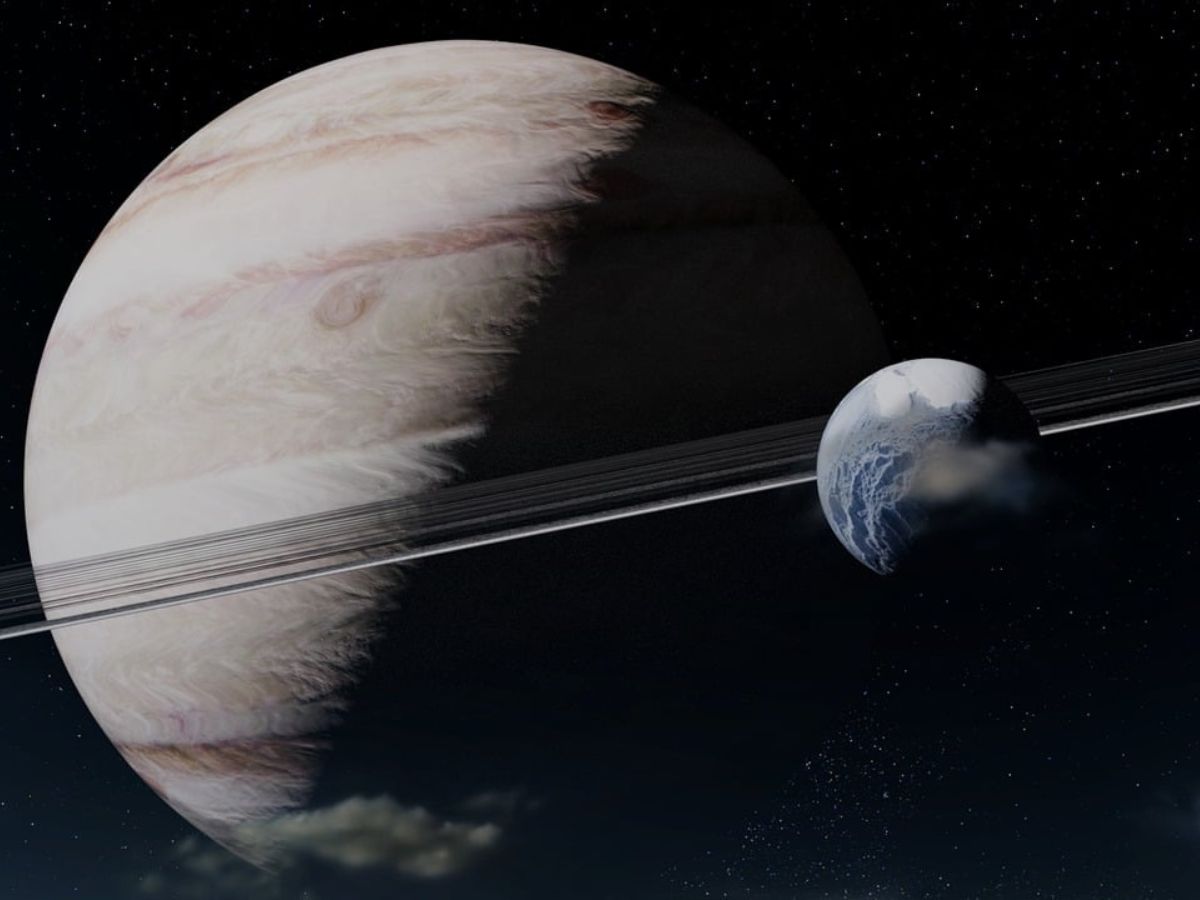
About 4.6 billion years ago, our solar system was born from a vast, swirling cloud of dust and gas. A recent study suggests that without the dramatic influence of Jupiter, Earth might never have formed—or could have been lost to the Sun.
In the earliest days, the Sun pulled in enormous amounts of material from the surrounding cloud, the same raw ingredients that build planets. Observations of young planetary systems elsewhere show that this process can strip away the matter needed for rocky worlds like ours. According to the study, Jupiter changed that fate.
As the gas giant grew, it likely migrated toward the middle of the solar system before shifting direction. In doing so, it carved a gap in the protoplanetary disk—a ring of dust and gas—effectively corralling and isolating chunks of material that would later become planets. This reshaping of the early environment helped the inner planets settle into stable orbits rather than spiraling into the Sun.
That planetary choreography may be the reason Earth exists today. As the study’s author André Izidoro explains, “Jupiter didn’t just become the biggest planet, it set the architecture for the whole inner solar system. Without it, we might not have Earth as we know it.”
While this research offers a compelling explanation for how Jupiter safeguarded the early building blocks of Earth, many puzzles about our solar system’s past remain. Future studies of planet formation and the behavior of giant planets will continue to refine our understanding of how our cosmic neighborhood came to be—and why our world ended up in just the right place.


