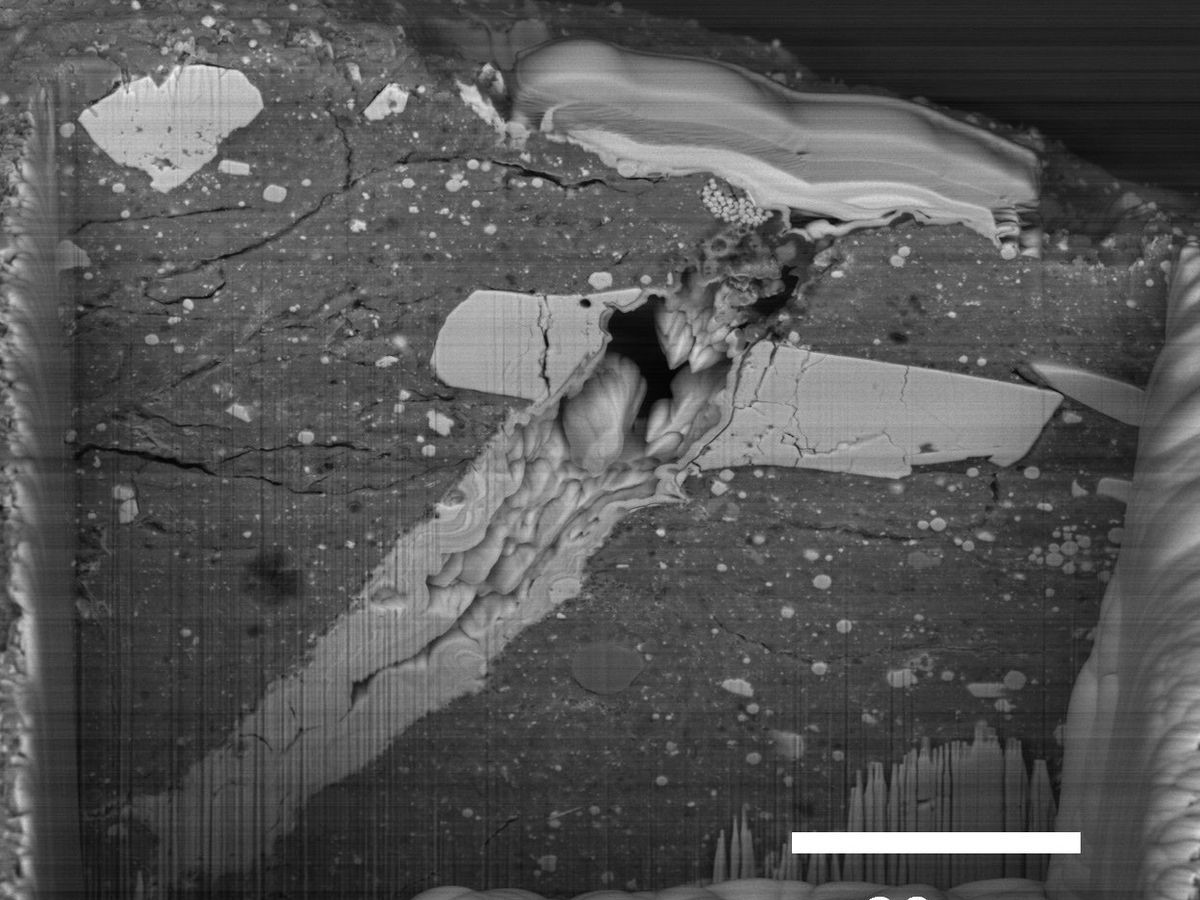
Scientists poring over the first returned samples from asteroid Bennu are uncovering clues that make the early solar system feel less like ancient history and more like a puzzle we can finally solve. Inside the dark grains collected by NASA’s OSIRIS-REx mission, researchers have identified three headline-making discoveries: sugars linked to biology, a strange gum-like material packed with key elements, and an unexpectedly large supply of stardust that predates our solar system.
The idea driving this research is as big as it is tantalizing: asteroids may have carried essential chemical ingredients for life and delivered them to early Earth through impacts billions of years ago. OSIRIS-REx was built to test that possibility by bringing pristine material home for laboratory analysis. After the spacecraft returned to Earth in September 2023 with pieces of Bennu, teams around the world began carefully examining what the asteroid has been preserving for ages.
One of the most attention-grabbing results comes from the detection of sugars, including ribose and glucose, in the Bennu material. Ribose matters because it’s a key component of RNA, one of life’s fundamental molecules. Even more notable, glucose appears in the samples as well—marking the first time glucose has been identified in an extraterrestrial sample. This strengthens the argument that asteroids can contain important organic molecules, potentially helping seed young planets with the chemistry needed for life.
There’s another twist: researchers did not find deoxyribose, the sugar that forms part of DNA. That absence adds an intriguing bit of support for the “RNA world” hypothesis—the long-debated idea that life may have started with RNA-like systems before DNA became dominant. While it doesn’t prove the theory on its own, the chemical profile in the Bennu samples fits unusually well with that storyline.
A second research group found something that reads like science fiction but is firmly grounded in analysis: an ancient, mysterious substance that behaves like gum. What makes it especially compelling is its chemistry. The material is extremely rich in nitrogen and oxygen, elements that play central roles in many biological and prebiotic compounds. Scientists believe this gum-like substance likely formed very early in the solar system’s history—so early that one expert described it as originating in the “Beginning of the beginning.” In other words, Bennu may be carrying chemical snapshots from the solar system’s earliest moments, long before planets fully took shape.
Then there’s the dust—an enormous amount of it. A separate team analyzing the Bennu samples reported large quantities of presolar grains, tiny particles created by stars that died before the Sun and planets existed. Finding so much of this ancient stardust suggests Bennu’s parent body formed in a region heavily enriched by material from exploding stars. It also hints that parts of Bennu avoided being heavily altered by water or heat, allowing some grains to remain nearly unchanged for billions of years—essentially time capsules from before the solar system was born.
Together, these discoveries make Bennu far more than a typical space rock. The sugars point to life-relevant chemistry in asteroids, the gum-like substance hints at complex early solar system processes, and the presolar grains provide rare, concentrated evidence of stellar material that helped build our planetary neighborhood. As more studies emerge from the OSIRIS-REx sample cache, Bennu could become one of the most important references for understanding how planets formed—and how the chemistry that powers life might travel through space.
The sugar study was published in Nature Geoscience, while the findings on the gum-like material and the stardust-rich dust were published in Nature Astronomy.