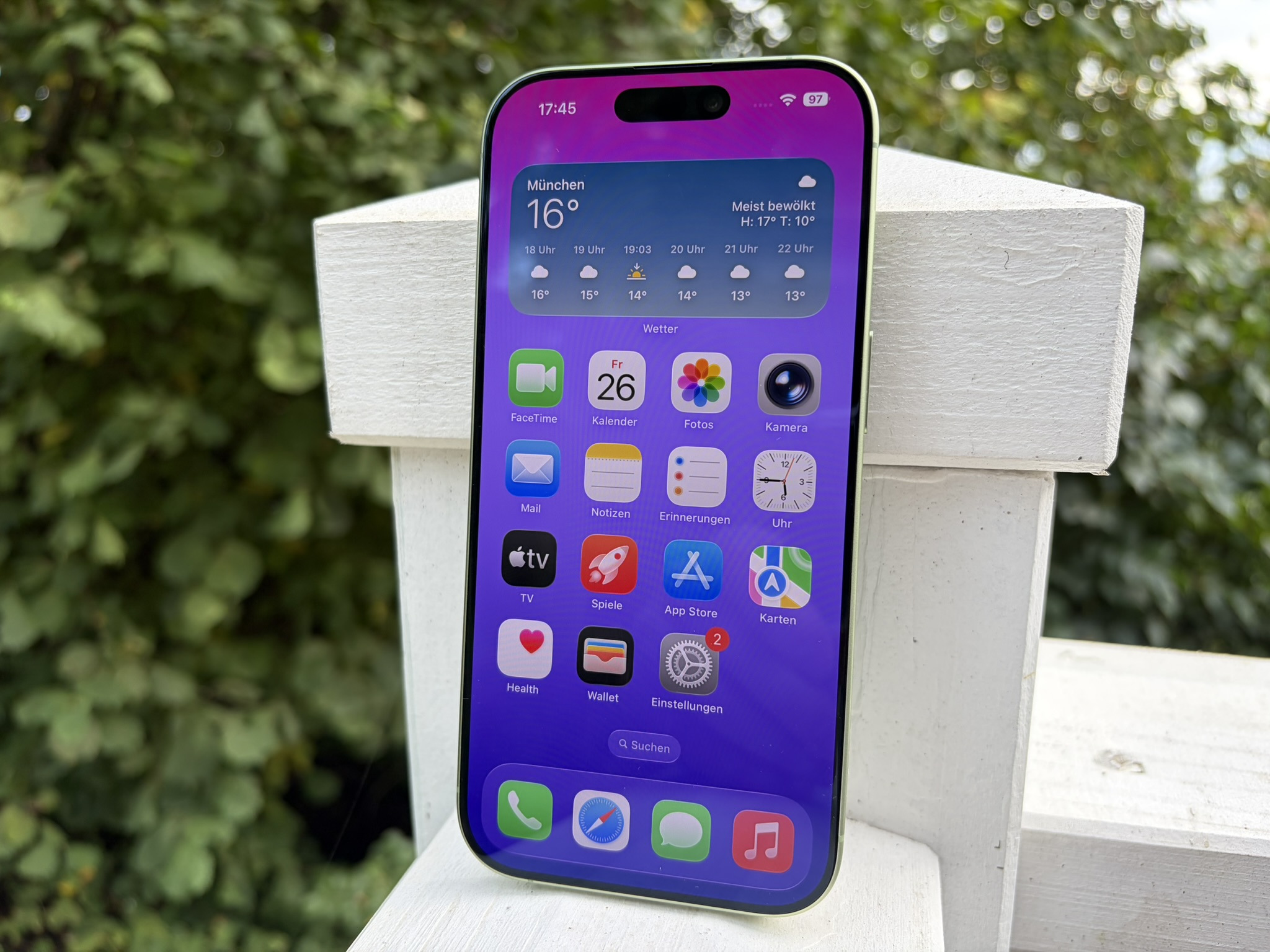
Most modern smartphones use OLED screens that rely on pulse-width modulation, or PWM, to control brightness. PWM rapidly turns pixels on and off to achieve a target brightness, a technique that’s precise and power efficient—but its relatively low frequencies (often under 500 Hz) can look like flicker to sensitive eyes. For some people, that flicker can trigger eye strain, burning sensations, headaches, or even nausea.
Apple’s latest iPhones, including the iPhone 17, introduce a new setting designed to address this. Called Display Pulse Smoothing (PWM), it appears in iOS 26 under Settings > Accessibility > Display & Text Size. The option is intended to offer an alternative way of dimming the OLED display and reduce reliance on standard PWM at lower brightness levels.
There are important limits. Testing shows Display Pulse Smoothing only takes effect up to 25% screen brightness. Beyond that, the phone returns to conventional PWM dimming. Even within that 0–25% range, the feature does not increase the dimming frequency, which is a key factor in how strongly flicker is perceived.
Apple’s description is deliberately vague, referring to an “alternative method for dimming the OLED display” without technical specifics. Observers suggest it could be a form of DC dimming or a hybrid system. In a detailed analysis, YouTuber Nick Sutrich concludes the company is using pulse amplitude modulation (PAM). Unlike PWM’s square-wave pattern, PAM adjusts voltage levels to create smoother, more sine-like transitions in brightness.
Measurements back up that interpretation: when Display Pulse Smoothing is switched on, the frequency response becomes noticeably flatter up to 25% brightness. That smoother curve suggests fewer abrupt transitions in light output, which theoretically should feel gentler on the eyes.
However, real-world feedback from PWM-sensitive users has been mixed to negative. Many report little to no relief after enabling the toggle, citing the same symptoms they experience with standard PWM dimming. The likely culprits are the unchanged dimming frequency and modulation depth—two factors closely tied to flicker perception.
Bottom line: Display Pulse Smoothing is a step in the right direction, but it’s a limited one. Until Apple raises the effective brightness range or meaningfully alters the frequency and modulation characteristics, most PWM-sensitive users may not notice a substantial improvement. With any luck, future software updates will refine the feature so it delivers genuine eye-comfort benefits instead of incremental gains at very low brightness levels.


