Intel 14A Gains Momentum as Major Tech Giants Evaluate Next-Gen Chip Process
Intel’s upcoming 14A manufacturing process may not yet have a confirmed anchor customer, but interest in the node appears to be growing across the semiconductor industry. According to a recent investment note from Piper Sandler, several of the world’s largest technology companies are evaluating Intel’s next-generation foundry process as demand for advanced chip production continues to outpace available supply.
The list of companies reportedly assessing Intel 14A includes Amazon, Apple, AMD, Google, Tesla, Microsoft, NVIDIA, and Qualcomm. That level of attention is notable because it suggests that leading chip designers are actively looking beyond Taiwan Semiconductor Manufacturing Company, better known as TSMC, for future advanced-node capacity.
The timing is important. TSMC’s most advanced manufacturing capacity is reportedly heavily booked through 2028, leaving major customers with limited options for next-generation chip production. As artificial intelligence, data centers, smartphones, electric vehicles, and high-performance computing continue to drive demand, securing reliable foundry capacity has become a strategic priority for the entire tech sector.
Intel 14A is showing stronger technical progress than expected
One of the key reasons for the renewed optimism around Intel Foundry is the reported improvement in technical data for the 14A process. Piper Sandler’s latest assessment suggests that Intel’s 14A development milestones are progressing better than anticipated.
A major metric to watch in chip manufacturing is defect density, often referred to as D0. This measures the average number of microscopic defects found across a given area of a silicon wafer. Lower defect density usually means higher yields, better production efficiency, and a greater chance that a process can move successfully into commercial manufacturing.
Intel’s 14A process reportedly reached a defect density of 0.5 in June 2026. The company is said to be targeting a D0 range of 0.1 to 0.2 by the first quarter of 2027. If Intel achieves that target, it would mark an important step toward making the 14A node commercially competitive.
Intel CFO David Zinsner has also recently indicated that the 14A process is improving at one of the fastest rates the company has seen since the 22nm era in 2012. That statement adds to the sense that Intel may be gaining traction after years of manufacturing delays and foundry execution concerns.
Why the industry wants an alternative to TSMC
TSMC remains the dominant force in advanced semiconductor manufacturing, but its success has also created a capacity bottleneck. With demand from AI accelerators, custom cloud chips, mobile processors, GPUs, and automotive silicon continuing to rise, many companies are seeking a second reliable source for cutting-edge chip fabrication.
That search has become even more urgent due to geopolitical concerns and growing pressure in the United States to bring more semiconductor production onshore. For American companies, a strong domestic advanced-node foundry could reduce supply chain risk and offer more flexibility for future chip designs.
In that environment, Intel has a unique opportunity. Samsung is also competing in advanced foundry manufacturing, but Intel’s U.S.-based fabrication footprint gives it a strategic advantage if its technology can meet customer expectations. The big question remains whether Intel 14A can deliver the performance, yields, and production scale required by the world’s most demanding chipmakers.
Intel’s recent capital raise may signal confidence
Intel’s recent move to raise fresh capital has also drawn attention. In August, the company sold new shares to raise roughly $15 billion, with the amount later increased to around $20 billion. Intel said the offering was intended to support future growth opportunities while maintaining a strong balance sheet and preserving its investment-grade credit rating.
That explanation was broad, but the timing is significant. Intel leadership has previously suggested that major foundry expansion would only move forward after securing confirmed customer commitments for advanced nodes such as 14A. If that stance remains in place, the capital raise could be interpreted as a sign that Intel sees a real path toward landing one or more major customers.
Intel already holds a large cash position, so the decision to raise additional funds may point to upcoming investment needs tied to manufacturing expansion. One possible use is the tooling required for new 14A capacity.
The shell of Intel’s Fab 62 is reportedly close to completion, but bringing new capacity online will require substantial equipment spending. Tooling costs for approximately 20,000 wafers per month of 14A production could reach around $10 billion. Intel’s latest capital raise would be more than enough to support that level of investment.
What makes Intel 14A important
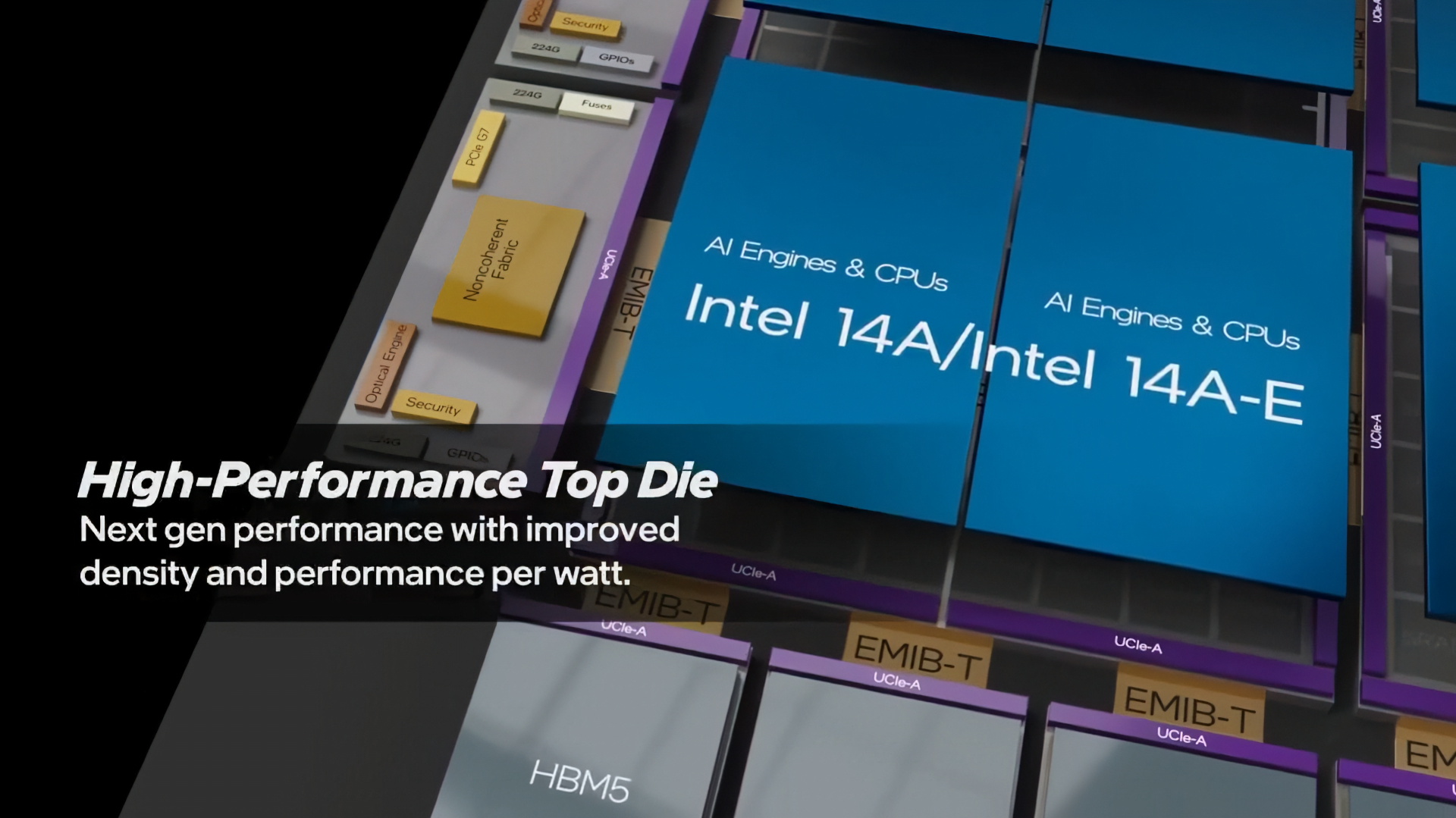
Intel 14A is a 1.4nm-class chip fabrication process designed to compete at the leading edge of semiconductor manufacturing. The node is expected to include several major technological advancements intended to improve power efficiency, transistor performance, and chip density.
One of the most important features is PowerDirect, Intel’s backside power delivery system. Traditional chip designs route both power and data signals through the front side of the wafer, which can create congestion and electrical inefficiencies. By moving power delivery to the back side of the silicon, PowerDirect frees up space on the front side for data routing. This can reduce resistance, improve performance, and allow denser chip layouts.
Intel 14A also uses RibbonFET 2 transistors and a second-generation Gate-All-Around architecture. Gate-All-Around technology gives the transistor gate more control over the channel through which current flows. This is increasingly important as transistors become smaller and harder to manage. Better electrostatic control can help improve drive current while reducing power leakage, two critical goals for advanced chips used in AI, mobile devices, and high-performance computing.
Intel’s production timeline
Intel has indicated that risk production for the 14A node is planned for the second quarter of 2027. Risk production is an early manufacturing phase that allows customers and engineers to test the process, validate designs, and identify issues before full-scale production begins.
Volume production is currently expected to start in the first quarter of 2028. If Intel stays on schedule, that timeline would place 14A in direct competition for next-generation chip programs from major technology companies that are already planning products several years in advance.
Why this matters for Intel’s future
Intel’s foundry ambitions are central to its long-term turnaround strategy. The company is trying to become not only a major chip designer, but also a leading contract manufacturer for other semiconductor companies. Success with 14A could help Intel prove that it can compete with the most advanced foundries in the world.
Landing a major anchor customer would be a breakthrough moment. It would validate Intel’s technology, help justify the enormous capital spending required for advanced manufacturing, and potentially attract additional customers that want a non-TSMC option.
For now, Intel 14A still faces major challenges. Evaluations by large customers do not guarantee commercial orders, and the company must continue improving yields, performance, and manufacturing readiness. However, the fact that some of the biggest names in technology are reportedly examining the process suggests that Intel is back in the conversation.
If Intel can deliver on its 14A roadmap, it could become a serious alternative in the global foundry market at a time when the industry urgently needs more advanced chip capacity. That would not only reshape Intel’s business, but also influence the future supply chain for AI processors, smartphones, cloud infrastructure, electric vehicles, and next-generation computing hardware.