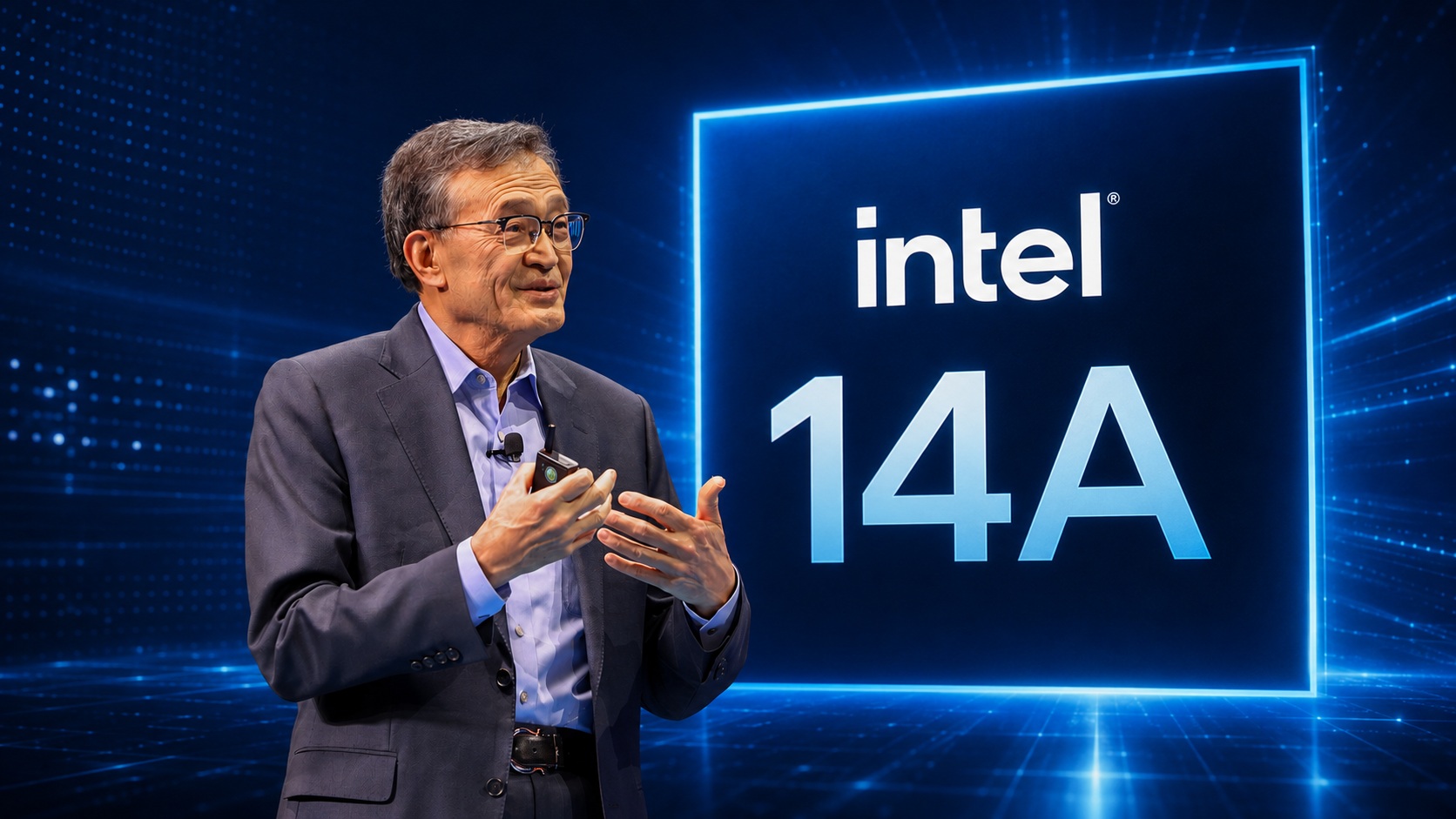
Intel 14A Chip Process Set for High-Volume Production in 2028 as Foundry Momentum Builds
Intel has confirmed a major update for its next-generation chip manufacturing roadmap: the company’s 14A process technology is now scheduled to enter high-volume production in 2028. CEO Lip-Bu Tan expressed strong confidence in the node, saying Intel 14A is expected to deliver competitive results across power efficiency, transistor density, performance, cost, and production schedule.
The update came during Intel’s latest earnings discussion, where the company reported solid quarterly performance supported by strong market demand. A key focus of the call was Intel Foundry, the company’s contract chip manufacturing business, which continues to play a central role in Intel’s long-term turnaround strategy.
According to Tan, Intel’s foundry progress is being driven by what he described as “disciplined execution.” The company has been working to strengthen confidence among both internal product teams and external foundry customers, while proving that its manufacturing roadmap can meet demanding targets.
Intel said several of its existing and upcoming process technologies performed better than expected in the second quarter. Intel 7, Intel 3, and Intel 18A all exceeded internal volume targets, helped by improved factory utilization, faster cycle times, and stronger wafer availability.
Intel 18A appears to be gaining particular momentum. Higher output from the node is expected to support the ramp-up of upcoming products, including Panther Lake under the Core Ultra Series 3 family and Wildcat Lake under the Core Series 3 lineup. Tan noted that internal targets continue to rise, and Intel’s teams are continuing to meet those challenges.
The company has also started risk production for 18A-P, a refined version of its 18A process. However, the bigger long-term development is Intel 14A, which is already showing encouraging progress. Intel stated that 14A has outpaced 18A in both defect density and transistor performance at a comparable stage of development.
Intel has already released the 14A PDK 0.5, an important process design kit used by chip designers to begin building products around the node. The next version, PDK 0.9, remains on track for October. Intel is also expanding and validating the intellectual property portfolio needed to support 14A across a wide range of customer designs.
Tan said he is pleased with the rising level of customer engagement around Intel 14A. The company is also preparing several of its own internal products to use the technology, which should help demonstrate the node’s capabilities before broader customer adoption.
The updated schedule now places Intel 14A risk production for internal products in the second half of 2027. High-volume manufacturing is planned for 2028, which represents a faster timeline than earlier expectations that pointed to 2029.
This move suggests Intel is becoming more confident in its ability to execute on advanced process nodes and compete more aggressively in the global semiconductor manufacturing market. High-volume production in 2028 would give Intel an opportunity to position 14A as a leading-edge option for companies seeking advanced chip fabrication for high-performance computing, artificial intelligence, mobile, data center, and other demanding markets.
Customer interest appears to be one of the main reasons Intel is committing to an earlier high-volume ramp. While several 14A engagements have reportedly been secured or are in progress, Intel has not yet revealed the major companies planning to use the node. Those announcements may come later, once customers are ready to disclose their next-generation chip plans.
For Intel, 14A is more than just another manufacturing milestone. It is a critical test of whether Intel Foundry can become a serious alternative for advanced chip production at scale. If the node delivers on performance, efficiency, density, cost, and timing, it could significantly strengthen Intel’s position in the semiconductor industry.
With 18A production ramping and 14A moving toward risk production in 2027, Intel’s foundry roadmap is beginning to take clearer shape. The company’s decision to commit to 14A high-volume production in 2028 signals growing confidence that its next wave of process technologies can meet both internal product needs and external customer demand.


