Intel Foundry momentum builds as 18A, 14A and EMIB attract major chip industry interest
Intel’s foundry comeback appears to be gaining real traction, with new reports suggesting strong interest in the company’s next-generation manufacturing and advanced packaging technologies. The biggest attention is reportedly centered on Intel 18A, the future Intel 14A node, and EMIB packaging, all of which are becoming increasingly important as demand for AI chips, high-performance computing, and advanced processors continues to surge.
For years, TSMC has dominated cutting-edge semiconductor manufacturing, especially in leading process nodes and advanced packaging. However, Intel is now positioning itself as a serious alternative for companies that need more supply, more packaging capacity, and a reliable long-term manufacturing partner. With global demand for AI hardware rising faster than supply can comfortably support, Intel Foundry may be entering the market at exactly the right time.
Intel 18A is already moving through its volume ramp, while Intel 18A-P is reportedly in risk production. Intel 14A, the company’s more advanced future node, is expected to enter risk production around 2028, with volume production targeted for 2029. These technologies are central to Intel’s ambition to become a top-tier foundry provider for external customers, not just a manufacturer of its own CPUs.
According to recent industry reports, Intel Foundry may have secured major design wins from some of the biggest names in technology. Companies rumored to be working with Intel’s upcoming process technologies include AMD, NVIDIA, Marvell, Microsoft, Micron, OpenAI, and others. If accurate, this would represent a major vote of confidence in Intel’s roadmap and a clear sign that leading chip designers are looking beyond a single manufacturing partner.
A key reason for this shift is supply pressure. TSMC remains the leader in advanced nodes, but demand is exceptionally high, especially from AI accelerator makers and cloud computing companies. When capacity becomes tight, large customers need alternatives. Intel’s 18A and 14A nodes could give these companies another path for producing advanced chips at scale.
Intel’s 18A progress is especially important. Reports claim that 18A yields have improved to around 85%, up from roughly 65% in the previous quarter. That would put Intel closer to TSMC’s reported yields for its N2 process and ahead of Samsung’s reported SF2 yield range. Yield improvements matter because they directly affect cost, output, and customer confidence. A process node can look strong on paper, but foundry customers need proof that it can deliver high volumes efficiently.
Intel is also preparing to bring more 18A-based products to market. Panther Lake and Wildcat Lake are expected to play a major role in showcasing the company’s manufacturing progress. On the data center side, Intel is expanding capacity for Intel 4 and Intel 3 as AI-driven server demand continues to grow. The rise of agentic AI and enterprise AI workloads is expected to increase demand for high-performance CPUs, giving Intel another opportunity to strengthen both its product and foundry businesses.
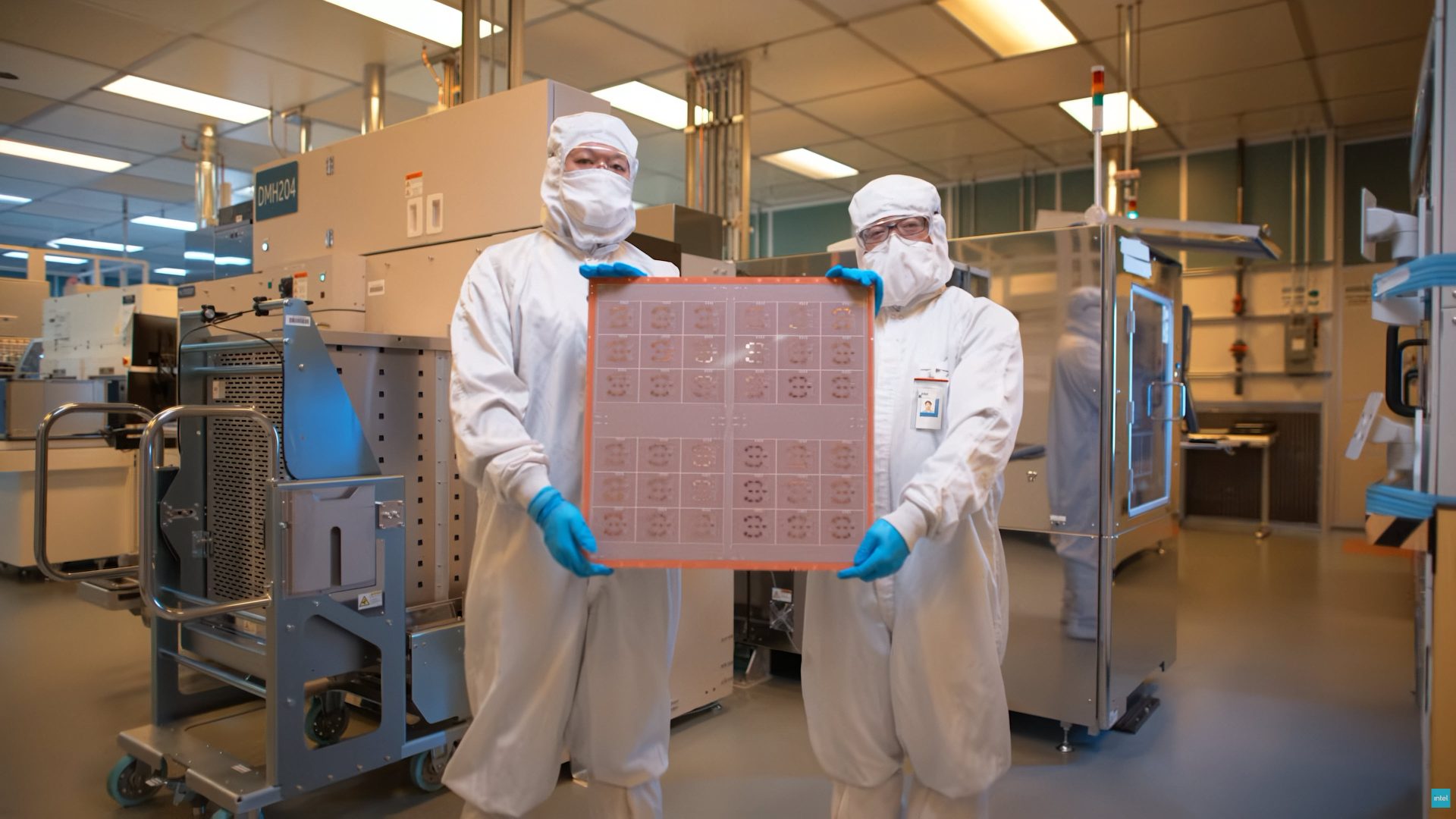
Beyond process nodes, Intel’s advanced packaging technology may be just as important. EMIB, short for Embedded Multi-die Interconnect Bridge, is one of Intel’s most valuable packaging tools. It allows multiple chiplets or dies to be connected efficiently inside a single package, making it useful for complex processors, AI accelerators, GPUs, and chips that combine logic with high-bandwidth memory.
Intel has continued to evolve EMIB with variants such as EMIB-T and EMIB-M. EMIB-M includes MIM capacitors in the bridge, while EMIB-T adds through-silicon vias, helping support more advanced integration. These packaging technologies are designed to offer a cost-effective and scalable way to connect multiple dies without relying on a full silicon interposer.
That matters because advanced packaging has become a bottleneck in the AI hardware boom. TSMC’s CoWoS packaging has been in extremely high demand due to the explosion of AI accelerator production. Intel’s EMIB could become an attractive alternative for companies that need more packaging capacity or want greater flexibility in chip design.
Reports now claim that Intel’s EMIB-T yield has reached around 98%, a significant jump from previously reported levels near 90%. If true, this is a major milestone. In advanced manufacturing and packaging, moving from strong yields to near-perfect yields is one of the hardest steps. A 98% yield would indicate that Intel’s packaging process is maturing rapidly and may be ready for high-volume customer deployments.
Intel is also investing in future packaging technologies, including glass substrate packaging. The company’s Rio Rancho facility is expected to play a key role in this effort. Glass substrates could allow larger and more complex chip packages, which are likely to become increasingly important as AI accelerators grow in size and complexity. Combined with EMIB bridges, this approach could help Intel support larger multi-die packages in a more flexible and cost-optimized way.
Several major technology companies are rumored to be evaluating or using Intel’s EMIB packaging for future chips, including NVIDIA, Google, and Amazon. These names are significant because they represent some of the most important players in AI, cloud computing, and custom silicon. If Intel can win more packaging business from these companies, it would strengthen its position in one of the fastest-growing areas of the semiconductor industry.
Intel’s foundry strategy also appears to be gaining leadership momentum. Under CEO Lip-Bu Tan, the company has focused on improving execution, strengthening customer relationships, and bringing experienced industry talent into the business. Intel Foundry’s pitch is not just about making chips; it is about offering a full manufacturing ecosystem that includes advanced nodes, packaging, supply chain resilience, and long-term capacity planning.
The broader picture is clear: Intel wants to become a major systems foundry for the AI era. That means serving customers that need leading-edge performance, advanced packaging, and reliable production at scale. If the reported design wins and yield improvements hold true, Intel may be much closer to that goal than many expected.
The next few years will be critical. Intel 18A needs to prove itself in volume production, 18A-P must show meaningful improvements, and 14A must stay on schedule for the end of the decade. At the same time, EMIB and future glass substrate packaging will need to demonstrate that Intel can compete not only in transistor technology but also in the complex world of multi-die chip integration.
For chipmakers, cloud providers, and AI companies, Intel Foundry could become an increasingly important alternative in a market where capacity, performance, and packaging are all under pressure. For Intel, these reported wins could mark the beginning of a major turnaround in its manufacturing ambitions.
If Intel can execute on 18A, keep 14A on track, and continue improving EMIB yields, the company may finally have the ingredients needed to challenge the current leaders in advanced semiconductor manufacturing.