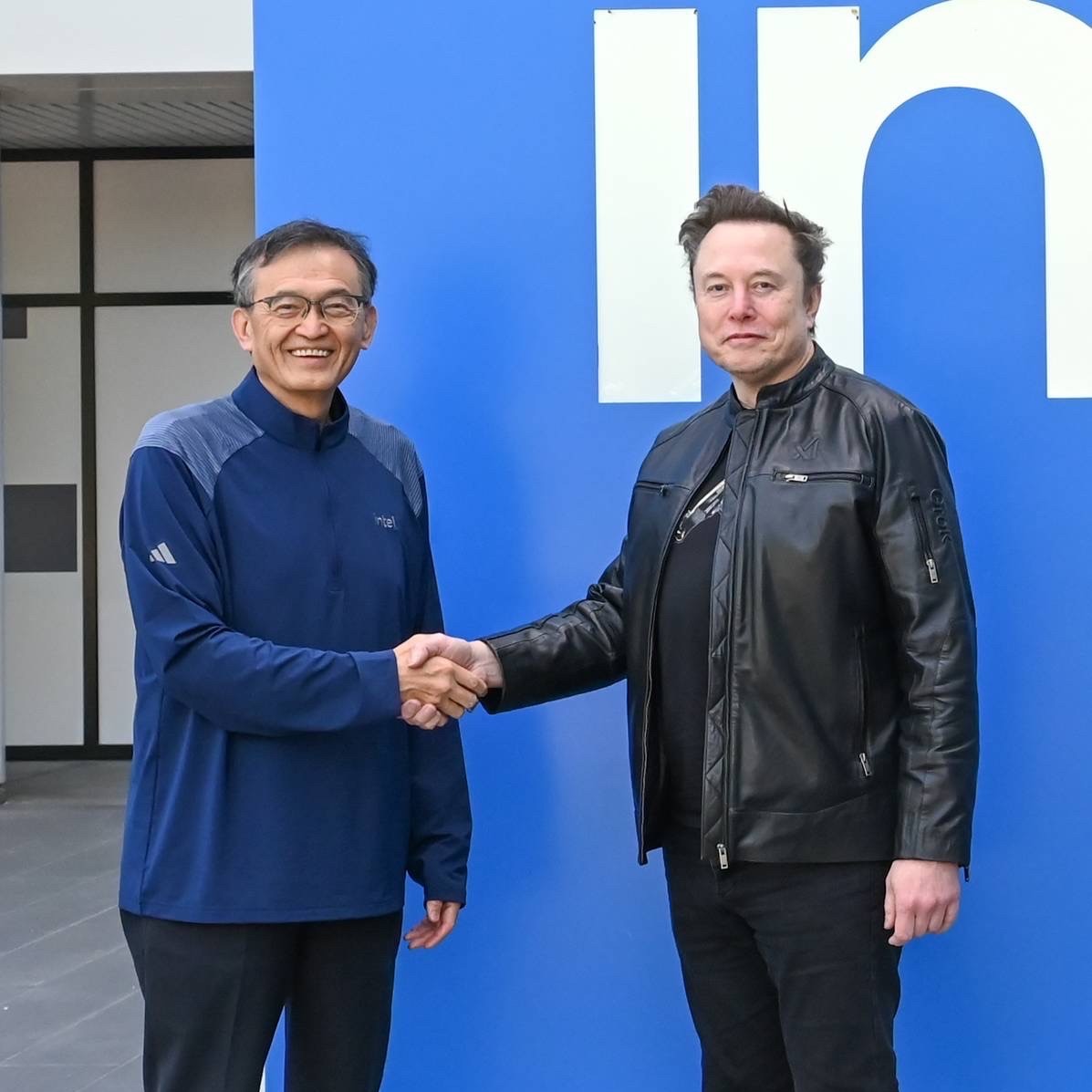
Intel has now officially confirmed it’s participating in Elon Musk’s Terafab initiative, a chipmaking effort tied to Musk’s wider tech ecosystem that includes xAI, SpaceX, and Tesla. The goal is sweeping: at full capacity, Terafab is intended to help produce “1 TW” worth of chips.
While the “1 TW” figure grabbed attention, it’s an unusual way to describe semiconductor manufacturing capacity. Chip production is normally discussed in terms of wafer starts per month and process node maturity, not in power-style units. As a result, Intel’s confirmation raises almost as many questions as it answers: how much real-world output does “1 TW” represent, what manufacturing node will be used, and where will these chips actually be made?
Earlier details tied to the Terafab concept suggested an initial production target of around 160,000 wafers per month. If that direction holds, Terafab would be aiming for a scale that places it among the most serious manufacturing ambitions in the industry. The planned technology level has also been described as roughly “2 nm-class.” If Intel’s most advanced manufacturing is involved, that could point toward Intel’s 14A process as a potential match, though no final manufacturing technology has been publicly locked in.
A key unknown is whether Terafab becomes a brand-new, ground-up manufacturing network or leans heavily on existing industrial capacity. Building leading-edge chip fabrication infrastructure from scratch is one of the hardest projects in modern manufacturing, requiring years of construction, process development, and specialized staffing. Because of that, it wouldn’t be surprising if early Terafab phases rely on established facilities and established expertise rather than an entirely new footprint.
Even if Terafab advances quickly on the factory side, the broader semiconductor supply chain could still limit momentum. The most advanced production depends on extremely scarce lithography tools, including EUV and high-NA EUV systems, along with specialized materials and a deep network of suppliers. Access to that equipment and the ability to ramp yields are often the true bottlenecks—not just funding or ambition.
For now, the practical takeaway is that Terafab remains a long-term effort, and Musk’s companies are still expected to continue relying on major external foundry partners for their chip needs as the initiative moves from announcement and partnerships into real manufacturing capacity. Intel’s involvement, however, signals that Terafab is being positioned as more than a headline—its backers appear to be trying to assemble the industry relationships required to make large-scale chip production realistic.