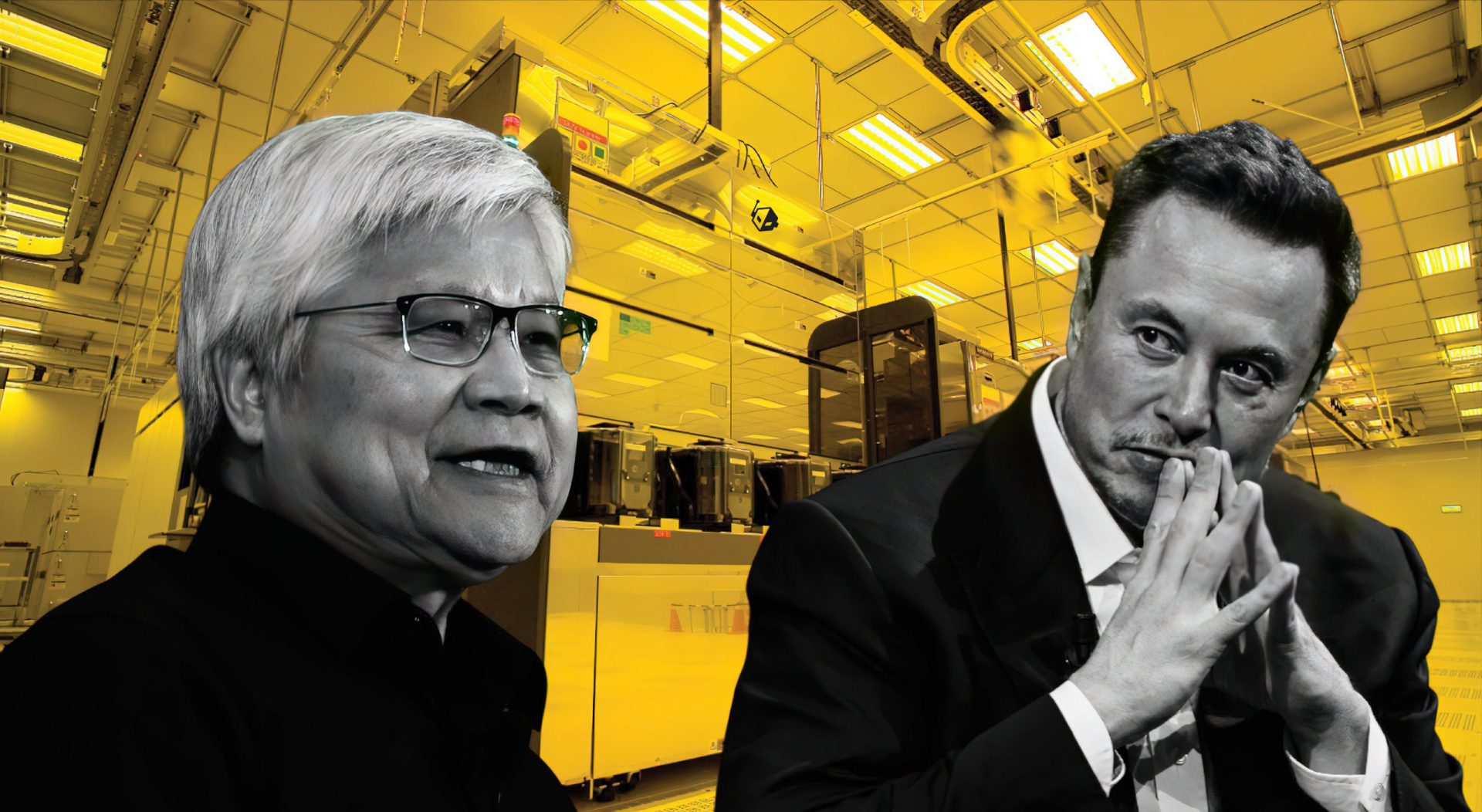
Elon Musk has confirmed that SpaceX and Tesla will remain major customers of TSMC for the long haul, even as he pushes forward with a new “in-house” chip initiative designed to cover a growing shortfall in global semiconductor capacity. In other words, this isn’t a clean break from TSMC—it’s a capacity and supply-chain reality check.
The comments come as Musk and Intel CEO Lip-Bu Tan move ahead with the Terafab project, a new partnership aimed at producing custom chips for Musk’s expanding portfolio, including Tesla, SpaceX, xAI, and potentially other ventures. Musk’s core message is simple: demand is exploding, and even the world’s leading chip manufacturer can’t always produce the sheer volume his companies will need in the years ahead.
Musk summed it up bluntly, saying that if TSMC could make the “staggeringly large number of chips needed,” there would be no reason to pursue Terafab in the first place. That statement frames Terafab less as a competitive attack on TSMC and more as an upgrade to Musk’s supply strategy as AI computing, autonomy, and aerospace workloads scale rapidly.
Terafab’s timeline also reflects just how hard chip manufacturing is to stand up. The project is expected to begin a first trial run in 2029, initially targeting around 3,000 wafers per month. From there, output is expected to increase as manufacturing processes mature and yields improve—an important detail, because reaching high-volume, high-yield production is typically the most difficult part of any semiconductor ramp.
Meanwhile, Tesla’s chip roadmap continues to lean heavily on established foundries. Tesla is already a significant customer of both TSMC and Samsung, with next-generation AI platforms such as AI5 and AI6 being produced through those relationships. Musk has even shared early images of the AI5 chip, noting it was freshly taped out at Samsung’s facilities in South Korea. He also reiterated that work on the Dojo3 supercomputer is underway, reinforcing how central AI compute has become to Tesla’s future plans.
TSMC, for its part, appears unfazed. During its Q1 FY26 earnings call, TSMC chairman and CEO C.C. Wei addressed the broader context around the Terafab initiative, emphasizing that building a chip fab takes time—typically 2 to 3 years to construct and another 1 to 2 years to ramp production. Wei also pointed out that both Tesla and Intel are customers of TSMC, while Intel is also a formidable industry competitor.
Musk responded by clarifying the relationship: SpaceX and Tesla will continue to be major TSMC customers and are not “competitors” in the typical sense. He positioned Terafab as a project meant to meet internal demand rather than as a new manufacturing option for the wider market of fabless chip companies. The purpose, according to Musk, is to address industry shortcomings that are likely to intensify as AI demand accelerates and advanced-node capacity becomes more constrained.
The takeaway is that this is less about picking sides in a chip war and more about hedging against a future where AI-driven demand outpaces even the strongest supply chains. TSMC still sits at the center of advanced semiconductor manufacturing globally, and Musk’s companies remain important customers. Terafab, if it succeeds, becomes an additional front—built not to replace TSMC, but to ensure Tesla, SpaceX, and xAI can keep scaling even when the world’s chip supply can’t keep up.