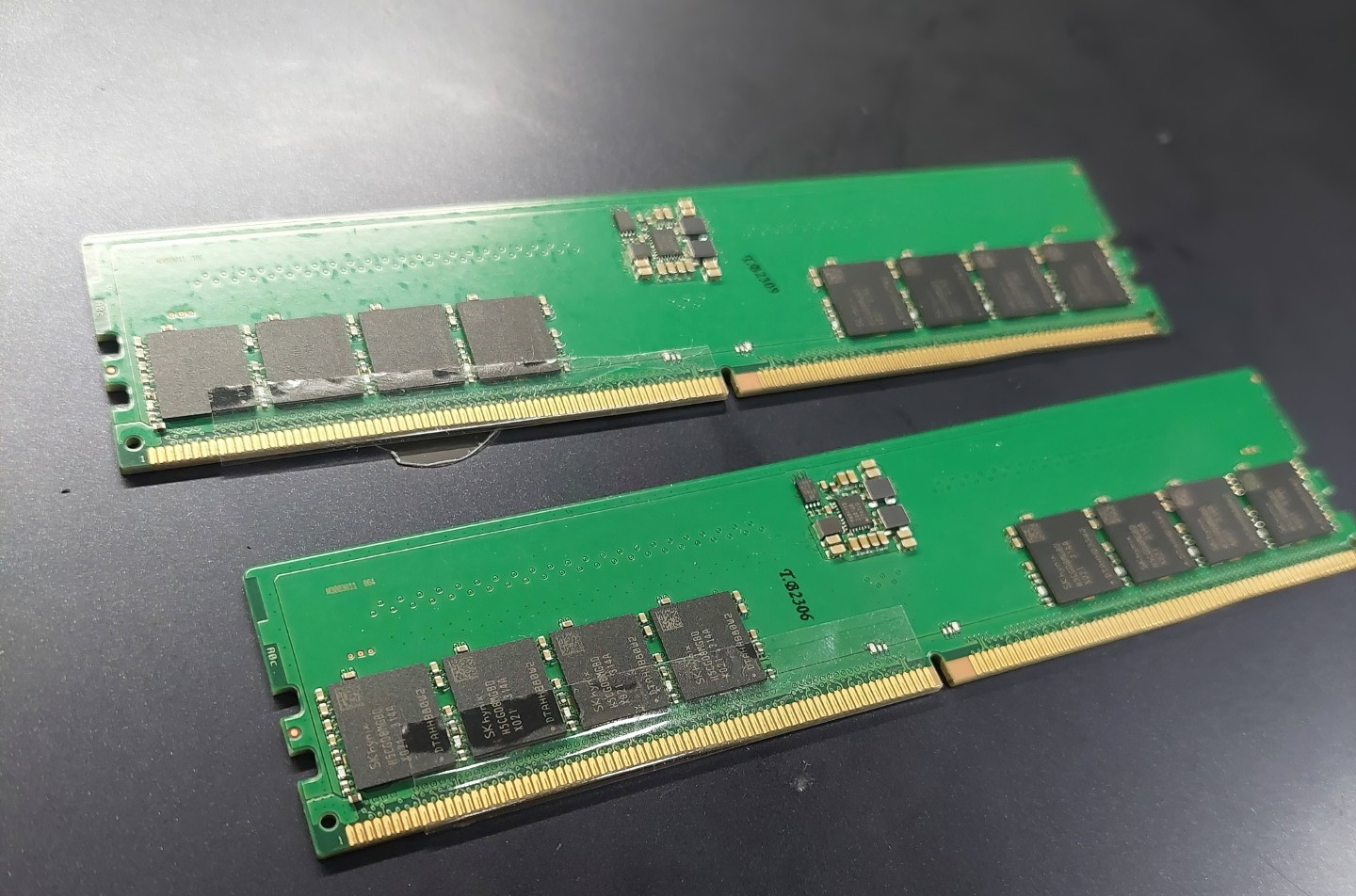
ASUS is showing early support for a new, budget-friendly approach to DDR5 memory called HUDIMM on its ROG motherboards, a move that could help make entry-level PC builds noticeably more affordable.
HUDIMM is a cost-focused DDR5 memory concept built around a “one sub-channel” design. To understand why that matters, it helps to look at how typical DDR5 UDIMM modules are laid out. Standard DDR5 desktop memory generally uses a “two sub-channel” arrangement (effectively 2 x 32-bit). HUDIMM changes that by running only a single 32-bit sub-channel. The practical result is simple: you end up using half of what the module could otherwise offer, which cuts capacity but also aims to cut the price.
The idea exists for one main reason: higher-capacity memory modules like 16GB, 24GB, and above can be tough to justify for budget PC builders when prices are high. Instead of paying for full-capability modules, HUDIMM targets lower-cost builds by reducing the memory resources in a more deliberate, standardized way.
One interesting part of the HUDIMM approach is flexibility. It’s possible to mix HUDIMM modules with standard UDIMM sticks. In an example shown, an 8GB HUDIMM module was paired with a 16GB UDIMM module, and the system’s performance behavior was described as comparable to running a single UDIMM kit—suggesting this isn’t only about cutting cost, but also about maintaining a smooth real-world experience for everyday workloads.
ASUS support was highlighted through a demonstration done by a ROG motherboard R&D engineer using the ROG Z890 APEX motherboard. The demo essentially showed how limiting connection points on a module can force it into a one sub-channel mode. Two 24GB modules were used with a modification to restrict operation, and the system reported a total of 24GB (12GB + 12GB) rather than the expected 48GB (24GB + 24GB), confirming both DIMMs were operating with a single sub-channel active.
There was also a look at a Teamgroup HUDIMM module designed from the start as a one sub-channel stick. This particular module was an 8GB part with fewer memory chips populated than a full alternative (half the DRAM banks, using 4 ICs instead of 8). It successfully booted and showed up properly in BIOS, and it was rated for 4800 MT/s, which is the baseline DDR5 speed.
For entry-level PC builders, capacities in the 16GB to 24GB range are often plenty for typical gaming, school, office tasks, and general home use. HUDIMM isn’t positioned as a long-term fix for memory pricing—it’s more like a practical bridge while DDR5 costs remain stubbornly high. If pricing doesn’t improve soon, HUDIMM could become a sensible option for low-end and budget desktop PCs that need DDR5 compatibility without pushing buyers into higher-priced memory kits.