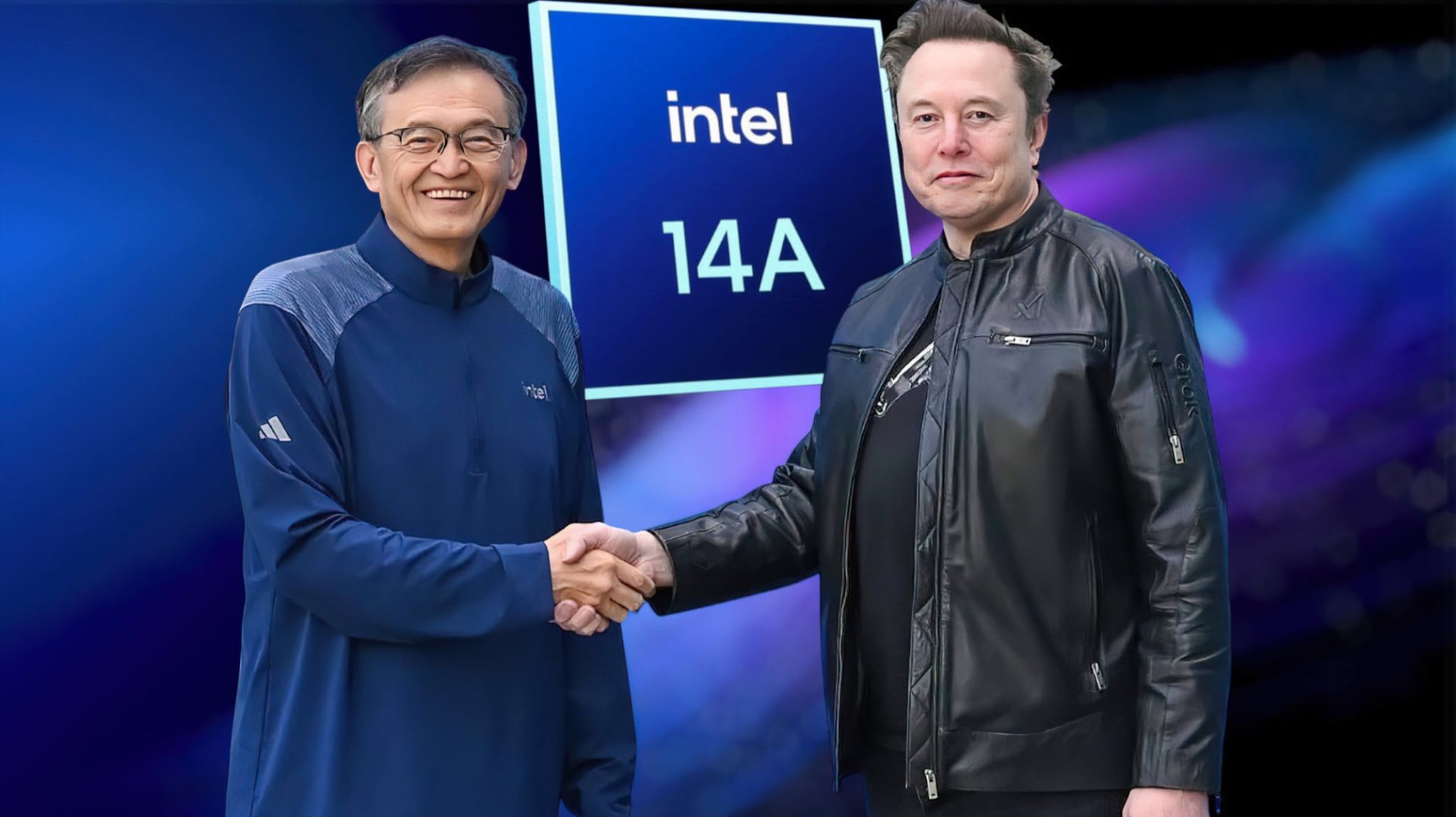
Intel’s next-generation 14A manufacturing process just picked up a major high-profile supporter: Tesla. During Tesla’s Q1 2026 earnings call, CEO Elon Musk confirmed that Tesla plans to use Intel 14A for its TeraFab project, signaling a deeper partnership than many expected and giving Intel’s foundry ambitions a significant credibility boost.
Musk described Intel 14A as “state-of-the-art,” while also acknowledging that the process isn’t fully complete yet. That point matters because it clarifies Tesla’s timeline and strategy: rather than needing 14A immediately, Tesla expects the node to be far more mature by the time TeraFab ramps. In Musk’s view, that maturity curve makes Intel 14A the right long-term choice for Tesla’s next wave of custom silicon.
He also emphasized that Tesla and Intel already have a strong working relationship, expressing respect for Intel’s leadership and technical team and calling the collaboration a “great partnership.” For Intel, it’s the kind of public endorsement that can reshape perception—moving 14A from “promising roadmap technology” to a node that a major customer is actively planning around.
The TeraFab focus ties directly into Tesla’s growing push into AI-focused custom chips. Musk has previously highlighted Tesla’s progress in custom silicon, and the company has relied on established manufacturing partners for recent chip efforts. But Tesla’s demand for advanced chips has been rising quickly, and Musk has said that existing capacity in the market hasn’t always been able to keep pace with what Tesla wants. That capacity pressure is a big reason Tesla has been exploring more options—working with multiple manufacturers and now moving toward its own manufacturing initiative with TeraFab.
Key details about the TeraFab plan are still developing. It’s not yet confirmed whether Tesla’s arrangement with Intel involves straightforward manufacturing services on Intel 14A, a licensing-style agreement, or a broader co-development framework. What is clearer is the projected operational window: TeraFab is expected to come online around 2029, starting with a pilot phase targeting approximately 3,000 wafers per month before expanding further.
For Intel, Tesla’s confirmation arrives at an important time. Intel 14A is widely viewed as a pivotal technology for the company’s foundry business, and landing recognizable customers is essential for proving it can compete as a serious alternative in advanced chip manufacturing. If Tesla follows through, it won’t just validate Intel 14A—it could help attract additional major customers evaluating Intel as a long-term foundry partner.
With TeraFab positioned as a future hub for Tesla’s custom silicon and Intel 14A set as the targeted process technology, this partnership could become one of the most closely watched moves in the next phase of advanced chip manufacturing.