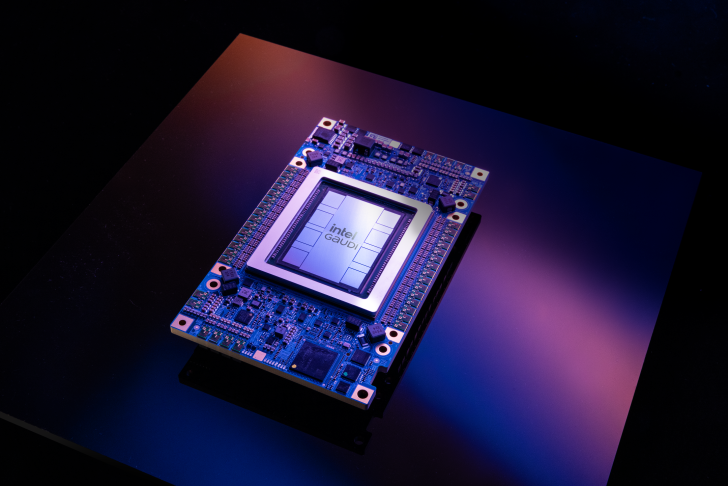
Intel’s Gaudi AI accelerators are struggling to meet their “modest” revenue goals, raising questions about the company’s strategy in this competitive market. Despite being a heavyweight in the tech industry, Intel is facing challenges as competitors like NVIDIA and AMD intensify their presence in both the x86 and AI sectors. In their recent Q3 2024 earnings report, CEO Pat Gelsinger disclosed that their Gaudi AI lineup failed to reach the anticipated revenue of $500 million, a stark contrast to NVIDIA’s ambitious multi-billion dollar aspirations.
Gelsinger noted that despite releasing the Gaudi 3 AI accelerator, Intel has struggled to gain market traction. The transition to their newest platform has been slower than expected, and the Gaudi 3 AI solution hasn’t captured enough customer interest to drive widespread adoption. However, Intel remains optimistic, emphasizing that the market demands cost-effective, open-source solutions.
Although Intel surpassed its general non-GAAP revenue expectations, bringing in $13.284 billion, the shortfall in Gaudi’s performance highlights potential flaws in their AI strategy. Currently, Intel’s offerings prioritize cost efficiency over raw power, which does not directly compete with more performance-driven solutions from NVIDIA and AMD.
Looking ahead, Intel plans to introduce its Falcon Shores architecture, employing TSMC’s 3nm process and CoWoS packaging, aligning with industry standards. This strategic move to an external foundry could bolster Intel’s AI business, positioning it to challenge competitors more effectively. While Intel’s future in the AI market holds promise, the company urgently needs a breakthrough to solidify its standing.