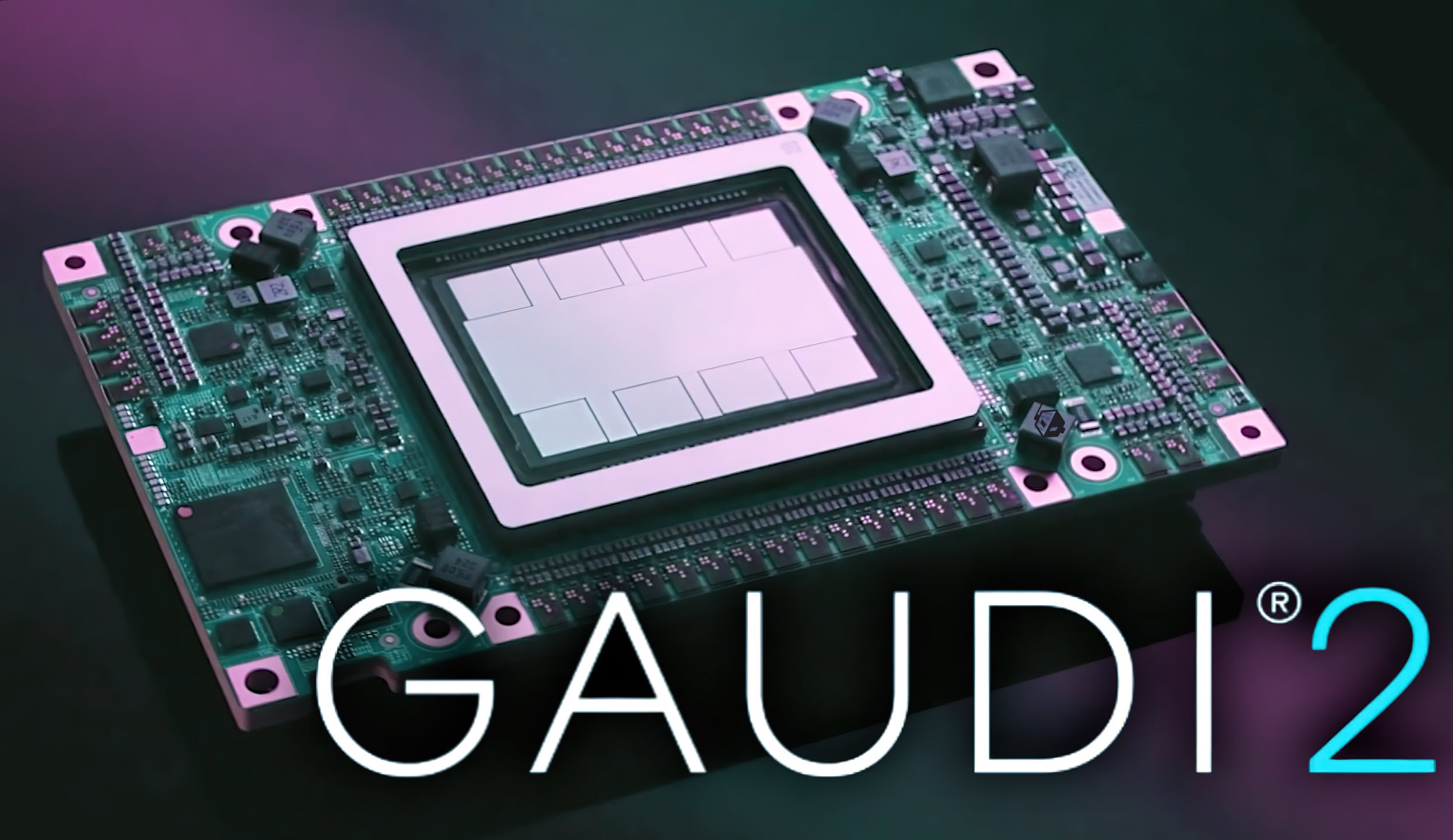
Intel appears to be expanding its foothold in the artificial intelligence (AI) market with the introduction of a new variant of its Gaudi 2 AI accelerator, as suggested by recently surfaced Linux patches. This comes amid competitive developments in the AI accelerator field and Intel’s broader strategy to tap into lucrative markets.
Intel Explores Variants of Gaudi 2 AI Accelerators
Recent updates from technology news indicate that Intel has been preparing different versions of its Gaudi 2 AI accelerators. This preparation includes support for a mysterious Gaudi 2-D product within the framework of Linux. This follows the sighting of a Gaudi 2-C model, though details about the significance of these models remain scarce.
Analysis of the Linux driver patches for Habana Labs—a subsidiary of Intel—reveals that the Gaudi 2-D version shares similar code paths with the original Gaudi 2 AI accelerator. This similarity hints that the “2D” model may well be a revision aimed at a specific segment of the market.
Potential Focus on the Chinese Market
Speculation arises regarding Intel’s intent with these new AI accelerator variants, especially considering the strategic importance of the Chinese market. There is a possibility that Intel could be preparing for a larger presence in China, potentially offering both low- and mid-tier AI solutions. However, concrete details about such plans are not yet confirmed.
Intel’s Position in the AI Market and Future Optimism
Intel’s enthusiasm for AI was palpable during their recent keynote at Computex, where the company expressed optimism about its advancements in AI technologies. The Gaudi lineup, in particular, was highlighted for its favorable price-to-performance ratios. Intel’s deliberate moves signal its ambition to provide competitive alternatives in a market where Nvidia has been a dominant player.
The Gaudi 3 AI accelerators have already garnered significant attention, pointing toward Intel’s continuous commitment to innovating in the AI space. Though Intel may not currently match Nvidia’s levels in certain aspects, the company is clearly positioning itself to offer aggressive value propositions.
Intel’s potential entry into the Chinese market with revised AI accelerators could result in an intensified competition, especially if they manage to attract customers with competitive pricing and performance metrics.
Impact and Expectations for the Future
As Intel navigates through the evolving AI market landscape, the introduction of the Gaudi 2-D model could mark a significant step in their strategy. While the complete impact of this move remains to be seen, it represents Intel’s adaptive approach to addressing market demands and supplying AI solutions that may appeal to a broad range of customers, including those in high-growth markets like China.
For now, the AI industry and market onlookers will be closely watching Intel’s further developments and the potential implications for the market dynamics against other major players such as Nvidia. The insights and actions of Intel in this area could provide valuable lessons for other technology companies looking to adapt and thrive in specialized markets.