Tesla’s eagerly anticipated Cybertruck has stirred significant interest, particularly regarding its origin and build quality. The company’s top engineer for the Cybertruck has emphasized that it stands among the most American-made vehicles, sharing this title with the Model Y.
A considerable portion of the Cybertruck’s components, about 65%, are sourced from the United States or Canada, with another substantial contribution of 25% coming from Mexico. The Cybertruck has shown that global supply chains play a crucial role in its production, with significant steering and suspension parts originating from Mexico.
The Cybertruck is engineered with an innovative 123 kWh 4680 structural battery that is integrated into the vehicle’s chassis. This design, mirroring the approach taken with the Texas-made Model Y, has raised questions about the potential challenges in battery serviceability and repairs in the future. With electric vehicles, the integration of such components is becoming more common, although it may complicate maintenance post-warranty. Some manufacturers are now considering extended warranties of up to 15 years, suggesting confidence in the longevity and performance of modern battery technology.
However, during a recent examination of the Cybertruck, observers noted what they described as “launch quality” issues. These included inconsistencies like unseated rubber seals on the doors and incorrect hinges, which were likely a result of the rush to get the vehicle to market and the need for assembly line teams to refine their coordination. Tesla CEO Elon Musk had previously mentioned that a small number of vehicles had been affected by issues such as noticeable panel gaps, but assured that this impacted only a limited batch.
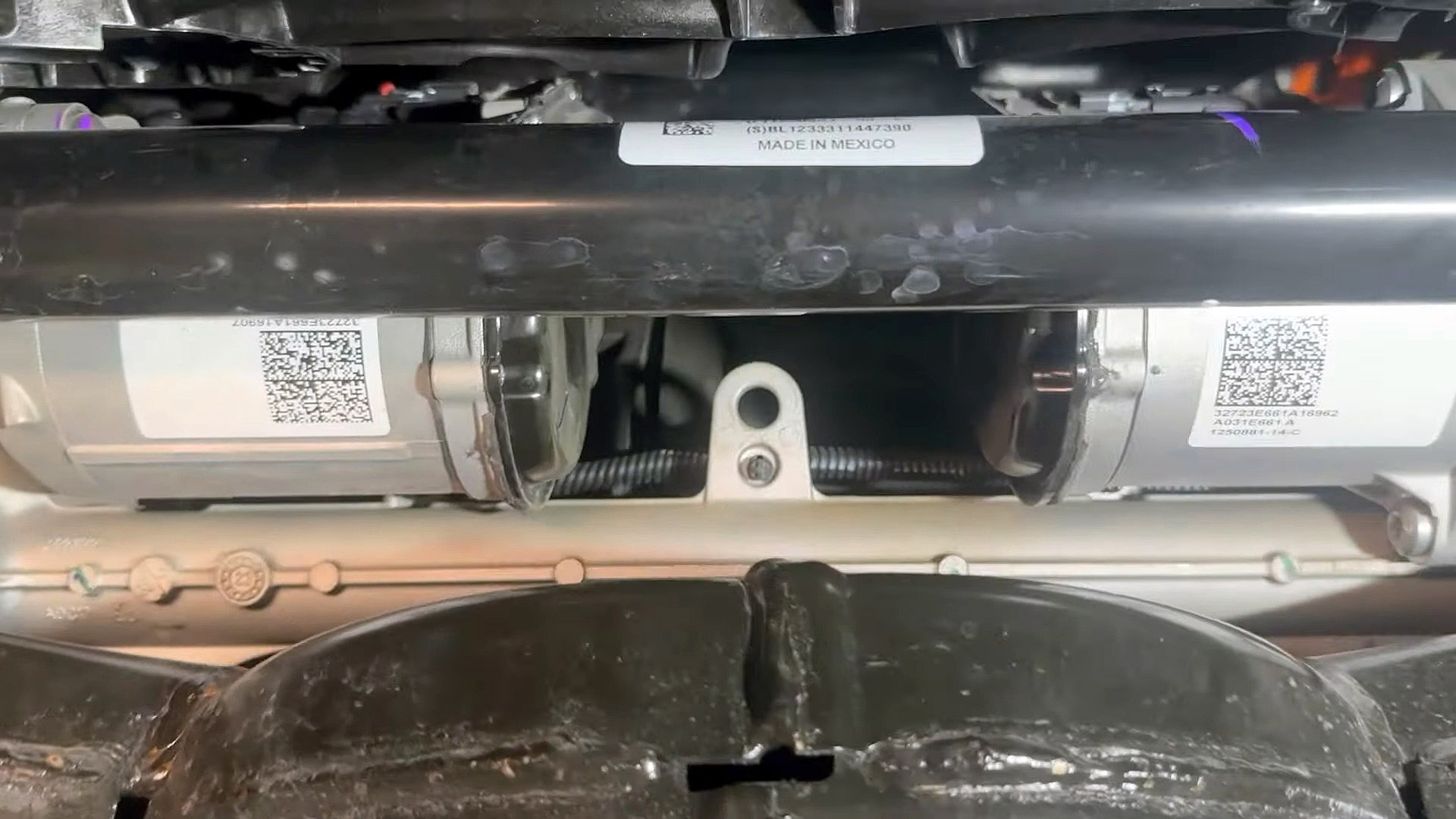
One of the most fascinating aspects of the Cybertruck’s design highlighted in its teardown is the wire steering system. Unlike traditional steering mechanisms, Tesla has developed a steer-by-wire system that doesn’t rely on a physical connection between the steering wheel and the wheels. Instead, electric signals control the steering. This technology offers a more responsive driving experience and can be adjusted for preferences or driving conditions. This system has been made possible thanks to the new 48V architecture, which surpasses the capabilities of the previous 12V systems, allowing for increased power to be transferred to the steering motors. Redundancy is key in the design, with dual motors positioned at the front to ensure reliability in case one fails.
Moreover, the rear of the Cybertruck features a significant gigacasting component, which, while beneficial for structural integrity, may pose hurdles for extensive repair jobs. This mirrors the construction approach of the Model Y, which includes a similar structural battery format. Such design choices may impact how insurers view these vehicles in terms of serviceability – with expensive repairs potentially leading insurers to consider total losses over complex restorations. Tesla has responded to these concerns by aiming to simplify repair processes and offering gigacast parts to service centers at cost, although the long-term effectiveness of these strategies with the Cybertruck remains to be seen.
In conclusion, Tesla’s Cybertruck is a pioneering vehicle with distinct features like its steer-by-wire technology and embedded structural battery. As with any new technology, it has encountered some growing pains common to vehicle launches. However, the focus is on the Cybertruck’s innovative contributions to the electric vehicle market and its role in pushing the boundaries of automotive design and technology. The true test will be in its performance, service life, and adaptability in addressing initial quality concerns as it moves into widespread use.