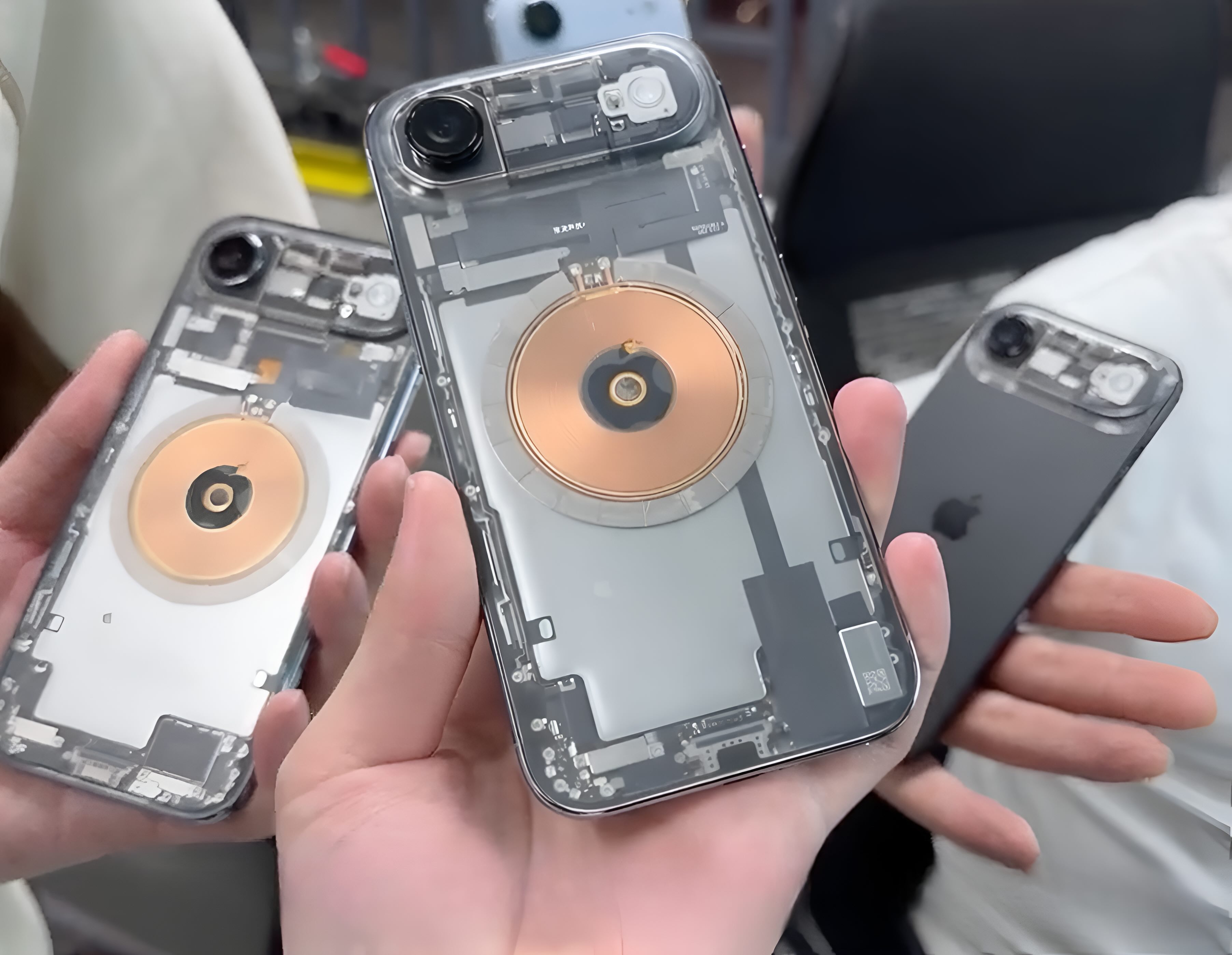
A transparent iPhone mod is always eye-catching, but one creator just raised the bar in a way many iPhone Air owners didn’t think was even possible. YouTuber Linzin transformed an ultra-slim iPhone Air with two major upgrades: a fully transparent back glass that shows off the internal components, and a working physical SIM card slot.
Transparent iPhone conversions aren’t new, and the iPhone Air has already been the subject of see-through back mods before. What makes this project stand out is how far it goes beyond looks. Linzin partnered with experienced modding specialists from China’s famous Huaqiangbei repair and customization scene to pull off a mod that’s both cosmetic and functional—bringing back something many users still prefer over eSIM: a real SIM tray.
Getting the iPhone Air’s rear glass to turn transparent wasn’t as simple as peeling off a coating. The team had to remove multiple paint layers, and the toughest part involved using a laser while carefully avoiding damage to the MagSafe charging coil. That detail matters because MagSafe is a big part of the iPhone experience for many users, especially those who rely on magnetic chargers and battery packs. Once the delicate work was finished, the entire rear panel became clear, putting the iPhone Air’s internals on display.
Then came the “SIM slot surgery,” the most extreme part of the build. To create space for a physical SIM slot, the modders had to cut a sizable opening into the phone’s chassis. That structural change created another problem: the original Apple haptic engine no longer fit, so it was replaced with a smaller third-party unit. After additional board-level soldering, the new SIM slot actually worked as intended—and the phone booted normally.
As impressive as the final result is, the mod came with real trade-offs. Thermal performance took a noticeable hit, largely because heat-management pads were removed during the process of stripping the paint from the rear panel. The iPhone Air also lost its dust and water resistance, which is a major sacrifice for day-to-day durability. On top of that, a microphone ribbon cable later came loose, forcing the phone to go back in for repairs.
Still, Linzin achieved exactly what many users have wanted: an iPhone Air that looks strikingly different and makes switching carriers or SIM profiles easier without the hassle of managing eSIMs. The cost of that convenience and custom style is clear, though—worse thermals, reduced protection against the elements, higher repair risk, and a warranty that’s effectively gone.