Apple’s iPhone 16e and iPhone 17e are so similar that, at a glance, you’d be hard-pressed to spot meaningful changes. They share almost the exact same chassis and overall design language, with Apple’s newest “e” model largely focusing on internal upgrades like a newer chipset and the welcome return of MagSafe support—something many people felt was a glaring omission on the previous budget-friendly iPhone.
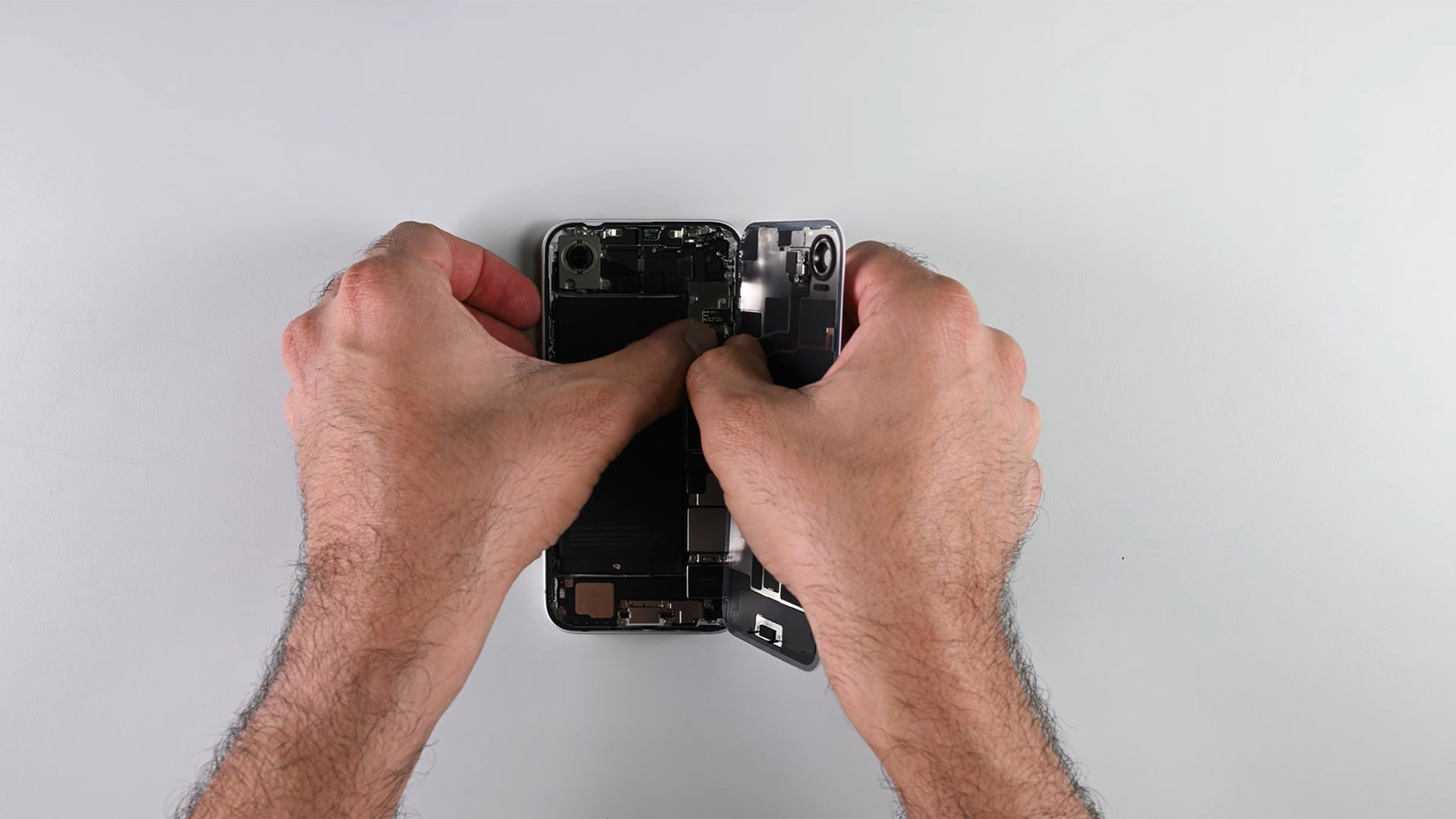
A recent teardown from iFixit highlights just how close these two phones really are, and it also answers a question that’s been on a lot of owners’ minds: can you add wireless charging hardware to the iPhone 16e? According to what the teardown demonstrates, the physical process is surprisingly quick with the right tools and a bit of hands-on experience.
Inside the iPhone 17e, the MagSafe charging coil stands out as one of the most notable hardware differences compared with the iPhone 16e. Beyond that, much of what you’ll find looks extremely familiar. Apple has also provided “day one” repair manuals to authorized repair professionals, which makes opening the iPhone 17e far more straightforward than many people expect.
Battery access is especially simple. Apple continues using an electrically-released adhesive system to detach the battery from the chassis, which can make battery replacement less stressful and less time-consuming than older pull-tab or strongly glued approaches. The battery itself appears unchanged between generations too, coming in at 15.556Wh (4,005mAh), matching what’s found in the iPhone 16e.
Not everything about the iPhone 17e is equally repair-friendly, though. The teardown points out that reaching the USB-C charging port takes a frustrating amount of effort. That’s a big deal because charging ports are among the most commonly worn components on any smartphone thanks to constant plugging and unplugging. Apple reportedly made changes on the iPhone 16 to simplify USB-C port replacement, so it’s disappointing to see the iPhone 17e doesn’t follow that same easier approach.
The big curiosity, of course, is whether swapping parts between the iPhone 17e and iPhone 16e actually delivers MagSafe on the older model. Hardware-wise, the components may fit, but there are important caveats. Some parts swaps can break features tied to Apple’s component pairing. In particular, Face ID won’t work if the TrueDepth camera is swapped, since each unit is registered to its original device.
MagSafe is also not as simple as installing the coil and calling it done. The teardown suggests the iPhone 16e doesn’t have the necessary software support to properly recognize the MagSafe component, which explains why you don’t get the usual MagSafe animation. And while the physical modification may be possible, one key detail still isn’t fully confirmed: whether the iPhone 16e can charge at the same 15W MagSafe speed as the iPhone 17e. That will require additional testing.
Overall, iFixit awarded the iPhone 17e a solid 7 out of 10 repairability score. While that sounds like Apple is moving toward more repair-friendly phones, the teardown notes these design decisions may be driven more by manufacturing efficiency and cost savings than a pure push for consumer repair freedom. Still, for buyers who care about easier battery replacement and more practical long-term ownership, the iPhone 17e’s internals reveal some encouraging steps—alongside a few stubborn frustrations that haven’t gone away.