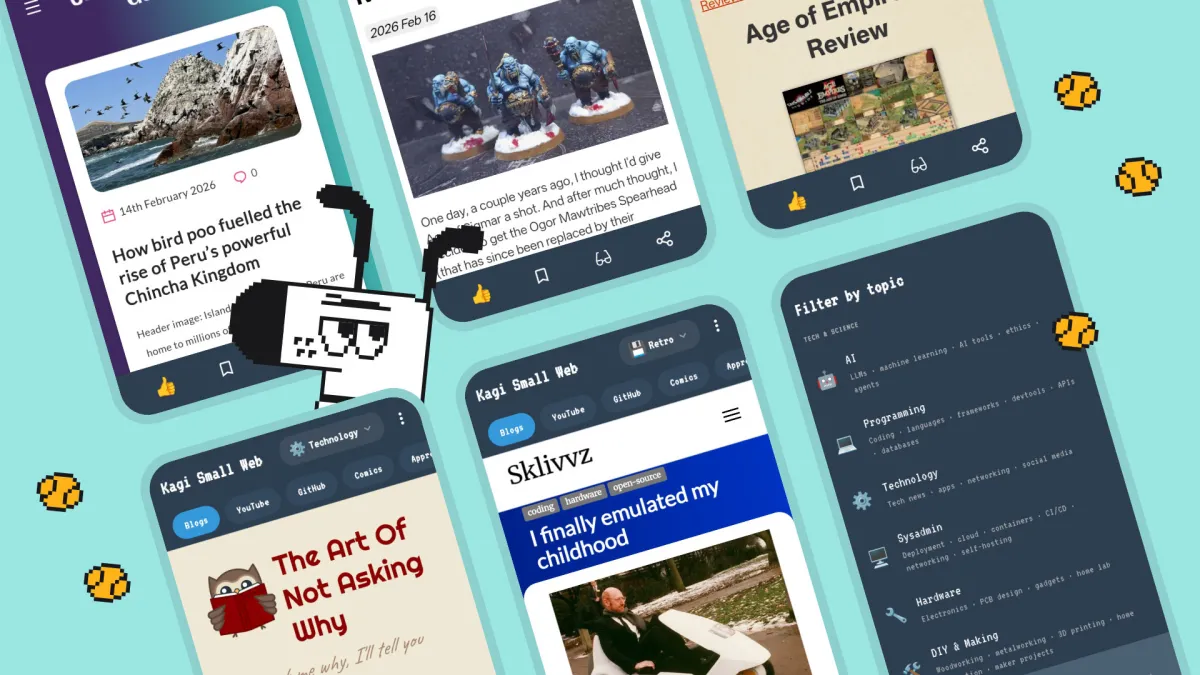
With AI-generated content flooding search results and social feeds, finding genuinely human-written corners of the internet can feel harder than ever. Kagi, a search engine company based in Palo Alto, is betting that many people still want the web to feel personal again. Its latest move brings its “Small Web” discovery experience to iOS and Android through new mobile apps, putting a curated collection of independent, non-commercial websites right in your pocket.
Kagi uses the term “Small Web” to describe websites created by individuals rather than corporations or ad-driven content farms. Think personal blogs, webcomics, indie video creators, and other passion projects that reflect real voices and niche interests. These are the kinds of sites that shaped the early internet, before algorithms, ads, and platform incentives pushed everything toward mass appeal and maximum monetization.
The challenge today is discoverability. As AI-written pages multiply and larger platforms dominate attention, many smaller independent sites get buried. Kagi’s Small Web initiative is designed to fix that by highlighting human-authored, independent websites inside its broader search ecosystem, while also offering a dedicated browsing experience focused on exploration rather than ranking battles.
Kagi first introduced the Small Web initiative back in 2023, aiming to elevate these indie sites in search results and through a standalone discovery page. More recently, the company expanded the idea with new tools, including browser extensions, mobile apps, and category filters that help users narrow down what they want to explore.
The Small Web discovery site works a bit like a modern revival of the old “random web discovery” experience: it surfaces one handpicked site at a time, and you can simply hit “next” to jump to another. The idea is straightforward—make it easy to stumble into something interesting that you wouldn’t have found through typical searches.
Now that categories are part of the experience, discovery doesn’t have to be totally random. Users can filter by topics and formats across Kagi’s index of more than 30,000 Small Web sites, focusing on what they actually enjoy. In the iOS and Android apps (as well as the browser extensions), you can choose the type of content you want to see—such as blogs, videos, code repositories, or comics—then browse in a more intentional way.
The mobile apps also add practical features that make Small Web browsing feel less like a novelty and more like a daily habit. You can check recently viewed or popular sites, read content in a distraction-free mode, and save favorite websites and articles to revisit later.
Even with the positive reception to the idea of spotlighting the indie web, some users argue the approach still has gaps. In community discussions, critics point out that Kagi appears to prioritize sites with RSS feeds and recent activity, which could leave out one-off projects, experimental pages, and unique single-purpose sites that don’t publish on a regular schedule. Others have reported bumping into sites that don’t feel truly human-written, raising the concern that AI-generated content could slip into a collection meant to celebrate authentic voices.
Still, the broader concept is resonating: a human-curated directory of human-created websites, built for discovery instead of engagement metrics. If Kagi’s long-term ambition of competing as a paid, premium alternative to mainstream search engines faces headwinds, investing in a more meaningful way to explore the web could become a defining feature that sets it apart.
For those who want to help shape what gets included, Kagi allows people to suggest new sites for the Small Web through its public submission process.