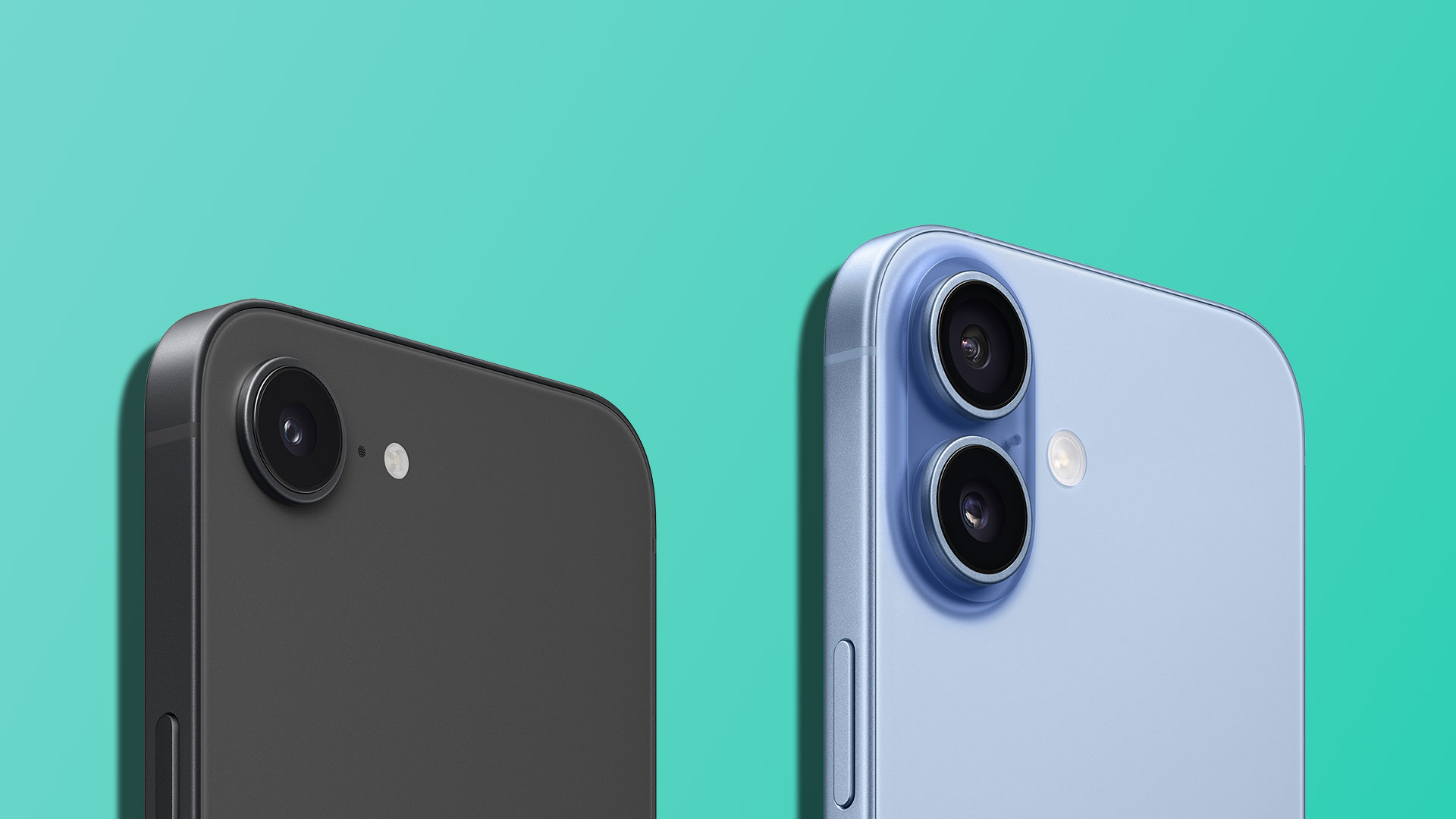
Apple has officially introduced the iPhone 17e as the follow-up to the iPhone 16e, keeping the familiar look while making a handful of meaningful upgrades. At $599, it lands in an attractive sweet spot for buyers who want a new iPhone without paying flagship pricing. The bigger question is whether it’s smart to save $200, or if the $799 iPhone 17 is clearly the better value.
Below is a straightforward iPhone 17e vs iPhone 17 comparison, focusing on the differences that matter most in real-world use: display quality, performance, cameras, connectivity, charging, and battery life.
Display and key features: same size, very different experience
The iPhone 17e continues with a 6.1-inch notched display, much like its predecessor. The big improvement is durability: Apple added Ceramic Shield 2, bringing it in line with the iPhone 17 and offering significantly improved scratch resistance.
But the screen technology is where the iPhone 17 pulls ahead. The iPhone 17 uses an LTPO OLED panel with ProMotion, allowing the refresh rate to dynamically scale from 10Hz up to 120Hz. That means smoother scrolling, more fluid animations, and better efficiency when high refresh isn’t necessary. The iPhone 17e sticks to an LTPS OLED panel locked at 60Hz, which can feel less responsive side-by-side and can be less power-efficient in certain scenarios.
Brightness also favors the iPhone 17. It reaches 1,000 nits typical brightness compared to 800 nits on the iPhone 17e. Peak brightness rises to 1,600 nits on the iPhone 17 versus 1,200 nits on the iPhone 17e. The iPhone 17 can also drop as low as 1 nit minimum brightness to reduce power use in dark environments.
Both models include the Action button, but the iPhone 17 adds a Camera Control slider for faster access and more seamless photo and video capture.
Performance: same A19 name, different graphics power
On paper, the iPhone 17e and iPhone 17 look closely matched. Both come with 8GB of RAM, and both start at 256GB of NVMe storage. They also share the A19 chip, built on TSMC’s 3nm N3P process.
The difference is that the iPhone 17e uses a binned A19 with a 4-core GPU, while the iPhone 17 gets a 5-core GPU. CPU configuration remains the same across both, with two performance cores and four efficiency cores, and both include a 16-core Neural Engine.
The practical impact is likely noticeable for graphics-heavy tasks. Based on previous comparisons between binned and non-binned chips in the same family, a GPU reduction like this has resulted in around a 15% drop in Metal performance in benchmarks. Even if architectural improvements help narrow the gap, the iPhone 17 should still be the better choice for AAA gaming, sustained graphics workloads, and users who want more performance headroom over time.
Wireless connectivity: iPhone 17 is far more future-proof
Connectivity is another area where the iPhone 17e makes compromises. It lacks mmWave 5G again and supports Wi‑Fi 6 plus Bluetooth 5.3.
The iPhone 17 upgrades to Wi‑Fi 7 and Bluetooth 6 and supports both sub‑6GHz and mmWave 5G. If you care about the fastest wireless speeds, lower latency, and longer-term compatibility with newer routers, accessories, and networks, the iPhone 17 is clearly ahead.
Camera comparison: single-camera simplicity vs true versatility
If camera quality and flexibility matter to you, the iPhone 17 is the stronger pick.
The iPhone 17 features a Dual Fusion camera system: a 48MP wide camera plus a 48MP ultrawide. It also includes sensor-shift optical image stabilization on the main camera, a more advanced stabilization approach than the standard OIS found on the iPhone 17e. The iPhone 17e has only one rear 48MP camera, which limits creative options and framing flexibility.
The iPhone 17 also offers more zoom options and includes Cinematic mode, which the iPhone 17e lacks.
Up front, the iPhone 17 steps up to an 18MP Center Stage camera with features like ultra-stabilized video and Center Stage for video calls. The iPhone 17e uses a 12MP front camera and misses those added capabilities.
Charging and USB-C: MagSafe finally arrives on the 17e
One of the most welcome upgrades on the iPhone 17e is MagSafe. This fills a major gap from the prior generation and brings it closer to the iPhone 17 for charging convenience and accessory compatibility. Both support MagSafe wireless charging up to 15W (or higher with a 20W adapter), and the iPhone 17e now works properly with MagSafe cases and add-ons.
However, the iPhone 17e’s USB‑C port is limited to USB 2.0 speeds, which matters if you frequently move large video files or rely on wired data transfer.
Battery life: iPhone 17 lasts longer, especially for streaming
Apple hasn’t revealed exact battery capacities, but it does provide usage estimates, and the iPhone 17 comes out ahead. The iPhone 17e’s battery life is also unchanged compared to the iPhone 16e, suggesting the battery itself may not have been upgraded.
Video playback:
iPhone 17e: up to 26 hours
iPhone 17: up to 30 hours
Streamed video playback:
iPhone 17e: up to 21 hours
iPhone 17: up to 27 hours
A big reason for this gap is likely the iPhone 17’s LTPO ProMotion display, since variable refresh can save power during less demanding on-screen content.
So which should you buy: iPhone 17e or iPhone 17?
The iPhone 17e makes sense if your goal is to spend less while still getting a modern Apple phone with solid performance, 256GB base storage, improved durability, and the convenience of MagSafe. It’s a strong entry point for people moving into the Apple ecosystem or anyone who simply doesn’t need the best camera system and fastest wireless tech.
But if you can stretch your budget by $200, the iPhone 17 is the better long-term buy. You’re paying for a noticeably better display with 120Hz ProMotion, stronger GPU performance, longer battery life, significantly better camera hardware and features, and next-generation wireless connectivity. Those upgrades don’t just look good on a spec sheet—they’re the kinds of differences you’ll feel every day, and they’ll help the phone feel current for longer.


