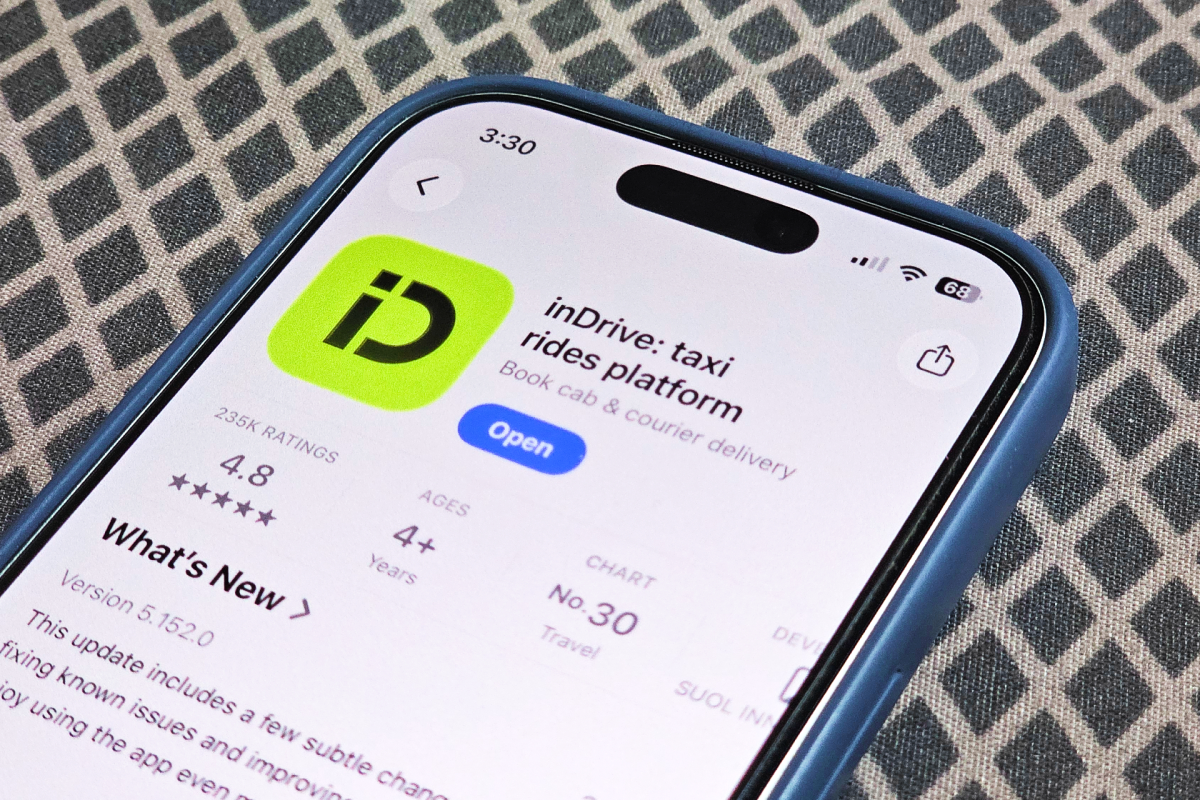
inDrive is best known for shaking up ride-hailing with a bidding-style fare system where riders and drivers negotiate the price directly. Now the company is pushing well beyond transportation, launching in-app advertising across its top 20 markets and expanding grocery delivery into Pakistan as it advances a broader “super app” strategy designed to unlock new revenue streams and keep users coming back more often.
This expansion comes at a time when ride-hailing companies are feeling pressure from tougher competition and slimmer margins in many emerging markets. For a platform built around affordability and price-sensitive users, relying only on ride commissions can be limiting. Advertising adds a high-margin business that can scale with app usage, while grocery delivery gives people a reason to open the app far more frequently than they might for occasional rides. Together, those two moves can help inDrive diversify revenue while strengthening its core mobility offering.
Advertising rollout across key inDrive markets
inDrive is rolling out advertising in countries that include Mexico, Colombia, Pakistan, Kazakhstan, Egypt, and Morocco as part of its wider top-20-market push. The company began testing earlier in 2025, generating hundreds of millions of impressions and attracting interest from major consumer brands and banks, according to Andries Smit, the company’s chief growth business officer.
At launch, the focus is on in-app advertising placements. These are designed to appear during moments when users are especially engaged, such as after a ride is booked while they’re waiting for pickup, and during the ride itself while passengers are en route. These windows typically deliver longer attention spans compared to many other mobile app experiences, making them valuable for advertisers.
While in-car and on-vehicle ads are on the roadmap, inDrive plans to prioritize in-app formats through 2026, citing the operational complexity of physical advertising in emerging markets and stronger early performance from digital placements.
Why Pakistan is central to inDrive’s “super app” expansion
Alongside ads, inDrive is scaling grocery delivery in Pakistan, which becomes its second grocery market after Kazakhstan. The expansion is being executed through a partnership with Krave Mart, a local dark-store operator that received an investment from inDrive in December 2024.
Pakistan is an especially attractive market for quick commerce because grocery retail is still fragmented and often informal, while demand for app-based convenience is rising in major cities as more households balance work and family schedules. At the same time, inDrive already has significant scale in the country, allowing it to promote grocery delivery to an existing user base instead of spending heavily on acquiring new customers, a challenge that has hurt many quick-commerce startups.
inDrive entered Pakistan in 2021 and has been expanding steadily. The company reports ride volumes in the country climbed nearly 40% year-over-year in 2025, and deliveries through its courier services grew 67% in the first half of the year. It now operates ride-hailing in more than 20 Pakistani cities, along with intercity services across over 200 locations, with strong usage in Karachi, Lahore, and Islamabad.
Grocery delivery in Karachi first, then wider city expansion
The grocery rollout will begin in Karachi, where users will be able to order daily essentials with delivery targeted at roughly 20 to 30 minutes. From there, inDrive plans to expand the service to other major cities, including Lahore, Islamabad, and Rawalpindi, later this year as logistics and supply capacity are built out with Krave Mart.
The offering is set to include more than 7,500 products across categories such as fresh produce, meat and dairy, snacks, and household items. inDrive also plans to provide free delivery for orders above PKR 499 (about $2) and says there will be no service fees, positioning the service to appeal directly to value-conscious customers.
Investment focus and growth strategy in a cautious market
Pakistan is also becoming a priority for inDrive’s investment capital. From the company’s $100 million multi-year investment program announced in late 2023, the largest share so far has been directed to Pakistan, according to Smit, with at least half of the overall commitment already deployed.
This focus stands out because many investors have been cautious about Pakistan amid geopolitical and macroeconomic risk. Equity funding in the country increased 63% year-over-year in 2025 to $36.6 million across 10 rounds, but that is still far below the peaks recorded in 2021 and 2022. inDrive sees the contrast between investor hesitation and strong local demand as an opening. Having operated across dozens of emerging markets, the company believes it can handle volatility and invest through uncertainty. Its established footprint also allows it to help partners scale without the heavy customer acquisition spending that becomes even harder when outside funding is limited.
A larger platform play: mobility plus ads, delivery, groceries, and more
inDrive’s push into advertising and commerce is supported by its global scale. The company operates in 1,065 cities across 48 countries and has surpassed 360 million app downloads. It has also ranked as the world’s second most-downloaded mobility app for the third consecutive year, based on the company’s data.
Over time, inDrive expects advertising to become a more meaningful part of its business, especially as grocery and delivery volumes grow and create more opportunities for targeted, contextual promotions. This shift is already visible in the revenue mix: ride-hailing, which represented about 95% of inDrive’s revenue a few years ago, is now closer to 85%, even while the core ride business continues to expand.
In the next three to five years, inDrive expects groceries, delivery, advertising, and eventually financial services to play a much bigger role as it expands selectively in priority markets. For users, that could mean an app that’s no longer just for getting from point A to point B, but one that becomes part of everyday routines—especially in fast-growing cities where convenience and affordability matter most.