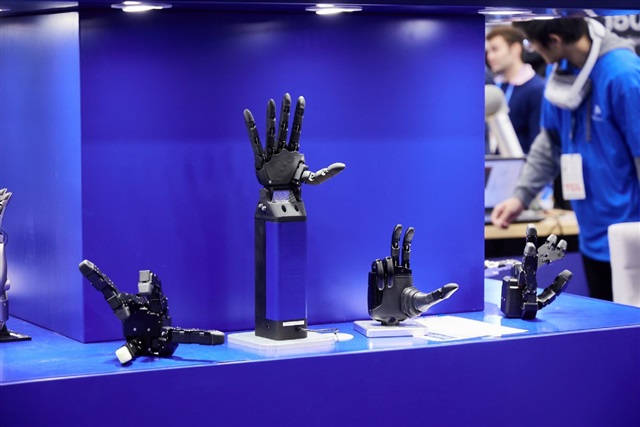
The future of AI robot computing is rapidly shifting away from relying mainly on distant cloud servers and toward edge devices that can think and react on the spot. As this transition accelerates, one component is emerging as a surprisingly important centerpiece: dexterous robotic hands. According to industry experts, the next major leap in AI robotics won’t be driven only by bigger models or faster chips, but by hands that can sense, understand, and respond to the physical world with human-like precision.
Why robotic hands matter so much in the next wave of AI
Robots are getting better at seeing and planning, but true real-world usefulness depends on touch and manipulation. A robot can identify an object perfectly with computer vision, yet still fail to pick it up safely, rotate it correctly, or apply the right amount of pressure. That’s where advanced fingertip sensing and fine motor control become game-changing.
Dexterous hands act as the “endpoint” where AI meets reality. Every contact point with the world produces valuable information—pressure, texture, vibration, slip, temperature, contact angle, and micro-movements. The richer this tactile feedback becomes, the more capable a robot is at delicate tasks like handling fragile items, assembling components, sorting irregular objects, or working alongside humans in unpredictable environments.
Edge computing: the key to faster, safer robot decisions
As robotic hands become more capable, they also generate more data. Sending that constant stream back and forth to the cloud can introduce delays, add costs, and create reliability risks. Edge computing solves this by bringing AI processing closer to where the action happens—inside the robot or near the workstation—so it can respond instantly.
This matters even more in manipulation. When a robot hand starts to slip on a smooth surface, it has milliseconds to adjust grip force. When it handles soft materials, it needs continuous micro-corrections. These decisions can’t wait for a cloud roundtrip. Real-time control demands local intelligence, which is why the industry expects AI robot computing power to increasingly concentrate at the edge.
Fingertip sensing could drive the next “breakthrough moment” in robotics
The next breakthrough in AI robotics is expected to come from combining high-quality tactile sensing with on-device AI models that interpret touch in real time. Vision tells a robot what something looks like; touch tells it what’s actually happening. That difference is huge when dealing with objects that vary in weight, shape, or surface friction.
With advanced fingertip sensors, robots can potentially learn more like humans do—by interacting, adjusting, and refining movements through physical feedback. This can improve performance in tasks that are hard to pre-program because they change constantly, especially in logistics, manufacturing, healthcare support, and household assistance.
What this shift means for the future of AI robots
The move toward edge AI and dexterous robotic hands signals a broader change in how robots will be designed and deployed. Instead of treating hands as simple grippers at the end of an arm, the industry is increasingly viewing them as a central intelligence point—where perception, learning, and action come together.
As development continues, expect to see more robots that don’t just “pick and place,” but handle objects with confidence, adapt their grip on the fly, and operate with greater speed and safety. If experts are right, the combination of fingertip sensing and edge computing won’t just improve robots—it could unlock the next era of practical, everyday AI robotics.


