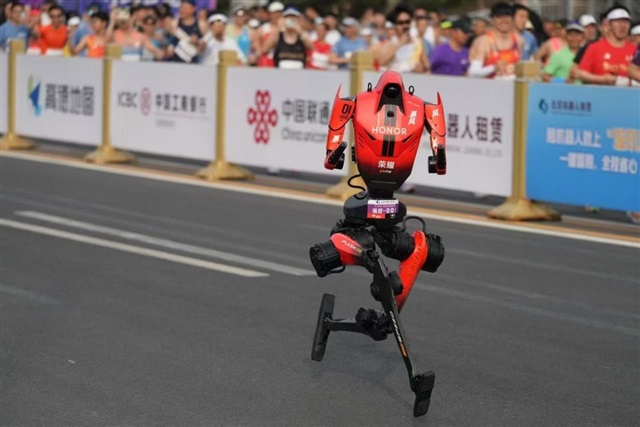
The Beijing Humanoid Robot Half Marathon is over, but the conversation it sparked is just getting started. In a result few saw coming, Honor, best known as a smartphone brand, walked away with the win, beating out expectations that a dedicated robotics heavyweight would take the spotlight.
That surprise finish has quickly turned into a bigger industry debate. For some observers, Honor’s victory hints at real technical capability and a strong engineering foundation that goes beyond phones. Building a humanoid robot that can compete in a demanding endurance event requires reliable systems working together under pressure, from power delivery and stability to control and sustained performance across the full race.
But the win is also being interpreted in another way: as a sign that the barriers to entry in humanoid robotics may not be as high as many assume, at least in certain competitive formats. If a consumer electronics company can outperform teams focused purely on robotics, it raises questions about how mature the field really is, what the race is actually testing, and whether success comes down to a few key advantages that translate well from other industries.
One theme now gaining attention is the “thermal edge” in robotics. Long-duration performance depends heavily on keeping components within safe operating temperatures. Consumer device companies have years of experience optimizing heat management in compact designs, and that know-how may transfer well to humanoid robots where overheating can quickly limit speed, stability, or uptime.
In the end, the Beijing Humanoid Robot Half Marathon did more than crown a winner. It highlighted how unpredictable the humanoid robotics race has become and how companies outside traditional robotics circles may be better positioned than expected. Whether Honor’s win is proof of deep robotics innovation or evidence that the competitive landscape is still wide open, it has put a bright spotlight on what matters most in real-world humanoid performance—and what the next generation of robotics contenders will need to master.