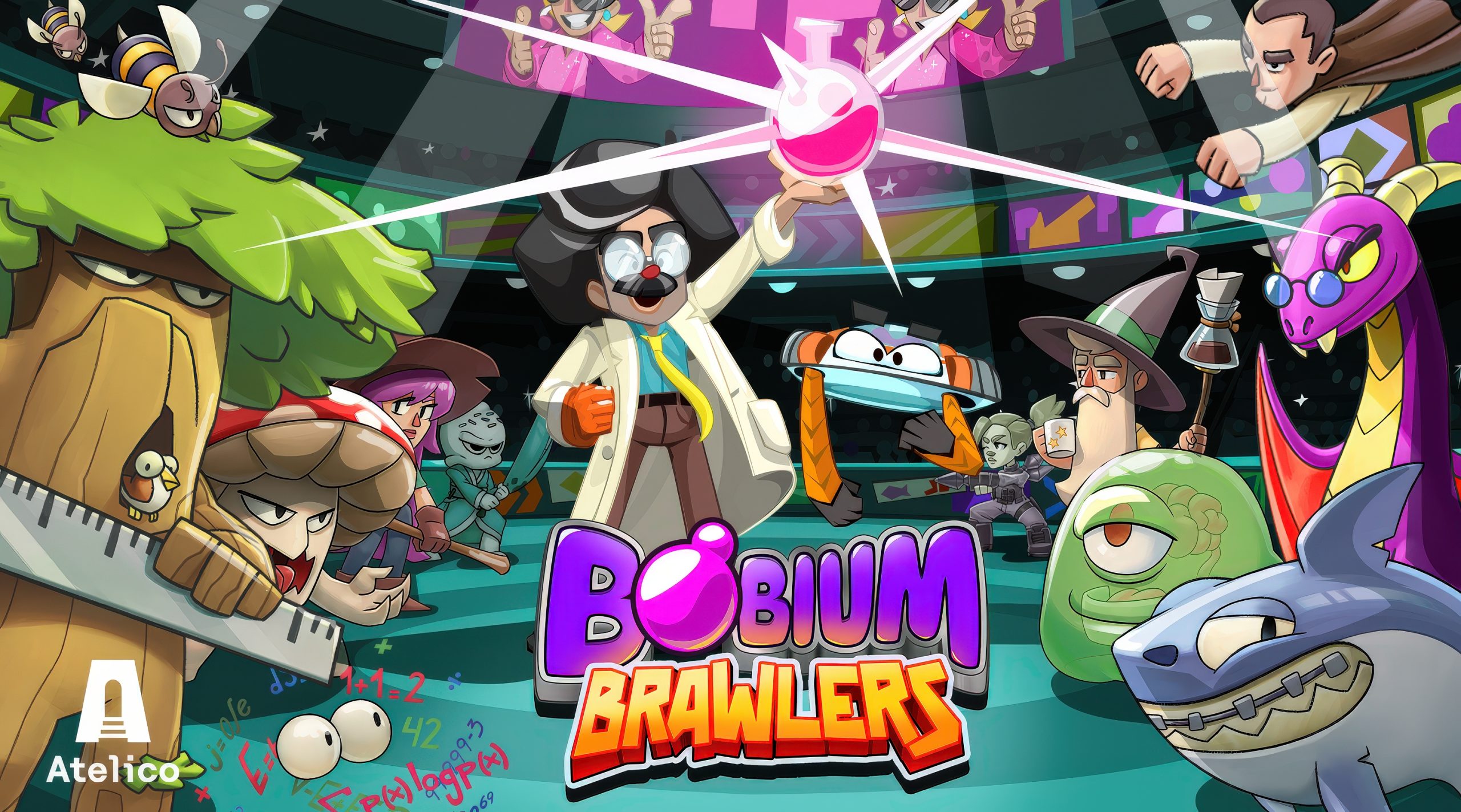
Studio Atelico has officially revealed its debut title, Bobium Brawlers, an AI-powered turn-based creature battler that mixes card play with dice rolls and is currently aimed at mobile devices. The game is expected to launch on iOS later this year, and it’s built around a standout idea: instead of only collecting pre-made creatures, players can create new ones for their deck simply by describing them. Type what you want, and the Studio Atelico AI Engine generates a creature that fits the game’s style.
One of the biggest talking points is how the AI is designed to work. Studio Atelico says the engine runs primarily on-device, which is meant to deliver faster results, better privacy, and no extra usage fees tied to cloud processing. The tradeoff is hardware requirements. Because it relies on Apple’s Neural Engine, Bobium Brawlers will only run on iPhones with relatively recent chipsets, likely starting around the iPhone 13 generation and newer.
To make sure the creature generator doesn’t feel random or off-brand, the studio didn’t just rely on generic data. The developers created a large collection of decks and cards specifically to train the system to follow the game’s intended visual direction and design rules.
The studio has also been vocal about how it’s approaching AI art in a way it believes is fair to creators. According to the team, human artists shaped the game’s visual identity by producing extensive training assets—images paired with written descriptions—that teach the model what “fits” in Bobium Brawlers. The company says it paid artists to develop the style, hired them for much of the non-creature art, and continues compensating them for the style work they contributed. That includes royalties tied to creatures generated in-game using their training assets. Studio Atelico frames this as a “pro-artist, pro-player, pro-human” approach, positioning its AI use as a tool for new gameplay rather than a replacement for creative professionals.
The elephant in the room, of course, is backlash. AI is a divisive topic in gaming communities, and the studio was asked directly whether it’s ready for criticism. CEO and co-founder Piero Molino said he understands why many players react strongly to AI, but he argues the frustration isn’t really about the technology itself. In his view, gamers are rejecting low-effort “slop” and the exploitation of human creators—especially when AI systems are trained in ways that don’t properly credit or compensate artists.
Molino emphasized that Studio Atelico is trying to prove a different model can exist: paying artists, offering royalties, and using AI to enable mechanics that weren’t realistically possible before—like letting players generate unique creature art in minutes while keeping a consistent, curated art style. The studio’s message is that the real target of player anger is unethical implementation, not AI as a concept.
While on-device generation is the long-term plan, Molino also noted that the earliest version of Bobium Brawlers may still rely on a small amount of cloud processing for certain parts of the AI Engine. He described that cloud usage as minimal, with a plan to move it fully on-device over time. Because it’s only a tiny portion of the workflow, the studio claims the cost is extremely low—less than one cent per creature creation overall. Molino argues that getting AI costs in games down to near-zero is essential if more developers are going to adopt the technology in a sustainable way.
Beyond the AI discussion, Bobium Brawlers is aiming for fast, focused matches. Battles are designed as quick 1v1 duels combining card-based strategy with dice-driven twists. Rather than pushing players into endless grinding or forcing them to chase whatever build is currently dominant, the studio says the game is built around smart combos and tactical improvisation—winning because you played well in the moment, not because you spent the most time farming the “right” pieces.
Bobium Brawlers is shaping up to be one of the more unusual mobile game releases of the year, not just for its AI creature creation, but for the studio’s attempt to address the biggest ethical concerns surrounding AI-generated content. Whether players accept that argument—or reject AI in games on principle—may end up being just as important as the game itself when it arrives on iOS later this year.