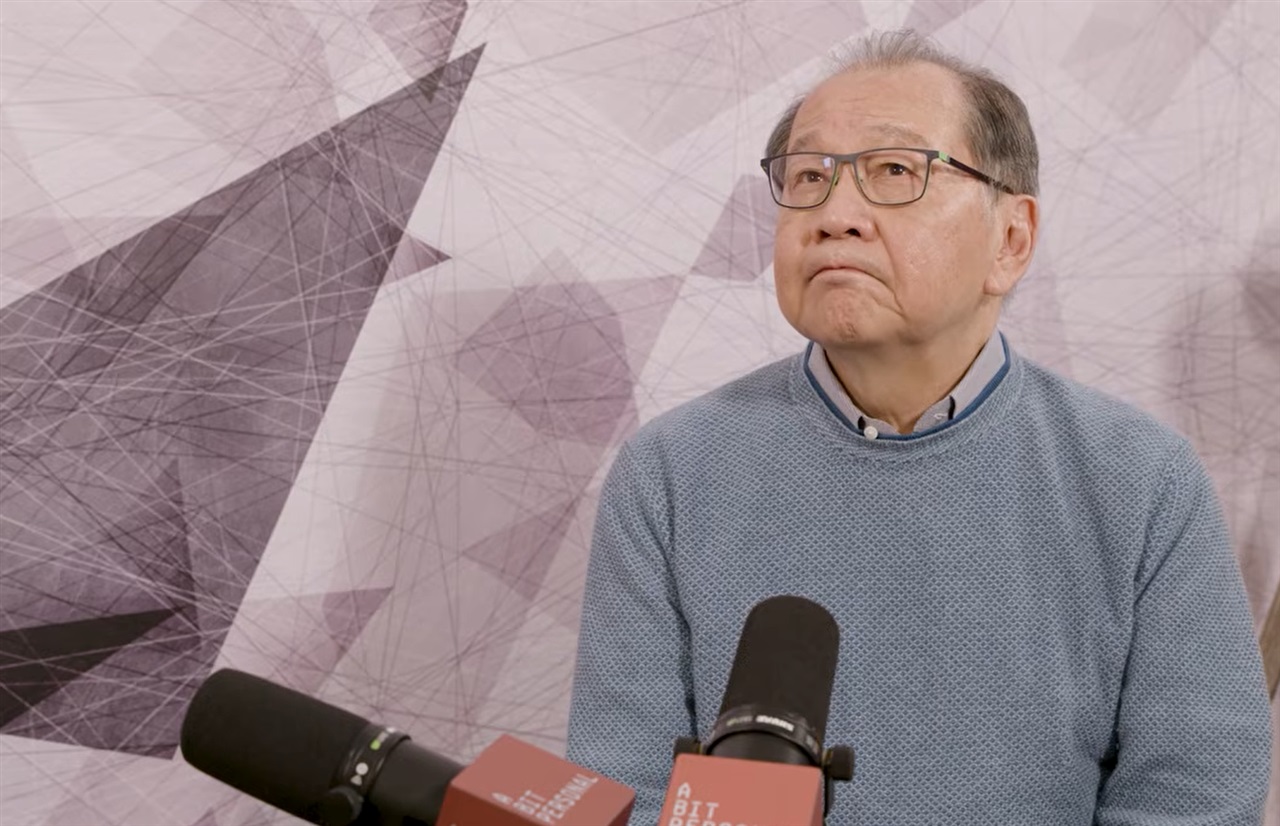
In late 2008, as the global financial crisis tore through the world economy, Taiwan Semiconductor Manufacturing Co. faced a nightmare scenario that few outside the industry truly understand. Factory utilization, the metric that keeps chip plants alive, fell below 40%. Orders evaporated. Visibility vanished. Dr. Rick Tsai, then CEO, was operating in the fog of uncertainty, unsure what the next quarter would even look like.
Yet the decision he made in that moment would become one of the defining “long game” moves in modern semiconductor history.
Instead of pulling back like many competitors, Tsai pushed forward. He told research and development teams not merely to hold the line, but to accelerate. At the time, the company was building Fab 14, a massive bet on future demand when the present looked bleak. Tsai’s message was blunt: don’t stop, because capacity would be needed when the market returned. That gamble paid off. When demand rebounded, the companies that had paused couldn’t respond quickly enough. TSMC could—and it seized the moment.
Today, Tsai is applying the same philosophy as CEO of MediaTek, positioning the company for a new cycle driven by the AI era and an industry-wide shift toward computing horsepower.
A semiconductor powerhouse built on sacrifice, not headlines
Taiwan’s dominance in the global semiconductor industry is often described in terms of policy, strategy, and national planning. Tsai doesn’t deny the importance of those forces, but he frames the story as something more personal: grit, sacrifice, and decisions made when resources were scarce.
He points back to 1976, when a group of young Taiwanese engineers traveled to the United States for a technology transfer program at RCA. Among them were future industry leaders who would shape the island’s tech ecosystem for decades, including MK Tsai (later Chairman of MediaTek) and F.C. Tseng (later Deputy Chairman of TSMC). In those early days, budgets were so tight that even buying a simple fast-food meal felt out of reach.
The more important detail isn’t the hardship itself—it’s what those engineers chose to bet on. With support from Taiwan’s industrial leadership and institutions such as ITRI, they backed CMOS technology at a time when PMOS was the prevailing standard. It was a high-conviction, against-the-grain call that ultimately became foundational to the electronics world, powering everything from everyday devices to the smartphone revolution.
From a one-way ticket to the center of the chip world
Tsai’s own journey came with similar uncertainty. He arrived at Cornell University in the late 1970s with a one-way ticket and just $1,000. Coming from National Taiwan University with a physics background, he has openly admitted that he didn’t see himself as the most naturally gifted person in the room. That humility pushed him toward practical engineering and continuous improvement rather than ego.
He spent about a decade at HP in California, but eventually grew restless with corporate predictability. In 1989, he followed instinct back to Taiwan to join a young company that was only three years old at the time: TSMC. He was hired by F.C. Tseng, one of the same pioneers from those early U.S. transfer days.
It would prove to be a career-defining return.
Leading after a legend—and learning the hard way
By 2005, Tsai stepped into one of the most difficult roles in the global tech industry: succeeding Dr. Morris Chang as CEO of TSMC. He has acknowledged the pressure that comes with following a towering figure. His leadership style became known internally as highly direct and disciplined, with little tolerance for excuses.
But Tsai is also unusually candid about what didn’t go smoothly. During the 2008 crisis, he made mistakes—mistakes serious enough that leadership shifted and Chang returned as CEO. Tsai doesn’t try to rewrite that era. He treats it as a hard education in leadership under extreme conditions, one that later strengthened his decision-making.
That next chapter took him into a different vantage point: serving as Chairman of Chunghwa Telecom, where he gained what he calls the “operator’s perspective”—how technology succeeds or fails when it meets real-world networks, customers, and economics.
That experience became a competitive advantage when he took over as CEO of MediaTek in 2017. He famously saw through the hype cycle around millimeter wave 5G and focused heavily on Sub-6GHz. His logic was simple and business-minded: he wanted to capture the first wave of opportunity, not arrive late for the second.
MediaTek’s shift from connectivity to computing power
Under Tsai, MediaTek is now pushing beyond its traditional identity in mobile connectivity and moving toward becoming more of a computing-focused company. A major part of that shift ties into a long-standing relationship that Tsai has maintained since the mid-1990s: his friendship with NVIDIA CEO Jensen Huang.
Tsai recalls knowing Huang back in 1996, long before today’s AI boom. Even then, Huang was talking about the future in terms of “computing”—a prediction that now looks remarkably prescient. Today, MediaTek and NVIDIA are collaborating on chips aimed at AI-powered automotive cockpit systems and PCs, reflecting where silicon demand is heading next.
Tsai also emphasizes the scale of the current transformation: investment in AI data centers, he argues, is far larger than what the world saw during the internet boom or the mobile era. For companies navigating the semiconductor supply chain, that level of capital and demand reshapes everything—capacity planning, partnerships, talent, and long-term bets.
A leader still playing the long game
Despite being at an age when most corporate leaders step back, Tsai remains locked in on what comes next. He credits his wife, Betty, for holding the family together while he lived a relentless executive schedule. His personal routine is understated: a hot shower, a glass of red wine, and a history book at night. He even has a small personal “quest” to try a rare Napa Valley Scarecrow Cabernet—something he hasn’t tasted yet, but still wants to experience.
In many ways, that detail mirrors his professional mindset. He’s spent decades chasing challenges that require patience, conviction, and an appetite for uncertainty.
Asked what ultimately matters as a legacy, Tsai reduces it to trust. If the people who worked with him can say they enjoyed working with him and relied on his word, that’s enough.
In an industry built on silicon, cycles, and brutal precision, Rick Tsai’s story is a reminder that resilience—real resilience—still comes from the human side of technology.