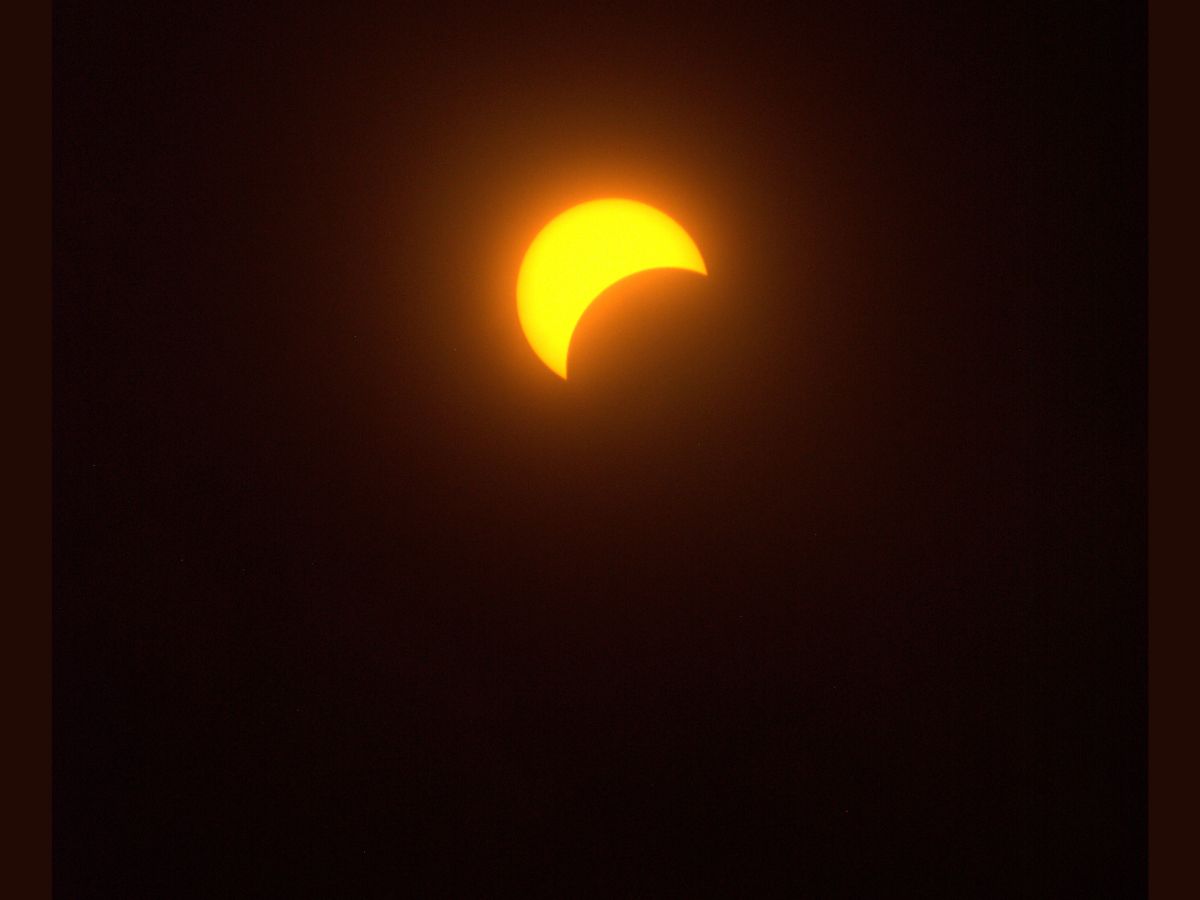
NASA’s Eclipse Megamovie citizen science project is changing how we study one of the most dramatic events in the sky: a total solar eclipse. Instead of relying on a handful of professional observatories, the project brought together amateur eclipse photos from across the United States to build a single, continuous time-lapse “megamovie” that follows the eclipse as it moved across the country.
During a total eclipse, the Moon completely covers the Sun’s bright surface, briefly revealing the solar corona. The corona is the Sun’s outer atmosphere, and it’s normally hidden from view because the Sun’s surface is so intensely bright. Totality at any one spot typically lasts only 2 to 4 minutes, which makes it difficult for a single location to capture extended changes in the corona. But because the eclipse path travels across the U.S., observers in different places can record totality at different times—creating an opportunity to stitch those short windows into a much longer look at the corona’s behavior.
That’s exactly what volunteers helped make possible. Across 143 volunteer-led observatories, participants captured a massive 58,837 photographs of the eclipse. Not every observing site had the equipment or conditions needed for fully standardized scientific calibration, but 28 observatories did. Those contributions became the foundation for a major breakthrough: more than 1.5 hours of continuous, calibrated white-light observations of the solar corona.
What makes this especially important for solar research is the calibration. This is the first white-light eclipse dataset of its kind to include calibration frames, allowing the images to be scientifically consistent and comparable across sites. In other words, it’s not just a stunning visual record—it’s a dataset designed for serious analysis of coronal structure and change over time.
The collection is organized into three processing levels, ranging from raw images to fully calibrated Level 3 data. Everything is provided in FITS format, a standard file type used widely in astronomy. The dataset is also publicly available through a centralized, searchable database, making it easier for researchers, educators, and space weather enthusiasts to explore and use the images.
Beyond the eclipse itself, the long-term value is in what scientists can learn from these continuous corona observations. Better insight into coronal dynamics can improve our understanding of how the Sun launches energetic events that can trigger solar storms and geomagnetic disturbances—phenomena that can affect satellites, communications, navigation systems, and power grids on Earth.
By turning thousands of volunteer photos into a calibrated scientific resource, NASA’s Eclipse Megamovie project has also helped set a new standard for distributed observational astronomy—showing how coordinated citizen science can produce data that’s both visually compelling and scientifically powerful.


