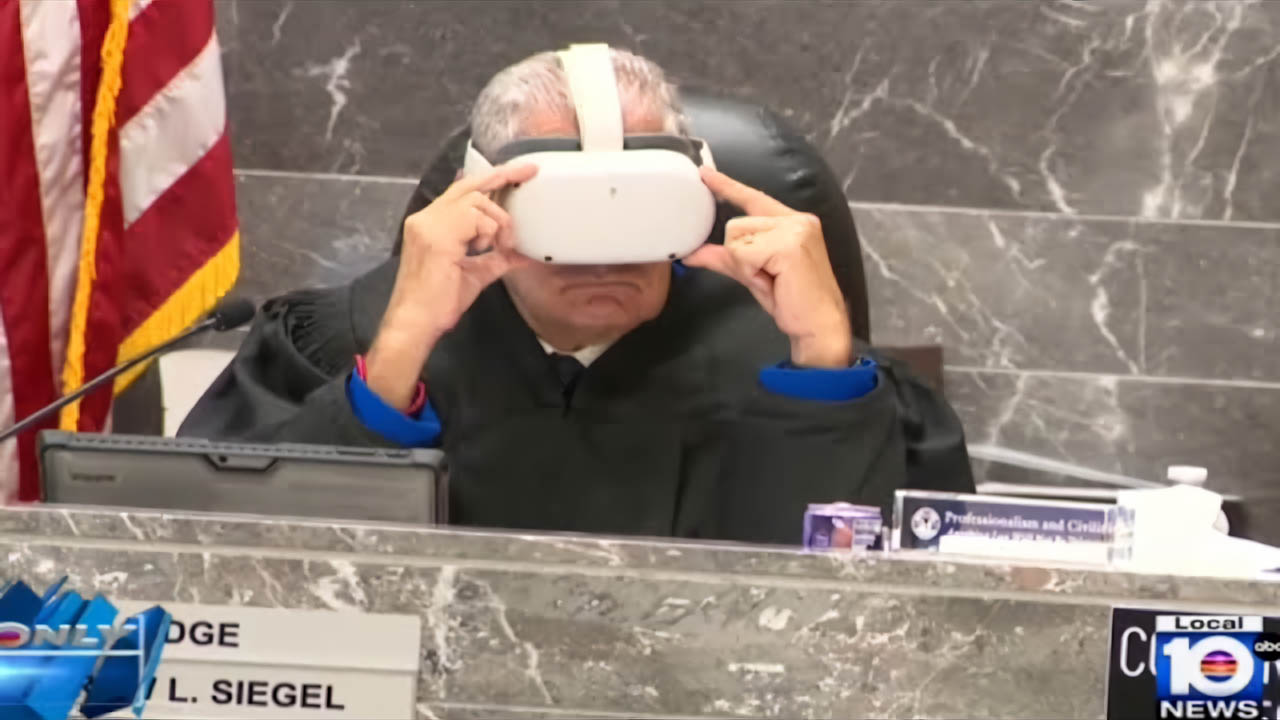
In a groundbreaking move that could reshape how crime scenes are examined in the courtroom, a Florida judge has embraced virtual reality technology for the first time in an alleged crime review. Broward County Judge Andrew Siegel donned a Meta Quest 2 virtual reality headset at the behest of the defense team as they sought to provide a deeper understanding of the scene in question.
At the center of this unique case is Miguel Albisu, who faces charges of aggravated assault with a deadly weapon. The incident occurred at his wedding venue in Southwest Ranches, where he allegedly brandished a gun in a bid to control unruly guests. To present their case effectively, Albisu and his legal team hired an artist to create a virtual reality rendition of the venue, bringing a new dimension to courtroom evidence presentation.
Albisu’s attorney, Ken Padowitz, explained that the scene spiraled out of control when Albisu’s family members were attacked and a thrown chair injured their party planner. Padowitz recounted, “Upon being alerted while asleep, Mike was informed of the chaos ensuing at his venue. He immediately instructed his wife to call 911, believing he needed to protect his staff and property from the rowdy guests.”
What’s notable is that this use of virtual reality might be the very first in a Florida courtroom, perhaps even in any court in the United States. Padowitz is an avid supporter of integrating technology into legal processes, having previously introduced computer animation as evidence in court back in 1992. This tech-forward approach could revolutionize crime scene recreations, giving judges and juries immersive insights into complex scenarios.
Albisu asserts his innocence, arguing that he was acting in self-defense, invoking Florida’s stand-your-ground law. This law permits property owners to use firearms to protect themselves, their loved ones, and their possessions.
During the proceedings, defense expert Bill Engler also adopted virtual reality to provide his testimony, indicating the critical moment when Albisu allegedly drew his weapon. “This is when he pulls the gun out, when he is backed up against the bar,” Engler described, with all legal parties present using the same VR technology to enhance their understanding.
The case is set to continue in February under Judge Siegel’s oversight. Should the technology prove successful, it may pave the way for jury use, although this possibility will need thorough examination in court before any definitive approval is given.
This groundbreaking integration of virtual reality in legal proceedings sits at the intersection of technology and justice, potentially offering a more accurate depiction of events to all courtroom participants.