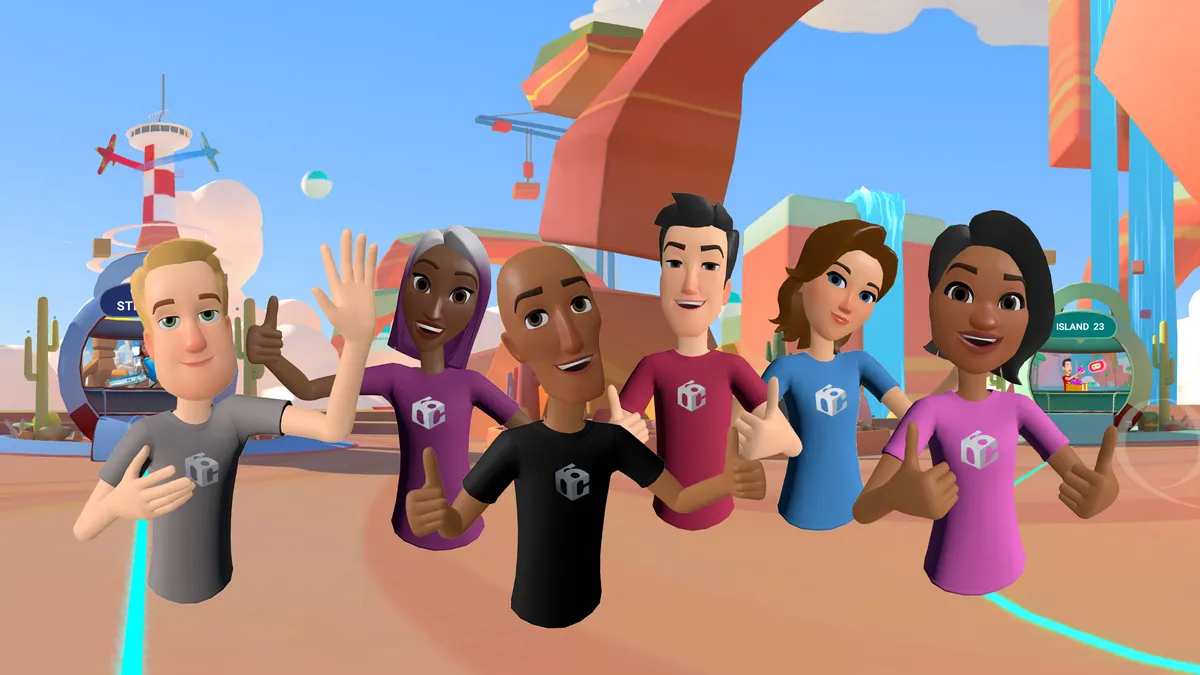
Meta’s massive virtual reality push just hit a hard wall. The company reportedly cut around 1,500 jobs from its Reality Labs division—roughly 10% of that team—while also shutting down multiple VR game studios. It’s a striking pivot for a business that, only a few years ago, rebuilt its entire identity around the metaverse.
Back in 2021, Facebook renamed itself Meta and pitched virtual reality as the next major computing platform. The strategy leaned on a few big assumptions: that Gen Z would increasingly prefer hanging out in game-like digital worlds, and that a new brand could help the company move past years of reputational damage tied to privacy controversies, whistleblower claims about harm to young users, government scrutiny, misinformation concerns, and monopoly accusations.
At the center of the plan was a new social universe where people would meet inside Horizon Worlds and spend time playing and creating through Quest VR headsets. But in 2026, the momentum has shifted decisively away from “metaverse-first” and toward AI. Reality Labs has been burning cash for years, and the unit’s losses have repeatedly rattled investors—especially since it never became profitable.
Reports indicate the restructuring has affected internal teams behind major VR games and experiences. Several studios developing VR titles under Meta have been hit, and the VR fitness app Supernatural—acquired in 2023 for $400 million—is expected to stop producing new content and move into a maintenance phase. Meta’s push to bring VR into offices is also being wound down, with its Workrooms product slated to shut down. These changes follow earlier reporting that Meta planned deep budget reductions in its VR organization and paused efforts to share its headset operating system with third-party device makers.
To understand why this feels like such a reversal, consider the scale of the spend. Meta has poured an estimated $73 billion into Reality Labs. That’s the kind of money that makes even tech giants flinch—equivalent to spending $1 million every single day for about 200 years.
A big problem: the early metaverse product simply didn’t inspire mass enthusiasm. The experience was widely seen as unfinished, with awkward visuals and avatars that became symbols of overpromising and under-delivering. The “build in the open” approach—shipping early versions and improving through user feedback—can work when excitement is high and demand is obvious. But VR’s demand stayed lukewarm, and the broader public never rushed in the way Meta needed.
Even with Meta holding a dominant share of the VR headset market, overall VR shipments have been slipping year after year. One industry estimate cited a 12% drop in global VR headset shipments in 2024, marking a third straight year of declines, with Meta responsible for the majority of those shipments. In other words, even the category leader was leading a shrinking market.
Underneath the ambition was another key motivation: control. Meta wanted a platform it owned end-to-end, rather than continuing to rely on Apple and Google’s mobile ecosystems—where app store policies and fees can shape what companies earn. Mark Zuckerberg argued that high platform fees and limited choices were holding back innovation, and he envisioned the metaverse reaching a billion people within a decade, fueling “hundreds of billions” of dollars in digital commerce. Plenty of market forecasts echoed that optimism, predicting trillion-dollar outcomes by 2030.
But adoption never matched the hype. While there’s limited transparency into how Meta’s VR app ecosystem performs internally, estimates for its Horizon app show sizable download numbers over time—yet downloads don’t necessarily translate into a thriving daily habit at world-changing scale. That gap becomes more obvious when compared to Meta’s core business: across Facebook, Instagram, WhatsApp, and Messenger, Meta now reaches more than 3.5 billion daily active users. VR was never close to becoming the company’s next universal platform.
Meta’s metaverse also missed a crucial playbook from its own history. In Facebook’s early rise, social games helped drive engagement and meaningful revenue. A similar outcome—VR games powering a new social empire—was possible in theory. But in practice, Meta made it harder to win over creators and developers.
Instead of using pricing to attract builders early, Meta signaled an aggressive take rate on digital sales inside Horizon Worlds. The company proposed taking 47.5% of certain transactions, combining a 30% platform fee with an additional 17.5% cut tied to Horizon Worlds. For developers deciding where to invest time and money, that kind of split can feel like the opposite of an invitation—especially when the user base isn’t guaranteed.
Safety issues also became an ugly distraction. As with earlier phases of social media, Meta often responded after problems escalated instead of building strong protections from day one. Reports of harassment inside Horizon Worlds pushed the company to add features like personal space boundaries between avatars, but troubling incidents—including accounts of virtual sexual violence—highlighted how unprepared early metaverse environments were for real-world behavior at scale.
Put together, the story of Meta’s VR retrenchment is less a sudden surprise and more the result of years of mismatched expectations: enormous spending, slow consumer adoption, developer backlash over fees, ongoing safety concerns, and a market that didn’t expand fast enough to justify the vision. Now, with the company’s attention moving sharply toward artificial intelligence, Reality Labs is no longer the future Meta is betting everything on—it’s a costly experiment being scaled back in real time.Meta is rethinking how safety works in Horizon Worlds and other metaverse-style experiences, starting with a major tweak to its Personal Boundary feature. Instead of keeping Personal Boundary automatically enabled for everyone by default, Meta is moving toward a setup where it only defaults to “on” when someone is interacting with non-friends in VR. Users will also be able to turn it off entirely, giving them more control over how close others can get in virtual spaces.
That change echoes a broader reality Meta has wrestled with since the early days of Horizon Worlds: keeping people safe in immersive environments is harder than it sounds, and early protections didn’t always match how people actually behave in VR. Meta has pointed to several safety tools it built into the experience, including options to block and report users, a “safe zone” button that can instantly block and mute others, and venue tools designed to temporarily remove disruptive people after community feedback. But a lingering frustration remained for many users—especially when abuse happened quickly and the moment was gone before it could be properly documented.
One common example highlighted by VR users was painfully simple: if someone experienced harassment, the instinctive reaction wasn’t to open menus and start recording. It was to rip off the headset and step away. The problem came later. When they returned, the person who caused the issue could still show up in recent interactions, but the window to file a report with attached video and audio evidence had passed. In practice, that meant bad behavior could go unreported not because users didn’t want to report it, but because the reporting flow didn’t align with real-world reactions to uncomfortable situations.
Criticism also grew around the lack of clearly defined, detailed policies early on—particularly around what counts as abuse and what consequences users should expect. Even after a metaverse code of conduct appeared, it still didn’t spell out specific penalties beyond broad statements that the company would “take action on users.” For people hoping the metaverse would become a mainstream social platform, that vagueness added to concerns about trust and accountability.
At the same time Meta has been refining VR safety and moderation, consumer excitement has shifted toward technologies that feel more practical in everyday life—especially AR, mixed reality, and AI-powered devices. One of the biggest momentum drivers has been Meta’s Ray-Ban smart glasses. Interest has risen thanks to features that fit naturally into daily routines, like hands-free video recording, music streaming, and AI chat features. In some retail locations in 2024, the smart glasses reportedly began outselling traditional Ray-Bans, and the company has been weighing higher production to keep up with demand.
Meta has also explored smart glasses with built-in displays for things like alerts and navigation directions shown on the right lens. Due to stronger-than-expected demand, the company has paused some international rollout plans for that display-equipped model, suggesting it’s prioritizing supply and managing demand before expanding further.
All of this adds up to a key turning point: as AI becomes more central to how people discover, create, and interact with apps and services, VR starts to look less like the next version of the internet and more like a niche experience with high costs and complicated safety challenges. With major players and startups betting on AI hardware as a future computing platform, Meta’s priorities are increasingly aligning with products that show faster adoption and clearer everyday value.
That’s why Meta’s strategy is shifting toward what’s working now—smart glasses, AI experiences, and large language models—while it continues to adjust the metaverse’s safety features to address the gaps that became obvious once real people started using VR socially at scale.