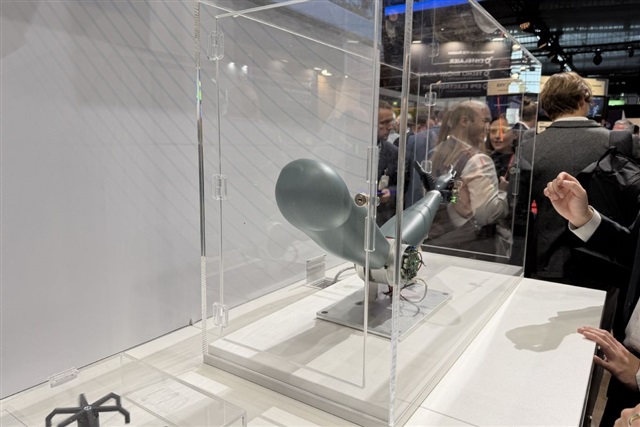
Embedded World (EW) 2026 put the spotlight on a clear mission for the next wave of robotics: helping machines see better and act more precisely. Walking through the show floor, many exhibitors weren’t trying to dazzle with vague “future of AI” promises. Instead, they zeroed in on practical, build-ready solutions and the specific components engineers need right now. Two themes kept coming up again and again: visual sensing, the “eyes,” and robotic arm control, the “hands.”
On the “eyes” side, visual sensing was everywhere. Companies highlighted technologies designed to help robots interpret their surroundings more reliably—especially in real-world environments where lighting changes, objects overlap, or surfaces reflect. The push wasn’t just about higher resolution; it was about smarter perception that can support consistent detection and tracking so robots can operate with fewer mistakes and less downtime. For manufacturers and system integrators, better machine vision can translate directly into safer workflows, fewer failed picks, and more dependable automation.
Just as prominent was the “hands” problem: how robots move, grip, and execute tasks with accuracy. Robotic arm control drew major attention because it’s one of the biggest make-or-break factors in industrial robotics and automation. Fine-tuning motion control, improving responsiveness, and enabling more precise manipulation are crucial for applications like assembly, packaging, component handling, and collaborative robotic work cells where smooth, predictable movement matters. The message from EW was straightforward: even with great perception, robots still need advanced control to turn data into reliable action.
What stood out at Embedded World 2026 was the industry’s practical mindset. Exhibitors largely focused on real engineering challenges rather than flashy demos—bringing forward targeted solutions that address the core robotics bottlenecks: seeing the world clearly and interacting with it effectively. As robotics adoption continues to grow across manufacturing, logistics, and smart infrastructure, the technologies powering robotic “eyes and hands” are shaping up to be the most important building blocks for the next generation of capable, dependable machines.