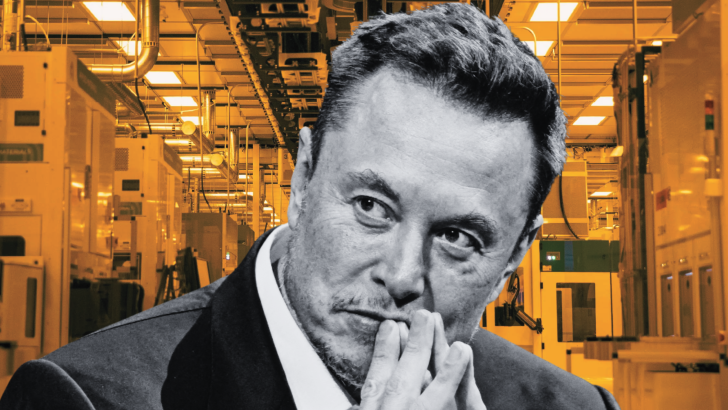
Elon Musk is taking Tesla’s chipmaking push to a new level by getting directly involved at the factory floor. Reports indicate that Samsung will set up a dedicated office for Musk inside its Taylor, Texas semiconductor facility, giving him a closer vantage point over production tied to Tesla’s custom silicon roadmap.
Tesla has been steadily expanding its chip supply chain as it prepares for higher-volume production of in-house designs. Samsung and TSMC are already part of the mix, and there have also been signs Tesla could tap Intel’s manufacturing services as well. The bigger goal is clear: Tesla wants more control over the chips that power its vehicles and AI systems, and it wants enough supply to match massive scale.
According to Korean media report details, Samsung Chairman Lee Jae-yong visited the Taylor fab and met with Musk to discuss Tesla’s AI5 chip and its next-generation AI6 successor. What makes this development especially notable is the claim that Musk will now have an on-site office at the Taylor facility and will personally oversee parts of the production lines. The idea is to speed up the feedback loop between Tesla and Samsung—tightening iteration cycles, improving communication, and reducing delays that can happen when chip design and manufacturing teams are separated by distance and layers of management.
This move lines up with Musk’s well-known hands-on style, and it suggests Tesla sees custom silicon as strategically important rather than just another component purchase. It also highlights Taylor’s growing role in America’s semiconductor manufacturing comeback, where large-scale fabs are becoming central to future tech supply chains.
Tesla is reportedly Samsung’s largest U.S. partner at the moment, backed by a major $16.5 billion agreement. Under that deal, Samsung is expected to deliver not only chips but an “entire semiconductor ecosystem” tailored to Tesla’s needs—an arrangement that could cover manufacturing, packaging, and other critical parts of the production pipeline.
Even with heavyweight partners, Musk has hinted that outside foundries may not be able to fully satisfy Tesla’s long-term demand. He has previously talked about bold semiconductor ambitions, including the concept of a “TeraFab” that could help meet annual demand in the range of 100 billion to 200 billion chips. In other words, Tesla may be laying the groundwork for a future where it relies less on third parties and more on a dedicated, stable chip supply chain built for its own scale.
A big part of that motivation appears to be supply stability. Depending heavily on overseas manufacturing can raise long-term concerns, especially when geopolitical risks enter the picture. From Tesla’s perspective, building more of the semiconductor pipeline in the U.S. could reduce uncertainty, improve planning, and secure access to the chips that increasingly define modern vehicles.
All of this is unfolding as competitive pressure rises across the EV and automotive tech landscape, with companies like Rivian and others advancing their own next-generation platforms. Musk has also suggested that Tesla’s AI5 and AI6 chips occupy their own category compared to offerings from NVIDIA and other major players—implying Tesla believes its silicon strategy will be a key differentiator in performance, cost, and autonomy capabilities.
With Musk now reportedly embedded closer to the manufacturing process at Samsung’s Taylor fab, Tesla’s custom chip effort could move faster—and the results may shape how the company scales its AI and vehicle technologies over the next few years.