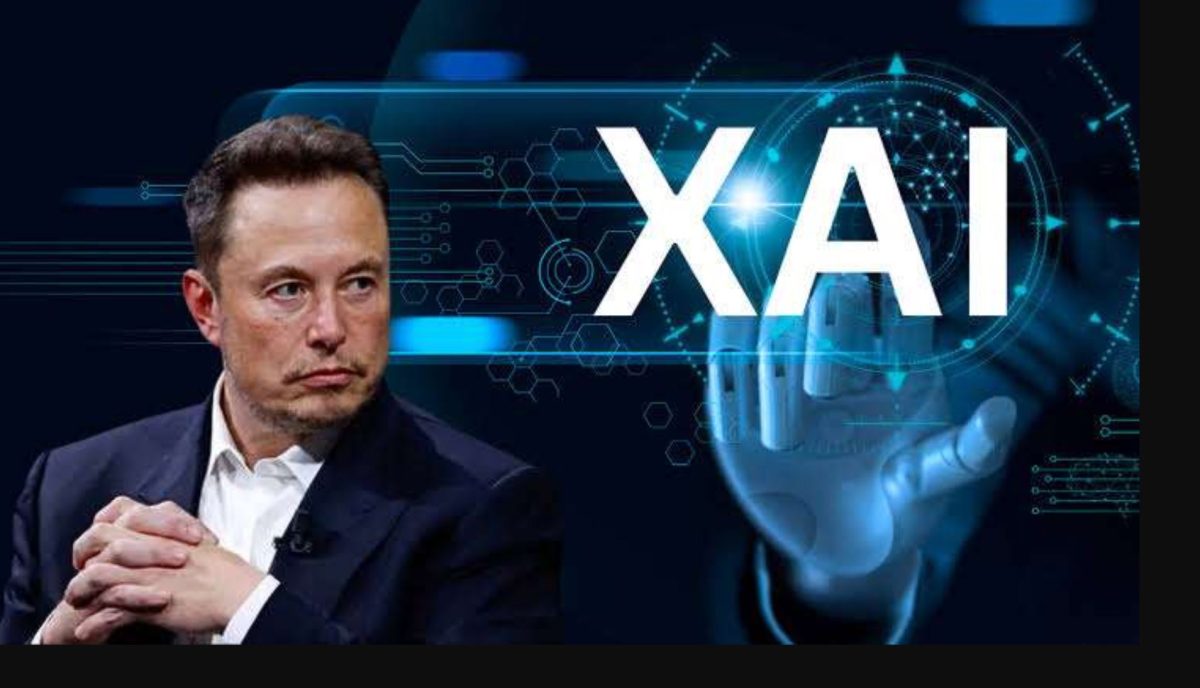
Elon Musk says AI still isn’t ready to handle the most demanding software engineering work, especially when it comes to ultra-high-performance C and C++ programming.
The SpaceXAI and Tesla chief shared the view on X while discussing the company’s next Grok model. According to Musk, the upcoming Grok 4.8 model uses 2.5 trillion parameters, a major jump compared with earlier versions. He said the model is expected to finish its training phase and move into reinforcement learning this week.
Musk’s comments came after a user asked what SpaceXAI had planned next following a busy September for the company. Earlier in the month, SpaceXAI released Grok 4.6 and claimed the model delivered performance close to Anthropic’s Fable 5 products. The company also positioned Grok 4.6 as a more affordable alternative in the AI market, with pricing listed at $2 per one million input tokens and $6 per one million output tokens.
By comparison, Anthropic’s Fable 5 pricing was described as significantly higher, at $10 per one million input tokens and $50 per one million output tokens. SpaceXAI also said Grok 4.6 scored 61 on the Artificial Analyst Intelligence Index, placing it above OpenAI’s GPT 5.6 Sol and just one point behind Fable 5.
The discussion became more technical when Musk said Grok 4.8 was trained using SpaceXAI’s C++ software stack. A Google AI employee suggested that the stack may have been created with help from AI-generated code from other models, including GPT and Fable. Musk pushed back, saying SpaceXAI’s C and C++ training stack was written by humans.
“Our C/C++ training stack was written by humans. AI is not yet good enough for extremely high-performance software, but it will be,” Musk said.
The statement highlights a key debate in the artificial intelligence industry: how much advanced AI development still depends on human engineers. While AI coding tools have improved rapidly and are now widely used for software development, Musk’s comments suggest that the most performance-sensitive systems still require expert human programmers, particularly in low-level languages like C and C++.
C and C++ remain critical for building high-speed computing infrastructure, operating systems, embedded platforms, AI training frameworks, and performance-heavy applications. Because these languages offer deep control over memory, hardware resources, and optimization, even small mistakes can lead to major performance issues or system instability. Musk’s view is that current AI systems are not yet reliable enough to independently build software at that level.
However, Musk also made it clear that he expects this to change. His comment that AI “will be” good enough suggests he believes future models could eventually take on even the hardest software engineering tasks.
Musk also shared expectations for future Grok releases. He said Grok 4.7 should perform at around the level of Anthropic’s Opus 5.0 model, though not the 5.1 version. He described Grok 4.8 as a “noticeable improvement,” while adding that Grok 4.9 will “probably” reach the same class as Astra and Fable-level AI models.
The remarks come as competition in the AI model race continues to accelerate. Companies are pushing for larger models, better reasoning capabilities, lower inference costs, and stronger coding performance. With Grok 4.8 reportedly built on 2.5 trillion parameters, SpaceXAI appears to be aiming for a major leap in model capability.
For now, Musk’s message is clear: AI is advancing quickly, but the most advanced programming work still belongs to skilled human developers.