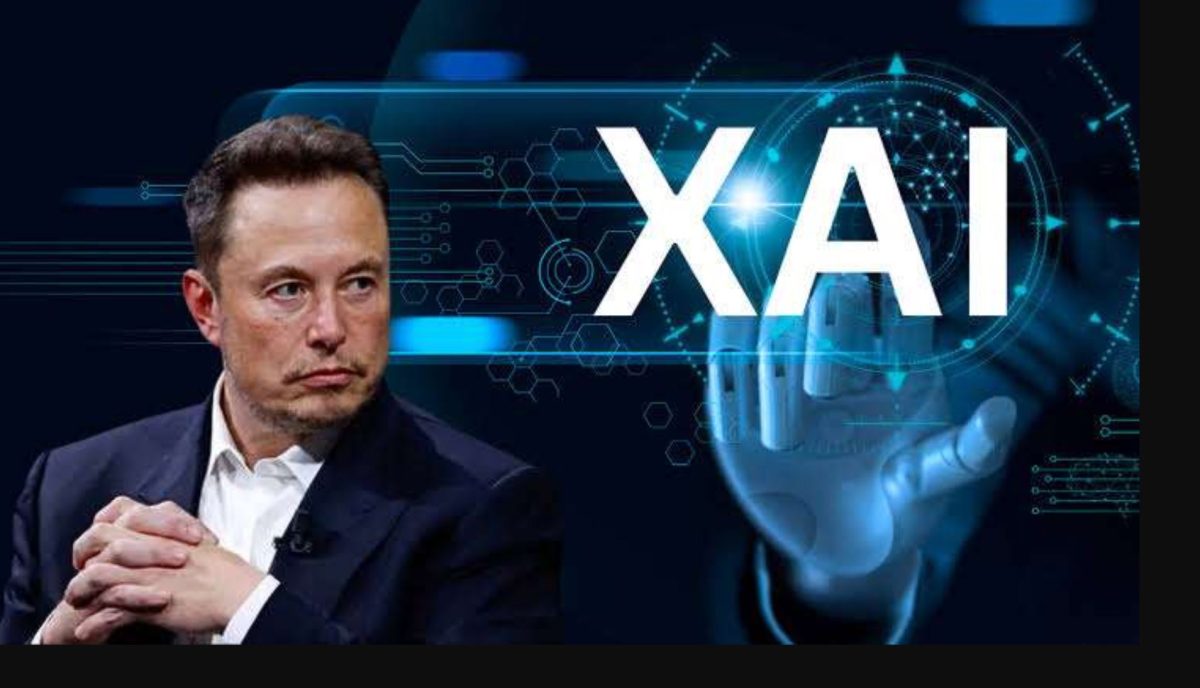
Elon Musk says Grok Bot is growing fast as xAI pushes toward real-world engineering AI
Elon Musk says xAI’s Grok platform is expanding quickly, even as he acknowledges that the company’s current AI models still trail some of the strongest competitors in the industry.
In a recent interview with Chinese media, Musk discussed the progress of Grok, the rapid growth of Grok Bot, and his expectations for China’s chipmaking ambitions. While he admitted that xAI is not yet at the very front of the artificial intelligence race, he argued that the company has a unique path forward: building AI that excels not only at software tasks, but also at real-world engineering.
Musk has recently been open about Grok’s position in the AI market. According to him, Grok’s upcoming version, Grok 4.8, is expected to deliver a major performance improvement, though he has suggested it may still fall short of the most advanced models from rivals such as OpenAI and Anthropic. Grok 4.8 has not yet been released, but Musk has said it is based on roughly 2.5 trillion parameters.
Speaking about the current publicly available version, Grok 4.7, Musk described it as “a solid workhorse of a model.” However, he also noted that it is not yet on the same level as the newest high-end AI systems from leading competitors. Musk attributed part of that gap to xAI’s relative youth, pointing out that the company has only been operating for around three years, while some rivals have been active for twice as long.
Despite that, Musk appeared confident that xAI can close the gap. He said he expects Grok to catch up to frontier AI models sometime next year, most likely. In the meantime, he said Grok is already useful for many tasks, particularly through Grok Bot, the company’s agentic AI assistant.
Musk described Grok Bot as a personal digital assistant designed to help users complete tasks more efficiently. He said the product has become “very popular” and is currently growing at around 100% per month. That rate of growth suggests strong demand for AI agents, a category many technology companies see as the next major phase of artificial intelligence.
AI agents are designed to go beyond basic chatbot responses. Instead of simply answering questions, they can help plan, organize, execute tasks, and interact with digital tools on behalf of users. Musk’s comments indicate that xAI sees Grok Bot as a key part of its broader strategy, especially as the market shifts from conversational AI toward more practical and autonomous AI systems.
One of Musk’s more interesting points was about the type of intelligence xAI wants to build. He argued that some rival AI companies have focused heavily on software engineering, creating systems that are especially strong at coding and related tasks. Musk believes there is still an opening for an AI model that is excellent at real-world engineering.
That is where he thinks xAI may have an advantage. Musk suggested that data and experience from Tesla and SpaceX could help Grok become more capable in areas involving physics, manufacturing, robotics, vehicles, rockets, and other engineering-heavy fields. In his view, xAI can use that foundation to build an AI system that understands the real world more deeply than models trained mainly around software and text-based work.
If xAI can deliver on that idea, Grok could become more than another general-purpose chatbot. It could become a tool for engineers, designers, manufacturers, researchers, and companies working on physical products. That would help differentiate Grok in an increasingly crowded AI market where many models are competing on coding, reasoning, search, and productivity features.
Musk also used the interview to comment on China’s semiconductor industry. He said China is likely to overcome its computing limitations faster than many people expect. According to Musk, his rough estimate is that China could address constraints in lithography and chip manufacturing within two or three years.
That prediction is ambitious. Advanced chip production depends on highly complex semiconductor manufacturing tools, especially lithography equipment used to produce cutting-edge processors. The most advanced systems are difficult to build and rely on extremely specialized optics, precision engineering, supply chains, and materials.
Not everyone shares Musk’s timeline. Some industry executives have suggested that China may still be many years behind the most advanced Western chipmaking technology, particularly in extreme ultraviolet lithography, also known as EUV. One senior semiconductor optics executive has previously estimated that China could be around 15 years behind in developing the latest EUV lithography systems.
The gap between Musk’s estimate and the more cautious industry view highlights the uncertainty surrounding China’s semiconductor ambitions. China has invested heavily in domestic chip production, and pressure from export restrictions has increased the urgency to develop local alternatives. However, replicating the most advanced lithography and chip fabrication systems remains one of the most difficult challenges in modern technology.
Musk’s remarks show that he sees rapid progress on multiple fronts: xAI’s growth in artificial intelligence, Grok Bot’s fast adoption, and China’s potential acceleration in chip manufacturing. While Grok may not yet lead the AI field, Musk appears to be betting that xAI can compete by focusing on practical intelligence, agent-based tools, and real-world engineering strength.
For now, Grok Bot’s reported monthly growth suggests xAI is gaining momentum. The bigger question is whether Grok can evolve from a useful AI assistant into a leading frontier model, and whether Musk’s vision of engineering-focused artificial intelligence can give xAI a lasting advantage.


