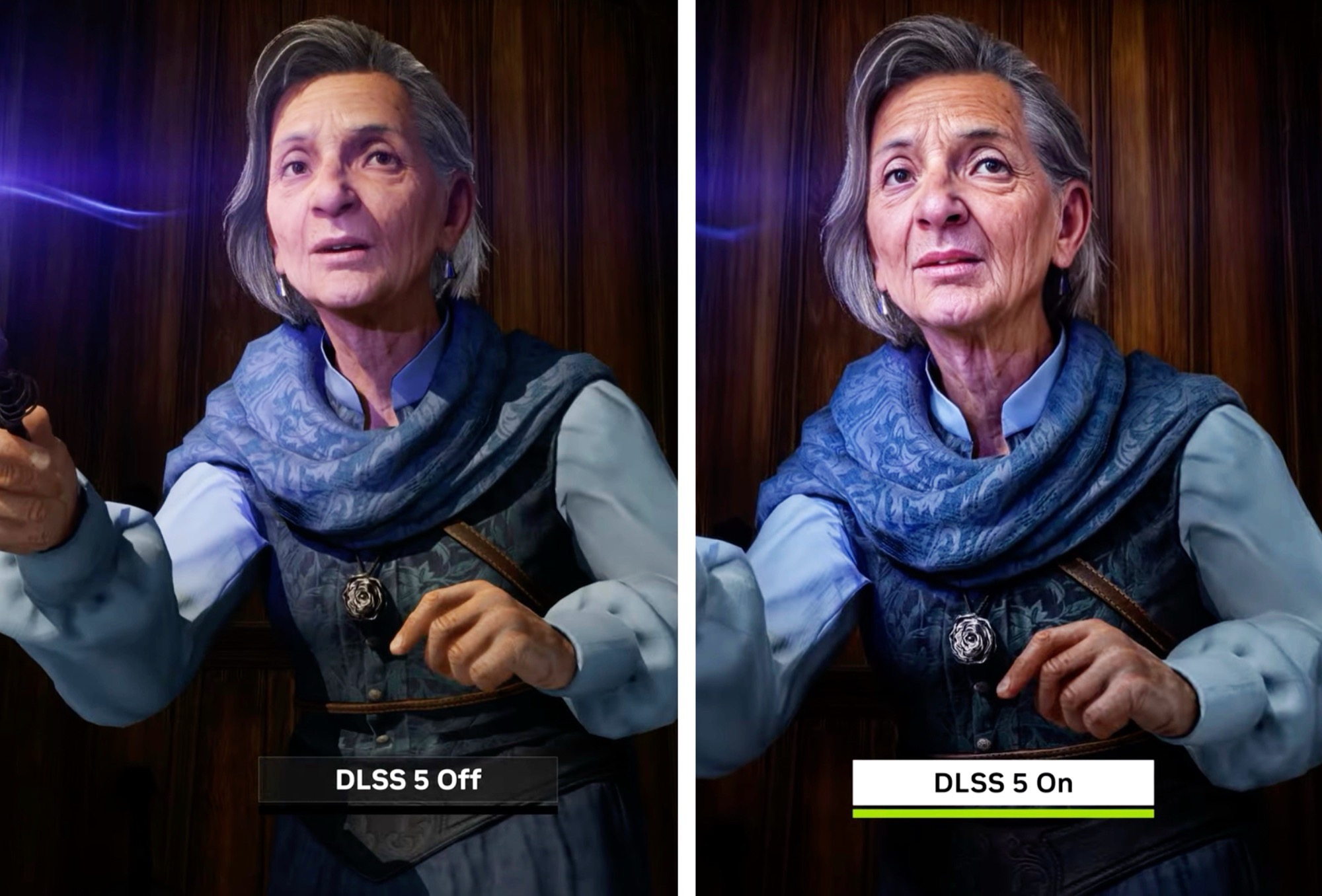
NVIDIA’s latest upscaling tech, DLSS 5, is once again sparking a familiar debate: when AI “improves” game visuals, is it actually making the game look better—or just making it look different?
The biggest issue isn’t performance, sharper edges, or higher frame rates. It’s the way DLSS 5 can subtly (and sometimes not-so-subtly) change the artistic identity that developers originally crafted. One of the most noticeable examples is how faces can appear more “detailed” under AI-driven reconstruction. Characters may end up with extra wrinkles, a wider-looking jawline, and thicker hair. On paper, that sounds like a win for realism. In practice, those changes can make characters look like they belong to a different game entirely, drifting away from the intended style and personality designed by the artists.
But the impact goes beyond faces. Lighting and atmosphere—two of the most important tools in visual storytelling—can also be reshaped by AI-generated rendering. When lighting shifts, the entire mood of a scene can change with it. Dark, gritty environments can become cleaner and brighter. Warm, moody color palettes can skew cooler. The result might look more “realistic,” but realism isn’t always the goal, especially in games with a strong visual tone.
A clear example comes from The Elder Scrolls IV: Oblivion Remastered. With DLSS 5 enabled, scenes can appear significantly brighter, and the overall color tone can trend cooler. There’s often an added sense of clarity and detail that can be impressive at a glance. Yet for many players, it no longer feels like Oblivion. The world may become more legible and technically crisp, but it can lose the signature atmosphere that defined the original experience.
This raises a bigger concern: as more games lean on AI-driven upscaling and reconstruction, visuals risk being pushed toward a familiar, homogenized look. Instead of each game having its own artistic fingerprint, they could start converging into a shared “AI-polished” style—where handcrafted decisions about mood, color grading, and character design get overridden by what the algorithm thinks looks best.
In other words, DLSS 5 can be like taking a game sketch and asking a chatbot to render it in a hyper-realistic style. The image might be sharper and more detailed, but it may also ignore the creative choices that made the original art direction memorable in the first place.
For players who prioritize frame rates and clarity, DLSS 5 can still be a powerful tool. But for anyone who values art direction, atmosphere, and the authentic look a studio intended, the trade-off is becoming harder to ignore.


